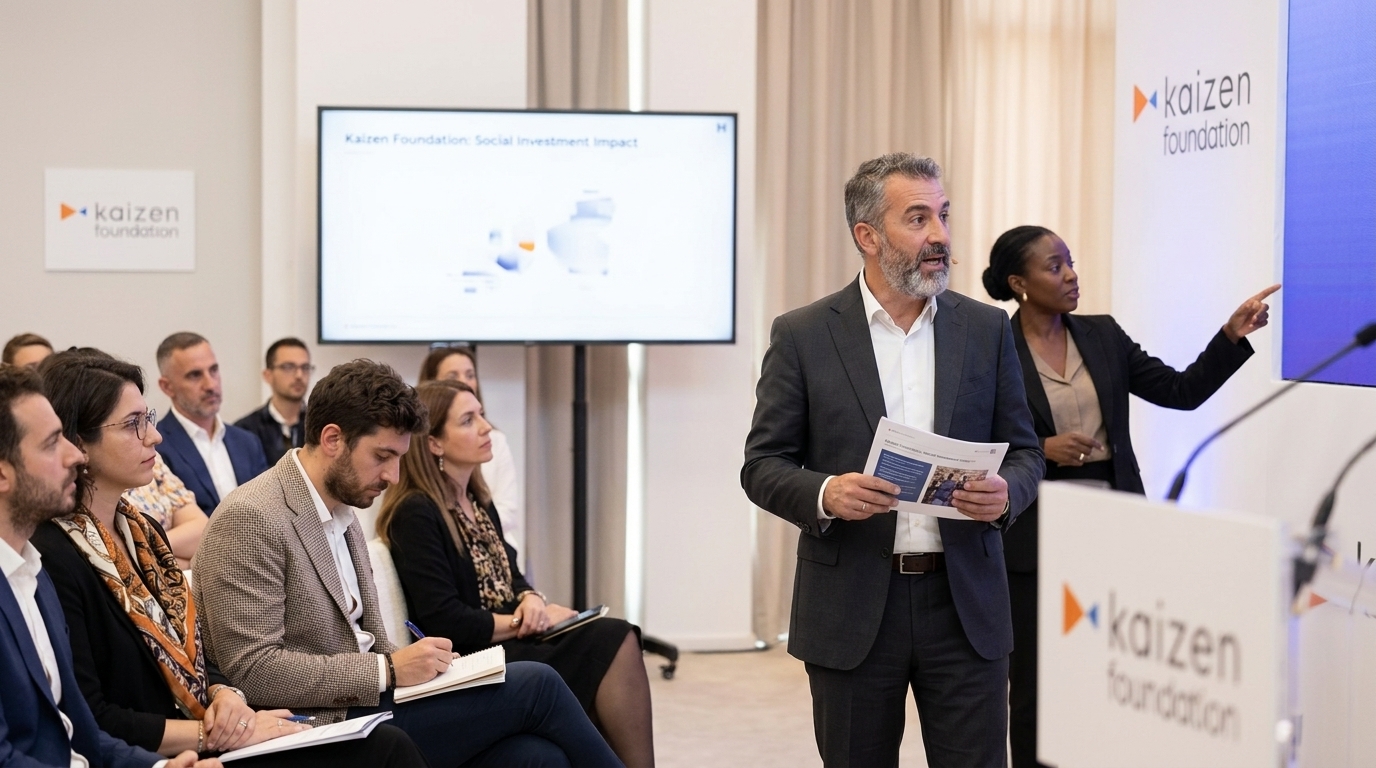
In an era where Corporate Social Responsibility (CSR) is shifting from simple philanthropy to strategic social investment, the Kaizen Foundation is emerging as a pivotal player in the broader region of Southeast Europe. The recent announcement of an additional €2 million in projects by the end of 2026 is not merely a financial commitment; it is a statement of intent to shape a sustainable future, funded by the success of one of the world's leading GameTech companies, Kaizen Gaming.
The Philosophy Behind the Commitment
The Kaizen Foundation, though a relatively new institution, has already managed to leave a significant mark. The choice of the name "Kaizen"—a Japanese word meaning "continuous improvement"—reflects the organization's methodology: it does not seek temporary fixes but interventions that gradually and steadily improve social infrastructure. The €2 million funding will be directed toward pillars considered critical for social cohesion: health, education, and the environment.
This strategy comes at a time when states, particularly in Greece, are struggling with fiscal constraints to renovate aging infrastructure. The example of the radical renovation of the Penteli Children's General Hospital, which was one of the Foundation's first major projects, demonstrates the private sector's ability to act as an accelerator for public welfare. With the new commitment, the Foundation aims to expand this model to other countries where the parent company operates, such as Portugal, Romania, and Bulgaria.
Health and Technology: A Two-Way Relationship
A significant portion of the new resources is expected to be channeled into the healthcare sector. The Kaizen Foundation's approach is not limited to donating equipment; it extends to upgrading hospitalization conditions and integrating technological solutions that facilitate the work of medical personnel. In a digital age, the "smart" management of hospital resources is just as important as the physical building infrastructure.
- Renovation of clinics and intensive care units.
- Enhancing the digital readiness of educational institutions.
- Initiatives to address the climate crisis at a local level.
- Scholarship programs for high-achieving students from vulnerable social groups.
The International Dimension and Governance Model
The Kaizen Foundation operates as an independent organization, allowing it to maintain a flexible decision-making structure. Panos Konstantopoulos, President of the Foundation, has repeatedly emphasized that the goal is to create an "ecosystem of giving." This means the Foundation does not operate in isolation but seeks partnerships with local governments, NGOs, and civil society.
The expansion of activities through 2026 in countries outside Greece underscores the global nature of Kaizen Gaming. In Portugal, for example, the focus is on strengthening child protection structures, while in Romania, emphasis is placed on educational innovation. This geographical dispersion allows the Foundation to transfer expertise from one country to another, applying best practices across different social environments.
Challenges and Future Prospects
Despite the positive reception, the challenge for the Kaizen Foundation remains ensuring the sustainability of its projects after completion. Experience has shown that many donations lose their value over time due to a lack of maintenance. The Foundation seems aware of this, incorporating clauses for the long-term support of infrastructure into its implementation contracts.
As we approach 2026, the €2 million investment will serve as a barometer for how modern tech companies can convert their profits into social capital. In a world demanding more transparency and accountability, the Kaizen Foundation is called upon to prove that "continuous improvement" is not just a corporate slogan but a living promise to society.