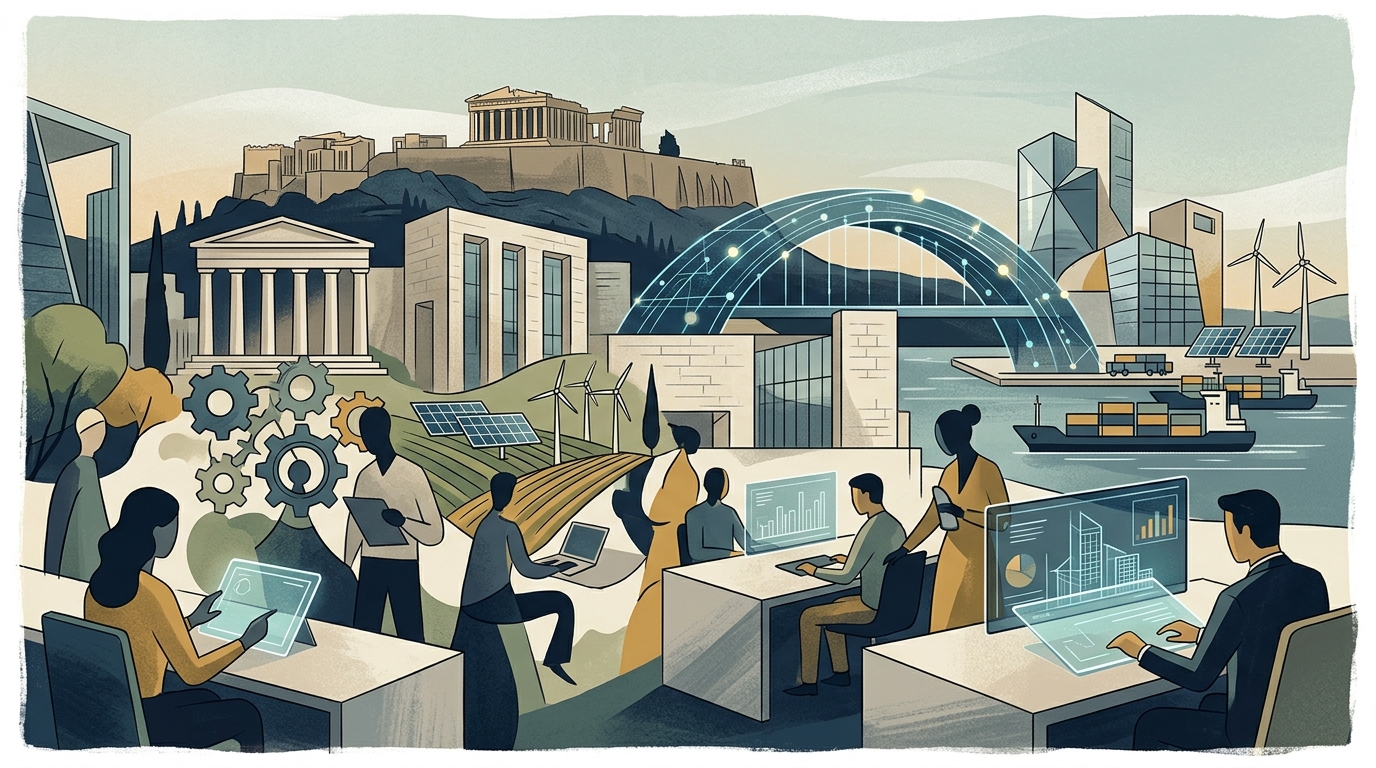
At the heart of the global financial elite, the conversation surrounding Artificial Intelligence (AI) has long moved past whether it will change the world and is now focused on how and how fast it will do so. JPMorgan Chase, one of the world's largest banking giants, is intervening with an analysis that attempts to dispel fears of a 'digital Armageddon' in the labor market. According to the bank and its CEO, Jamie Dimon, AI is not going to eliminate human labor, but rather reshape it fundamentally, while creating new opportunities that we are only beginning to imagine today.
The Prediction of a 3.5-Day Work Week
One of the most striking predictions to emerge from JPMorgan's offices is the possibility of reduced working hours. Jamie Dimon has repeatedly stated that the next generation of workers could work just 3.5 days a week, thanks to the massive productivity boost offered by AI. This prospect is not merely wishful thinking; it is based on the ability of large language models and machine learning algorithms to take over repetitive, time-consuming, and administrative tasks.
However, this transition will not be without its challenges. JPMorgan acknowledges that certain jobs will be eliminated, but insists that the history of technology teaches us that innovation always creates more jobs than it destroys. The key, according to the analysis, lies in 'augmentation' rather than 'replacement.' AI acts as a powerful co-pilot that allows the worker to focus on higher-value tasks, such as strategic decision-making, creativity, and human empathy.
Reskilling: The Great Challenge of the Decade
To achieve this optimistic scenario, JPMorgan emphasizes the urgent need for mass reskilling of the workforce. It is not just about learning how to use new tools, but about a fundamental shift in mindset. Businesses must invest billions in training their employees so they can work harmoniously with AI systems. In countries like Greece, where the digital divide remains an issue, this need is even more pressing.
- Development of 'prompt engineering' and data analysis skills.
- Focus on 'soft skills' that AI cannot replicate.
- Collaboration between the state and the private sector to shape new curricula.
- Creation of internal 'AI academies' within large enterprises.
JPMorgan is already implementing this model internally, integrating AI into areas such as risk management, fraud detection, and customer service. The bank views this technology as a tool that will help its advisors provide better services by having instant access to vast amounts of data and real-time analytics.
The Economic Dimension and Social Cohesion
From an economic perspective, the adoption of AI is expected to add trillions of dollars to global GDP. JPMorgan estimates that the value generated will allow societies to address long-standing issues such as population aging and climate change. However, there is also the risk of widening inequalities. If the productivity benefits accrue only to the owners of capital and technology, social cohesion will be tested.
"Artificial Intelligence is real and its potential is extraordinary. It will change almost every job, but we should not fear it, we should master it," the bank's leadership notes.
In conclusion, JPMorgan's position is a call to action. Technology is not a blind force that will sweep us away, but a tool that we are called to direct. The reshaping of the labor market is already underway, and success will depend on how quickly we can adapt, turning the fear of replacement into an opportunity for evolution.