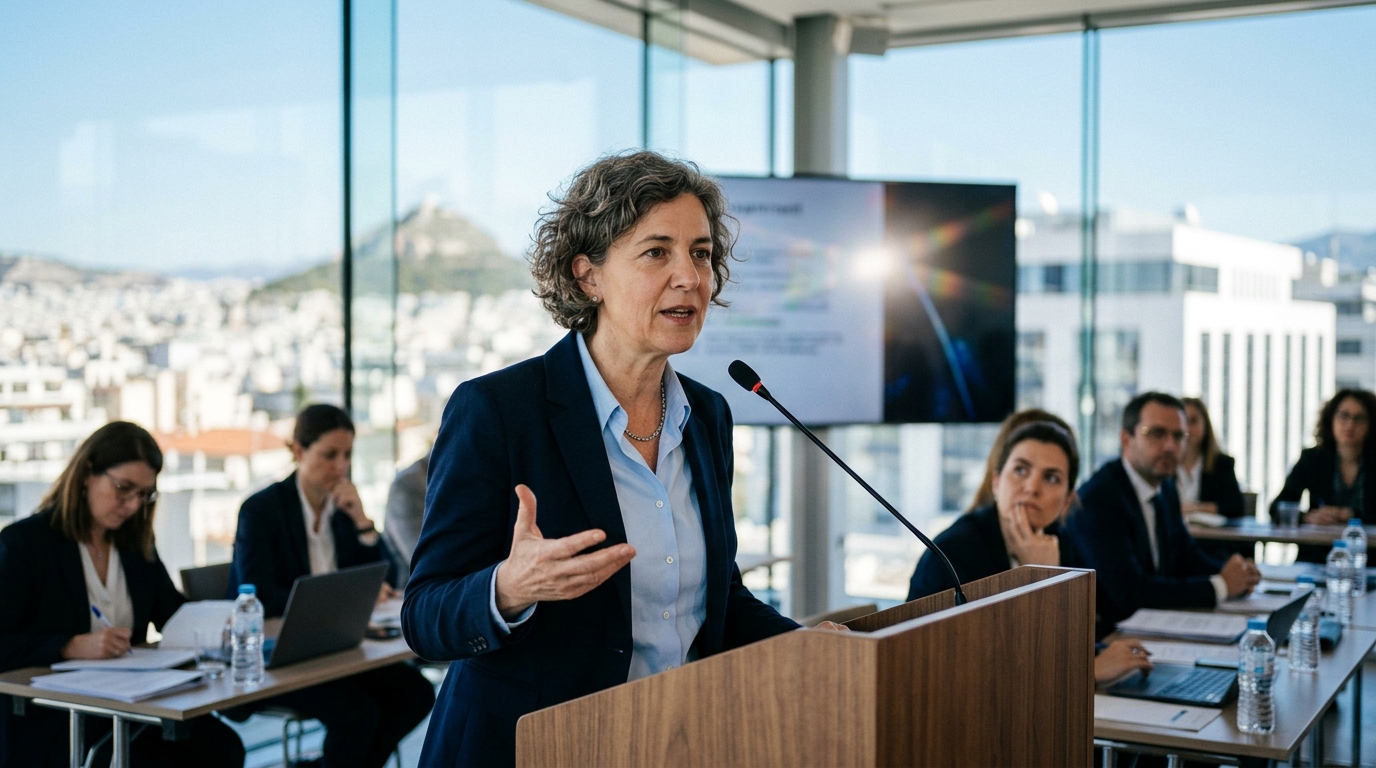
Journalism in Greece stands at a critical crossroads. While traditional media structures face mounting pressure from the velocity of social media and a prevailing crisis of public trust, Artificial Intelligence (AI) is emerging not merely as a threat, but as a potent tool for professional revitalization. Recognizing this historical necessity, Ionian University has announced the launch of a new, specialized training program in AI, specifically designed for media professionals.
This program is far more than a series of workshops; it is a comprehensive academic curriculum accompanied by ECTS (European Credit Transfer and Accumulation System) credits. This detail is pivotal, as it grants the program international recognition and academic rigor, allowing journalists to bolster their professional portfolios with measurable, certified qualifications.
Program Structure and Objectives
The curriculum focuses on the practical application of Generative AI tools within daily journalistic workflows. From automating transcriptions and real-time translations to analyzing vast datasets for investigative reporting, the syllabus covers the entire spectrum of modern needs. Significant emphasis is placed on "Prompt Engineering" — the art of communicating effectively with large language models — ensuring that journalists can extract optimal results without compromising factual accuracy.
- Data Analysis: Utilizing algorithms to identify patterns in government documents and financial reports.
- Fact-checking: AI-driven tools that assist in detecting deepfakes and disinformation.
- Multimedia Production: Creating infographics and visualizations with the help of automated systems.
Ethics and Deontology in the Algorithmic Era
One of the most crucial modules of the program addresses the ethical dimensions of AI. The use of algorithms in news delivery raises serious questions regarding bias, intellectual property, and transparency. Ionian University aims to train journalists not only on how to use these tools but also on when to refrain from using them. Maintaining human judgment in the final editorial process remains the cornerstone of credibility.
"Artificial Intelligence will not replace the journalist, but the journalist who uses AI will replace the one who does not," industry analysts often remark, and this program fully embodies that prediction.
Connecting with the Labor Market
The collaboration between the academic sector and journalistic unions (such as ESIEA) is deemed essential for the project's success. The Greek media market, though relatively small, exhibits a profound need for digital transformation. Graduates of the program will be equipped to staff modern newsrooms, offering services that reduce production costs while enhancing content quality. In an era where paywalls and subscription services are gaining traction, the added value provided by AI-driven analysis could be the key to media sustainability.
In conclusion, Ionian University’s initiative represents a bold step into the future. As the European Union establishes its regulatory framework through the AI Act, educating those who serve the public interest becomes a national priority for safeguarding democracy and the pursuit of truth. The integration of AI into the Greek newsroom is no longer a futuristic scenario; it is a current requirement for professional survival.