The global manufacturing industry stands at the threshold of a new era, where traditional factories are being transformed into intelligent ecosystems. Artificial Intelligence (AI) is no longer a mere automation tool; it has become the central nervous system of production. From predicting failures before they occur to optimizing supply chains in real-time, AI is redefining industrial excellence for the 21st century.
The Great Convergence: From Automation to Autonomy
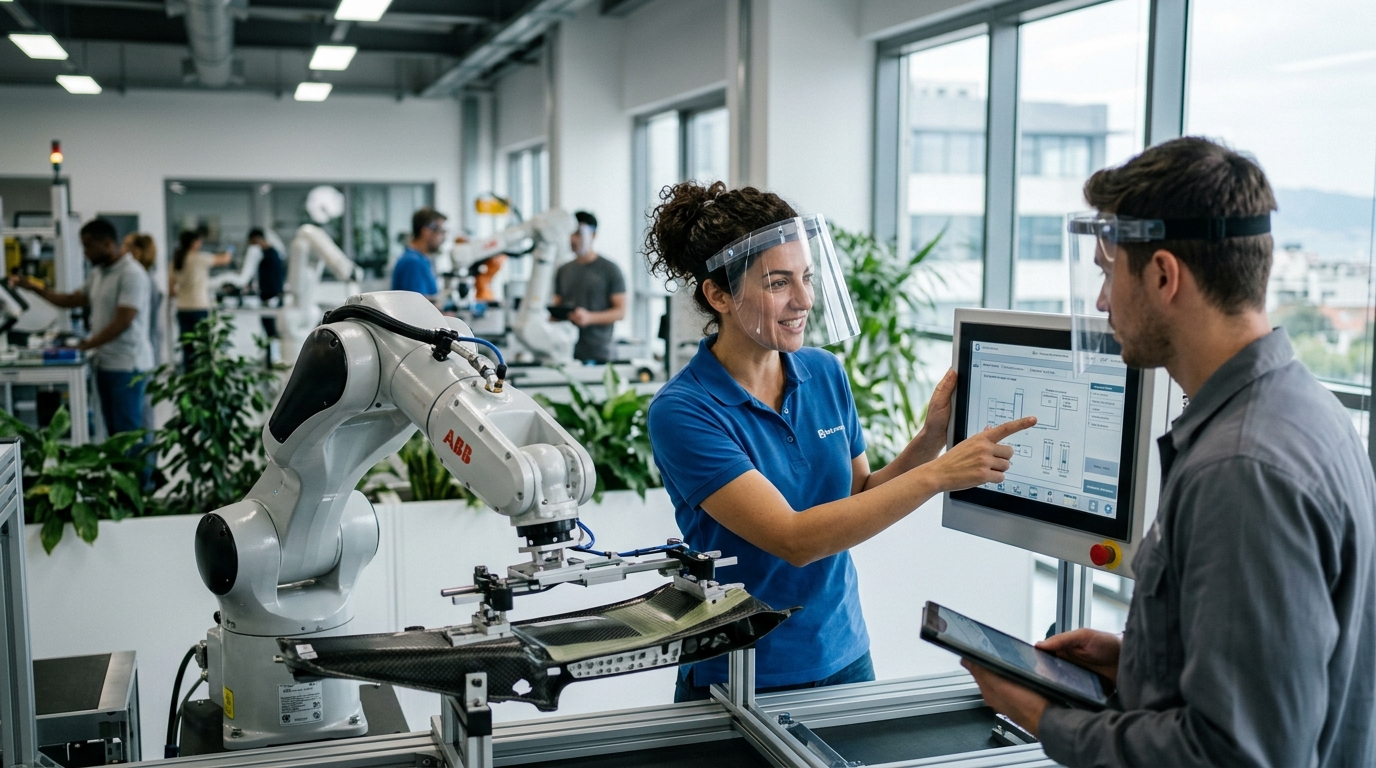
For decades, industry relied on programmed automation—robots performing repetitive tasks with precision. Today, we are moving into the era of autonomy. The integration of machine learning algorithms allows machines to "learn" from sensor data, adapt to unpredictable changes, and make decisions without human intervention. This transition to Industry 5.0 emphasizes human-machine collaboration, where AI handles the processing of vast amounts of data while humans focus on strategy and complex problem-solving.
The Greek Landscape: Challenges and Opportunities
In Greece, the industrial sector is striving to recover lost ground from previous decades. Despite having strong sectors like food processing, pharmaceuticals, and construction materials, the adoption of AI remains uneven. However, major Greek industries have already begun investing in smart systems. Using AI for quality control via computer vision and optimizing energy consumption are the first steps. The major challenge for the Greek economy is transferring this technology to small and medium-sized enterprises (SMEs), which form the backbone of production but often lack the resources and expertise for such investments.
Predictive Maintenance and Digital Twins
One of the most critical application areas for AI is predictive maintenance. Traditionally, machines were maintained either on a schedule or after a failure occurred. Both methods are costly. AI analyzes vibrations, temperatures, and other parameters to predict when a component will fail. Meanwhile, "Digital Twins"—virtual replicas of entire factories—allow production managers to simulate changes and test scenarios without disrupting actual operations. This reduces risk and increases efficiency to levels that were unthinkable a decade ago.
The Human Element: The Need for Upskilling
The introduction of AI in factories causes justifiable concerns about the future of work. However, the history of industrial revolutions shows that jobs do not disappear; they transform. The worker of the future will not need to perform manual labor in hazardous conditions but must be able to oversee and collaborate with intelligent systems. The need for upskilling and reskilling is urgent. Education in data analysis, programming, and AI system management must become a priority for both businesses and the educational system.
Sustainability: The Green ROI of Intelligent Industry
Finally, AI is the key to achieving green transition goals. Manufacturing is one of the largest consumers of energy and producers of waste. Through AI, production processes become "leaner," reducing raw material waste and optimizing the energy footprint. In a world pressured by climate change, smart industry is not just a choice for profitability but a necessity for survival.