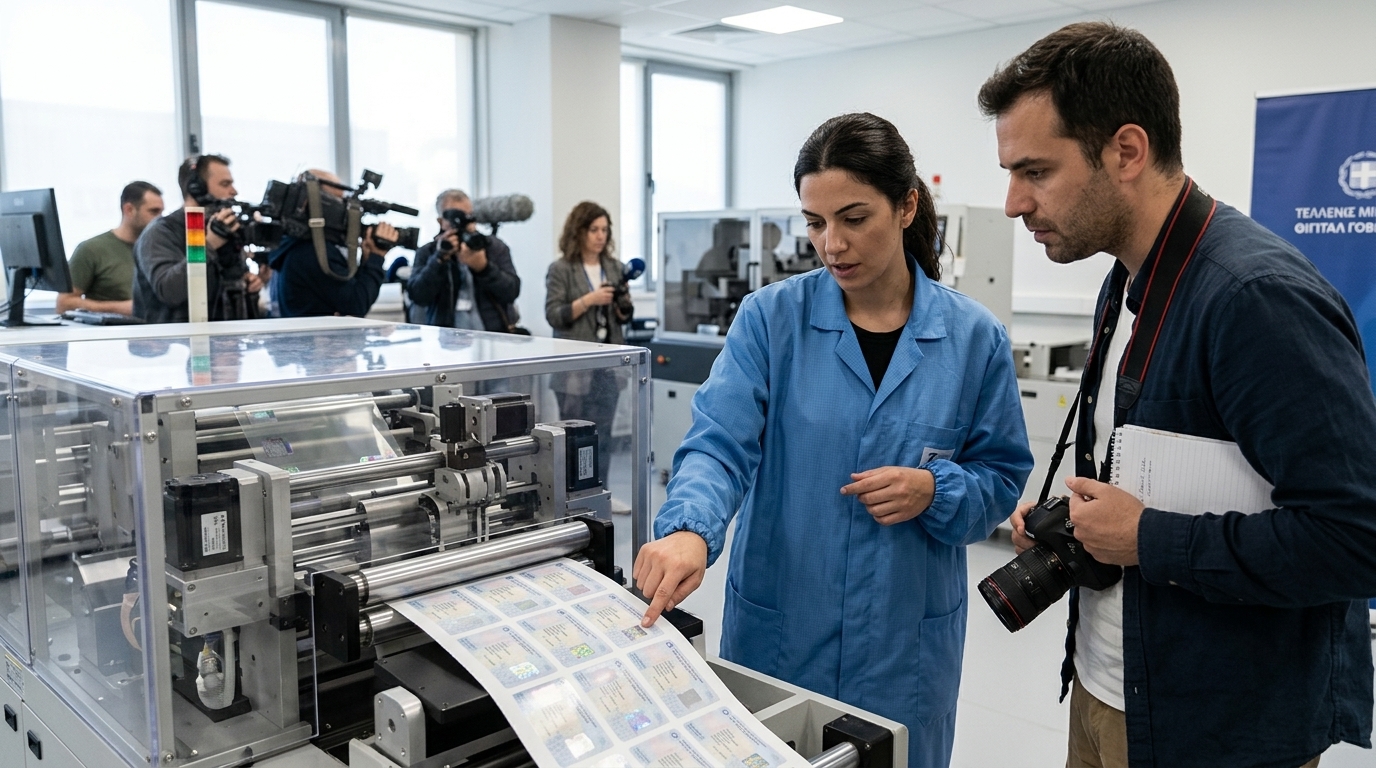
Greece is turning a page on one of the most troubled chapters of state modernization. The announcement of the tender for the new Integrated Information System for Security Documents (OPSEA), amounting to 515 million euros, is not merely an administrative act but a strategic move that aligns the country with the strictest international security standards. The project, which has navigated a labyrinth of cancellations and redesigns over the last decade, aims to replace old identity cards and other documents with new, digitally enhanced versions.
The Architecture of OPSEA and Digital Requirements
The scope of the tender is vast. It does not only concern the printing of new plastic cards but the creation of an entire infrastructure that will support the issuance of passports, residence permits, and, of course, the new police IDs. The key to success lies in "digital authentication." The new IDs will carry an electronic storage medium (chip), which will include biometric data, a digital signature, and the ability to access e-government services with absolute security.
The €515 million investment covers a period of 10 to 15 years, including equipment procurement, software development, maintenance, and document production. The scale of the project explains the interest of major international consortia, as Greece is now a field for applying cutting-edge cybersecurity technologies. The government seeks to create a system that is "armored" against forgery attempts, which in the past had exposed the country internationally.
Geopolitical Pressures and International Credibility
The need for new IDs did not arise solely from the internal need for digitization. Greece has faced pressure for years from the United States and the European Union. The country's participation in the US Visa Waiver Program depends directly on the security of travel documents. Old Greek ID cards, often handwritten or lacking modern security features, were considered a "weak link" in the global security chain.
With the implementation of OPSEA, Greece fully complies with Regulation (EU) 2019/1157, which imposes strict specifications for the identity documents of Union citizens. This means that Greek citizens will possess a document that is instantly and indisputably recognized at all border control points worldwide, enhancing the prestige of the Greek state and the ease of movement for its citizens.
A History of Cancellations and the Implementation Stakes
The history of this particular tender is a lesson in the chronic ailments of Greek public administration. Since 2018, the tender has been announced and cancelled at least three times due to objections between prospective contractors, political disagreements over costs, and concerns about personal data protection. The current effort seems more mature, having incorporated the observations of the relevant authorities and secured financial coverage.
However, challenges remain. Managing the biometric data of millions of citizens requires absolute transparency and strict adherence to GDPR. Social acceptance is also a factor that should not be underestimated, as there have been reactions in the past from groups of citizens who saw the new IDs as a mechanism for "surveillance." The government must communicate that data security is the priority and that the chip is not a tracking device but a means of protecting identity from theft.
Economic Footprint and Business Interest
The cost of 515 million euros is significant, but it must be seen as a long-term investment. Amortization will come partly from the fees paid by citizens, but mainly from the reduction of bureaucracy and fraud. Digital authentication will allow the processing of thousands of cases without the physical presence of the citizen, saving resources for the public sector and time for the private sector.
Major market players, from tech giants to specialized security printing companies, are expected to "battle" for the project. The selection of the contractor will determine the quality of services Greek citizens will enjoy for the next two decades. It is an opportunity for the country to prove it can manage complex IT projects with transparency and efficiency, leaving behind the era of handwritten documents and insecurity.