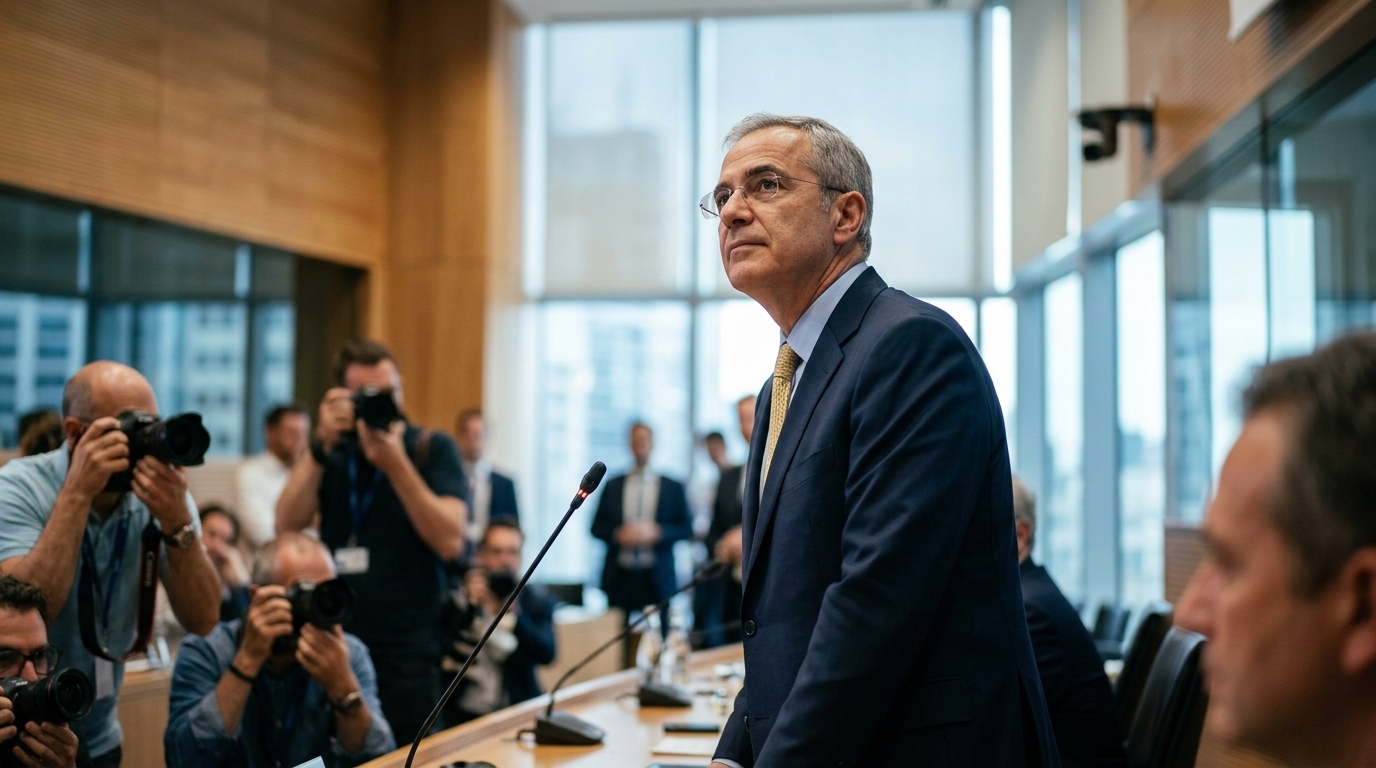
In a move that redefines the benchmarks of the Greek corporate landscape, GEK TERNA Group has successfully completed a capital increase of 660 million euros. The process, which attracted interest from titans of the global investment scene, was not merely a financial transaction but a resounding vote of confidence in the resilience and prospects of the Greek economy in 2026. With an oversubscription reaching 6 times, demand exceeded all expectations, highlighting GEK TERNA as one of the most attractive players in the infrastructure and concessions sector in Europe.
The Architecture of a Landmark Transaction
The strategic significance of this capital raise lies in the quality of the capital that flowed in. The participation of international investment banks such as Banco Santander, Morgan Stanley, and Mediobanca as global coordinators lent the process a prestige rarely seen in Greek issuances. These investors are not seeking short-term gains; they are positioning themselves in a group that boasts one of the strongest concession portfolios in Southeast Europe. The liquidity raised is expected to be directed toward further strengthening the group, allowing it to bid competitively for new major projects and accelerate the implementation of its existing investment plan.
The timing of the move is also noteworthy. At a time when international markets remain cautious due to geopolitical turbulence and interest rate fluctuations, GEK TERNA managed to mobilize capital suggesting that Greece is now considered a "safe haven" for large-scale strategic investments. This success reflects the group's internal reorganization and its focus on sectors with high profit margins and stable cash flows, such as highways and clean forms of energy.
Dominance in Infrastructure and Concessions
GEK TERNA Group has managed to establish a near-hegemonic presence in Greek infrastructure. With iconic projects such as the Attiki Odos, the Egnatia Odos, and the new airport at Kastelli, Crete, the company controls critical arteries of the national economy. The €660 million capital increase provides the necessary "war chest" to maintain this dominance. Analysts point out that GEK TERNA is transforming from a traditional construction company into a giant asset manager, where construction is merely the first stage of long-term profitability through concessions.
- Strengthening the capital structure to reduce borrowing costs.
- Funding an investment program exceeding 10 billion euros.
- Capacity to participate in new PPP projects and privatizations.
- Expanding activities in the green energy sector through TERNA ENERGY.
The strategic choice by the Peristeris management to open the company's capital to international institutional portfolios is a lesson in corporate governance. Transparency and the communication of the group's goals played a decisive role in attracting capital from the US, the UK, and mainland Europe. The 6x oversubscription is not just a numerical achievement; it is confirmation that the narrative of the "New Greece" has buyers in international capital markets.
Challenges and the Future of the Group
Despite the triumph of the capital increase, the road ahead is not without challenges. Managing such large and complex projects requires high operational capacity and continuous adaptation to the European Union's new environmental standards. GEK TERNA must prove it can turn capital raising into tangible results for its shareholders while maintaining its social license to operate at a local level.
"The success of this capital increase is a milestone not only for our group but for the entire Greek business community. It shows that when there is vision and consistency, international capital is here to support growth," sources close to the management stated.
In conclusion, GEK TERNA, with €660 million in its coffers, enters the second half of the 2020s as the undisputed protagonist of Greek infrastructure. Its ability to attract top-tier investors serves as a guarantee for its future path, while simultaneously setting the bar very high for the competition. The bet now is the effective utilization of these resources to create value in a constantly shifting global environment.