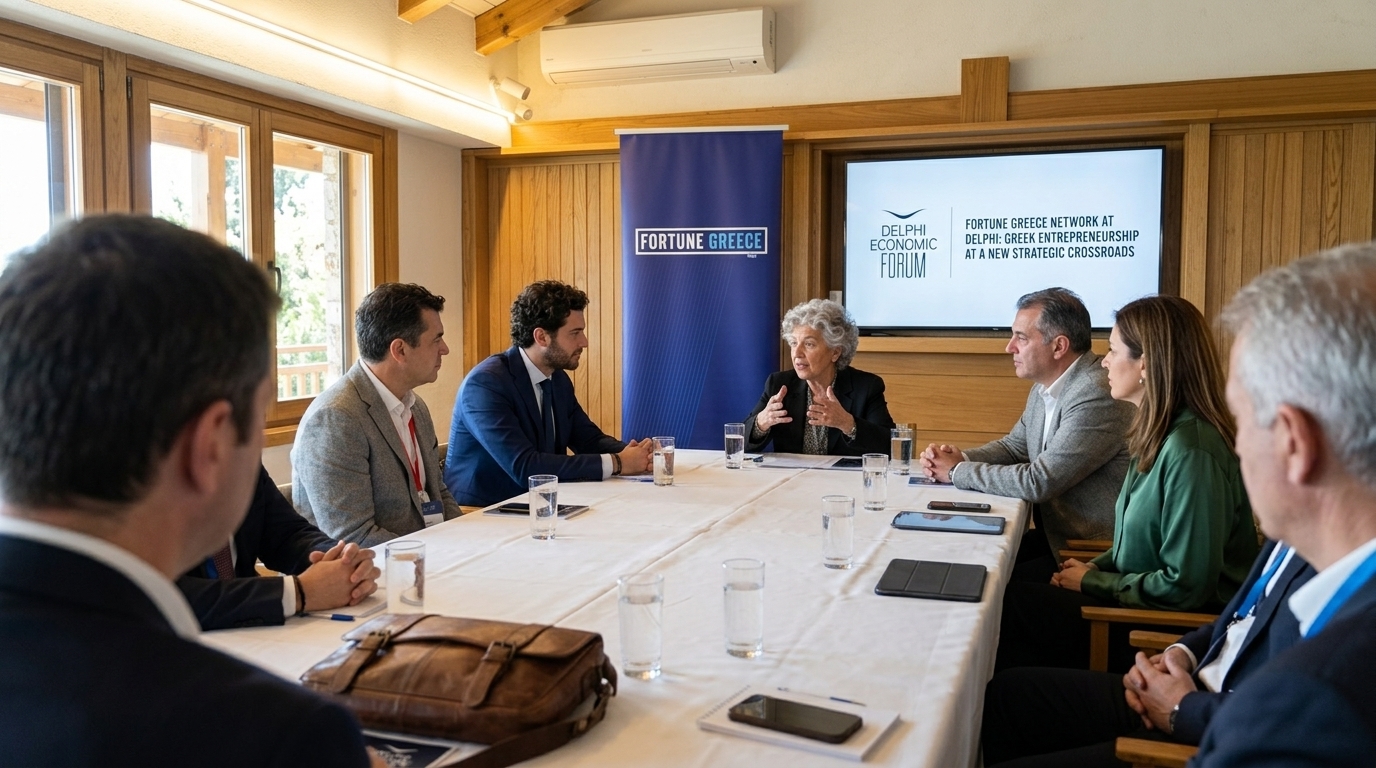
In the evocative landscape of Delphi, where antiquity meets modern geopolitical challenges, the Fortune Greece Network addressed the core issues facing the future of Greek business. At a time when Greece is attempting to solidify its position as an innovation hub in Southeast Europe, the central question dominating the discussions was not merely survival, but strategic direction: When should a Greek company pursue an acquisition, and when should it dare to transform into a global "unicorn"?
The Exit Dilemma: Opportunity or Self-Limitation?
For years, the Greek startup ecosystem viewed the "exit"—acquisition by a global giant—as the ultimate certificate of success. Examples like Viva Wallet or InstaShop served as beacons for a new generation of founders. However, at Delphi, the conversation shifted. Participants questioned whether premature acquisitions deprive the Greek economy of the potential to create large, domestic groups with a global footprint.
As pointed out, the liquidity resulting from an exit is vital for recycling capital within the ecosystem. When a founder sells their company, they often return as an "angel investor," funding the next generation of innovation. On the other hand, the lack of "scale-up" capital in Greece forces many promising companies to yield to acquisition offers before reaching their full potential. The need for deeper capital markets and the strengthening of the Athens Stock Exchange emerged as priorities to provide an alternative growth path.
Artificial Intelligence as a Productivity Catalyst
The impact of Artificial Intelligence (AI) could not be missing from the agenda. In the Fortune Greece Network discussions, it became clear that AI is no longer a future scenario but an immediate business necessity. Greek businesses, from shipping to tourism and manufacturing, are called upon to integrate AI tools to bridge the productivity gap with the rest of Europe.
"Artificial Intelligence in Greece should not be treated as a threat to jobs, but as the tool that will allow our small and medium-sized enterprises to compete globally without having the budgets of multinationals," it was characteristically noted.
The challenge remains the training of human capital. "Brain regain" seems to be bearing fruit, as more and more executives return from abroad, bringing with them expertise and a different culture of risk management. However, bureaucracy and high non-wage costs remain a hindrance to attracting high-skill talent.
Geopolitical Instability and the Green Transition
Delphi, as a traditional center for geopolitical analysis, provided the appropriate framework to discuss Greece's position in a changing world. The energy crisis and the need for a green transition are no longer theoretical exercises. Greek entrepreneurship is called to adapt to ESG (Environmental, Social, and Governance) criteria, not just for compliance reasons, but as a prerequisite for drawing cheaper financing.
Greece's strategic position as an energy and telecommunications hub creates new opportunities. Investments in data centers and renewable energy sources form the backbone of the new economy. The bet is whether these investments will diffuse throughout the economy or remain confined to a narrow circle of large players. Inclusive growth emerged as the key to social cohesion and long-term stability.
Conclusions: A New National Narrative
The conclusion of the proceedings at Delphi left a sense of cautious optimism. Greek entrepreneurship has proven its resilience through successive crises. Now, it is called to take the next step: to move from a defensive stance to aggressive growth. This requires collaborations (clusters), investment in research and development (R&D), and, above all, a change in mindset that allows failure as part of the learning process.
The next day requires a facilitator-state and a business class that is not afraid to look beyond borders. The Greece of 2026 is no longer the "black sheep" of Europe, but a country seeking its own path in the digital and green era, with Delphi reminding everyone that wisdom lies in moderation and strategic foresight.