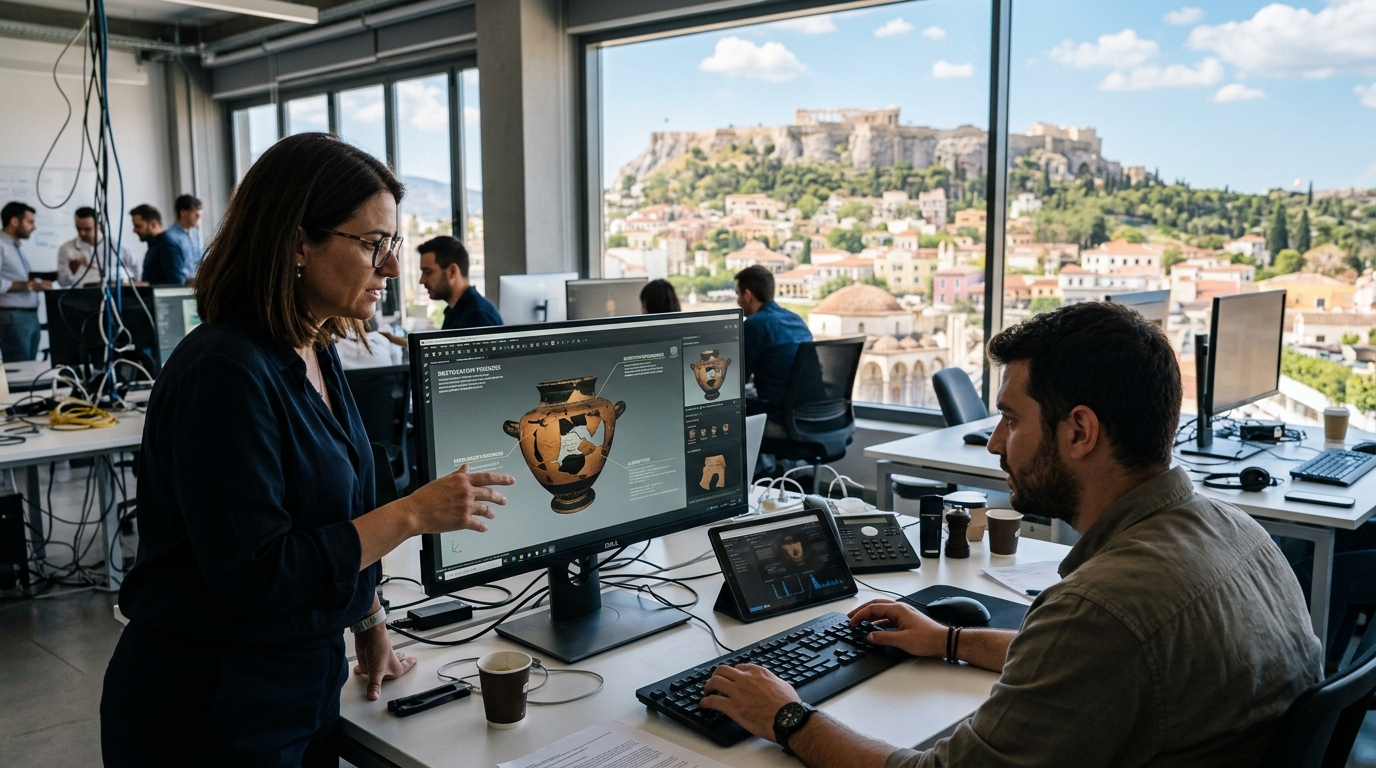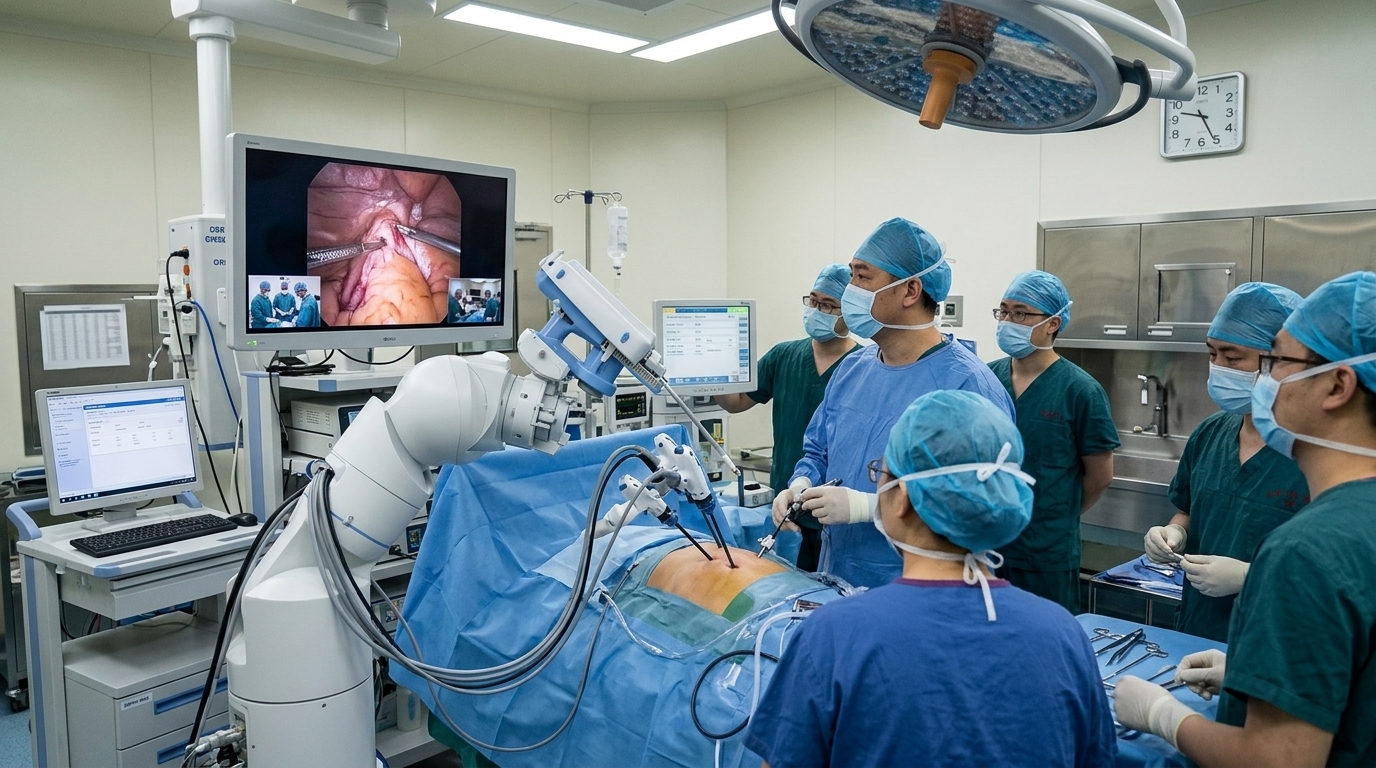
In an era where technology is often blamed for human alienation, medical science proves that digital bridges can save lives across thousands of kilometers. The recent success of Lefkos Stavros – The Athens Clinic, in performing the first robotic telesurgery from the heart of Athens to distant Wuhan, China, is not just a technical feat. It marks the beginning of a new era where geography is no longer a limiting factor for accessing top-tier medical services.
The Technology Behind the Feat
Conducting surgery at a distance of over 8,000 kilometers requires more than a skilled surgeon; it demands an infrastructure that pushes the boundaries of science fiction. The key to success lies in minimizing latency. In telesurgery, every millisecond counts. The use of advanced 5G networks and dedicated fiber optics allowed the Greek surgeon to control robotic arms in Wuhan with near-zero time lag.
- Low-Latency Networks: Data transmission delay was maintained below 100ms, the threshold considered safe for human perception and reaction.
- Cutting-Edge Robotic Systems: Platforms providing high-definition 3D vision and stability surpassing the human hand were utilized.
- Cybersecurity: Encrypted connections ensured that the procedure remained immune to external interference.
"We no longer operate only with our hands, but with the power of information traveling at the speed of light," stated a member of the medical team.
Greece at the Center of Global Innovation
For many years, Greece was seen as a country that "exported" scientists due to the economic crisis. Today, Lefkos Stavros is flipping that narrative, demonstrating that the country can become a hub for high-tech healthcare. This specific operation places Athens on the global map of robotic surgery, alongside medical giants from the US and Asia.
The strategic decision of The Athens Clinic to invest in latest-generation equipment and staff training is bearing fruit. It is not just about prestige; it is about a substantial upgrade to medical tourism and international cooperation. The ability of a Greek specialist to offer services to a patient in China without leaving their office opens new avenues for the knowledge economy.
Challenges and Ethical Stakes
Despite the excitement, telesurgery brings a host of questions. What happens if the connection drops during a critical incision? What is the legal framework for medical malpractice when the doctor is on a different continent than the patient? The international community must establish strict protocols to cover these scenarios.
Furthermore, there is the risk of creating a "digital divide" in healthcare. While residents of major cities will have access to world-class tele-surgeons, developing regions might be left behind due to a lack of network infrastructure. The challenge for the future is the democratization of this technology, ensuring it reaches the most remote parts of the planet where specialized medical care is often a matter of life and death.
Conclusion
The achievement of Lefkos Stavros is a victory for human ingenuity. Athens and Wuhan were brought closer together, not through physical travel, but through digital convergence. As we move toward 2030, the image of a surgeon located thousands of miles away from their patient will become the new normal, transforming the operating room into a global, unified platform for healing.