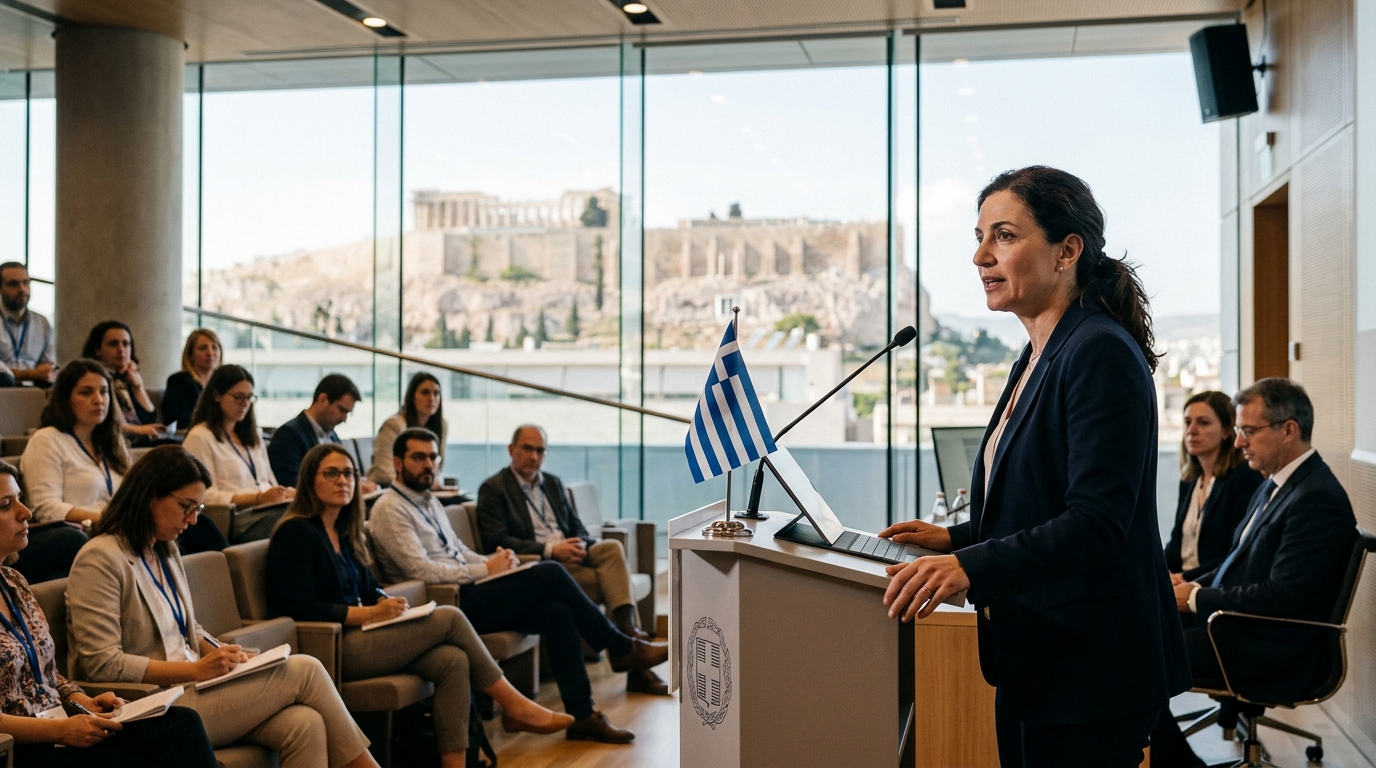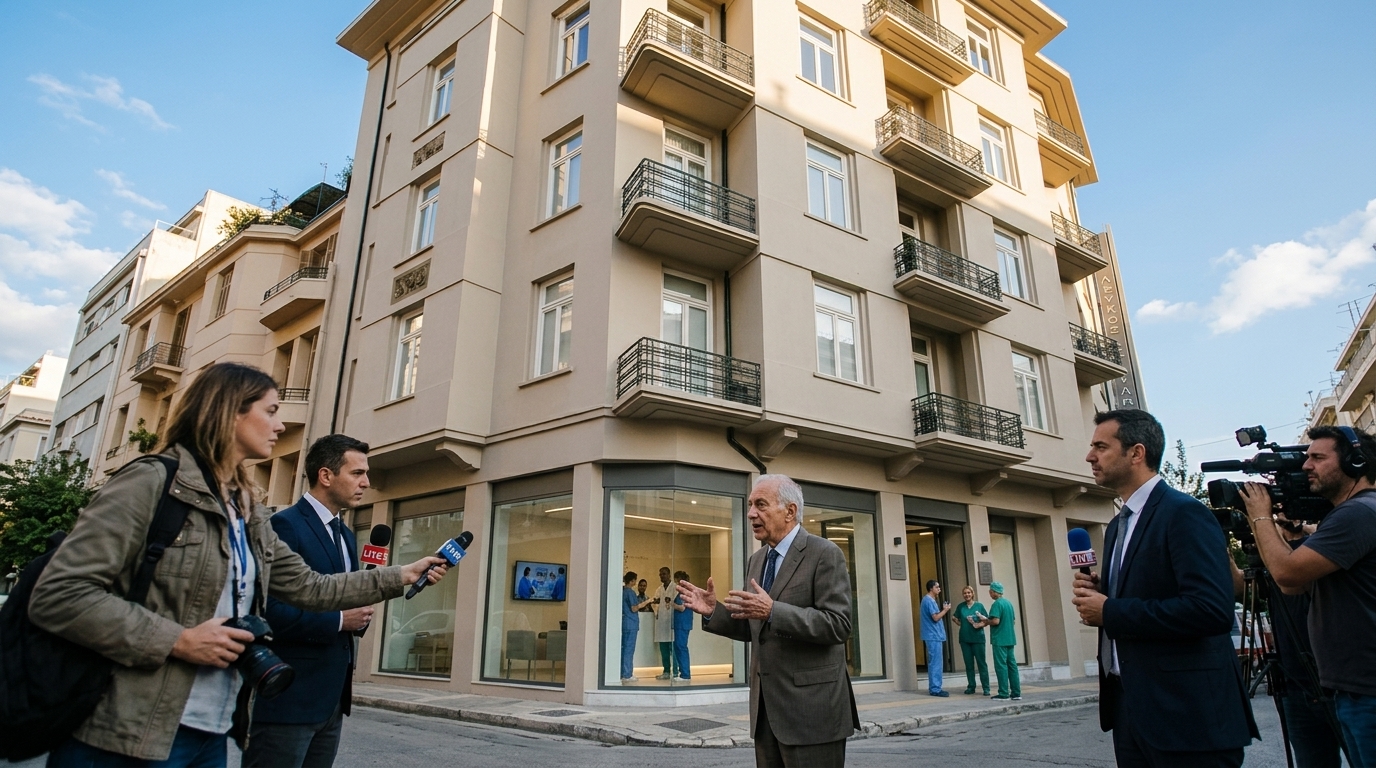
May 29, 2026, will be etched in the annals of Greek medicine as the day distance ceased to be a barrier to high-level surgical care. At "Lefkos Stavros – The Athens Clinic," the first robotic telesurgery in Greece was successfully performed, marking the country's entry into an elite group of nations pioneering digital health applications. This development is not merely a technological display of prowess but a fundamental paradigm shift in how we perceive surgery in the 21st century.
The Technology Behind the Scalpel: 5G and Robotic Precision
The success of the operation relied on the convergence of two critical technologies: an advanced robotic surgical platform and ultra-low latency communication networks. In telesurgery, the surgeon does not stand over the patient but operates a console that could be kilometers away. Every movement of their hands is translated into digital data, traveling via fiber optics and 5G networks to command the robotic arms performing the surgery at the operating table.
The critical metric in this process is response time. Any delay exceeding a few milliseconds could be fatal, as the surgeon requires immediate visual and haptic feedback. The infrastructure utilized at Lefkos Stavros ensured that the "digital bridge" remained uninterrupted, allowing the lead surgeon to operate with the same ease and precision as if they were in the same room as the patient. This technological excellence opens the door for robotics in urological, gynecological, and general surgeries, where detail is everything.
Geographical Democracy in Healthcare
For a country with Greece’s unique geography—featuring hundreds of islands and remote mountainous regions—telesurgery offers a solution to a chronic problem: inequality in access to specialized physicians. Until now, a patient on a remote island had to be transported to Athens or Thessaloniki for specialized robotic surgery. With the technology inaugurated by Lefkos Stavros, the future looks different: a top-tier surgeon can remain at their reference center while the robotic system is located in a regional hospital.
This "democratization" of expertise has the potential to save lives in emergencies where time is the most critical factor. Furthermore, it enables real-time international collaboration. A Greek surgeon can now guide or participate in operations performed abroad, or vice versa, bringing the global medical elite to the side of the Greek patient without the cost and risk of travel.
Challenges, Ethics, and the Next Step
Despite the excitement, integrating telesurgery into daily clinical practice comes with significant challenges. The first is cybersecurity. In a world where cyberattacks on healthcare infrastructure are increasing, protecting the connection between surgeon and robot is a matter of national security. A "hijack" of the signal during an operation would be catastrophic. Lefkos Stavros invested in military-grade encryption protocols to safeguard the process.
Secondly, there is the issue of the legal framework. Who bears responsibility in the event of a network failure? Is it the surgeon, the telecommunications provider, or the clinic? Greece, following EU guidelines, must update its medical malpractice laws to include these new realities. Finally, the cost remains high. The investment by Lefkos Stavros is private; however, to see these benefits in the National Health System (ESY), a coordinated state strategy for digital transformation will be required.
"We are not just operating on a patient; we are operating on the future of medical care in our country," a clinic executive stated after the procedure.
This success places Athens on the map of high-tech medical tourism. As 5G infrastructure expands across the territory, the possibility of "surgery without borders" transforms from science fiction into a tangible, life-saving reality for thousands of citizens. Lefkos Stavros has taken the first step; the continuation requires vision, investment, and a new generation of doctors who are as comfortable with a scalpel as they are with code.