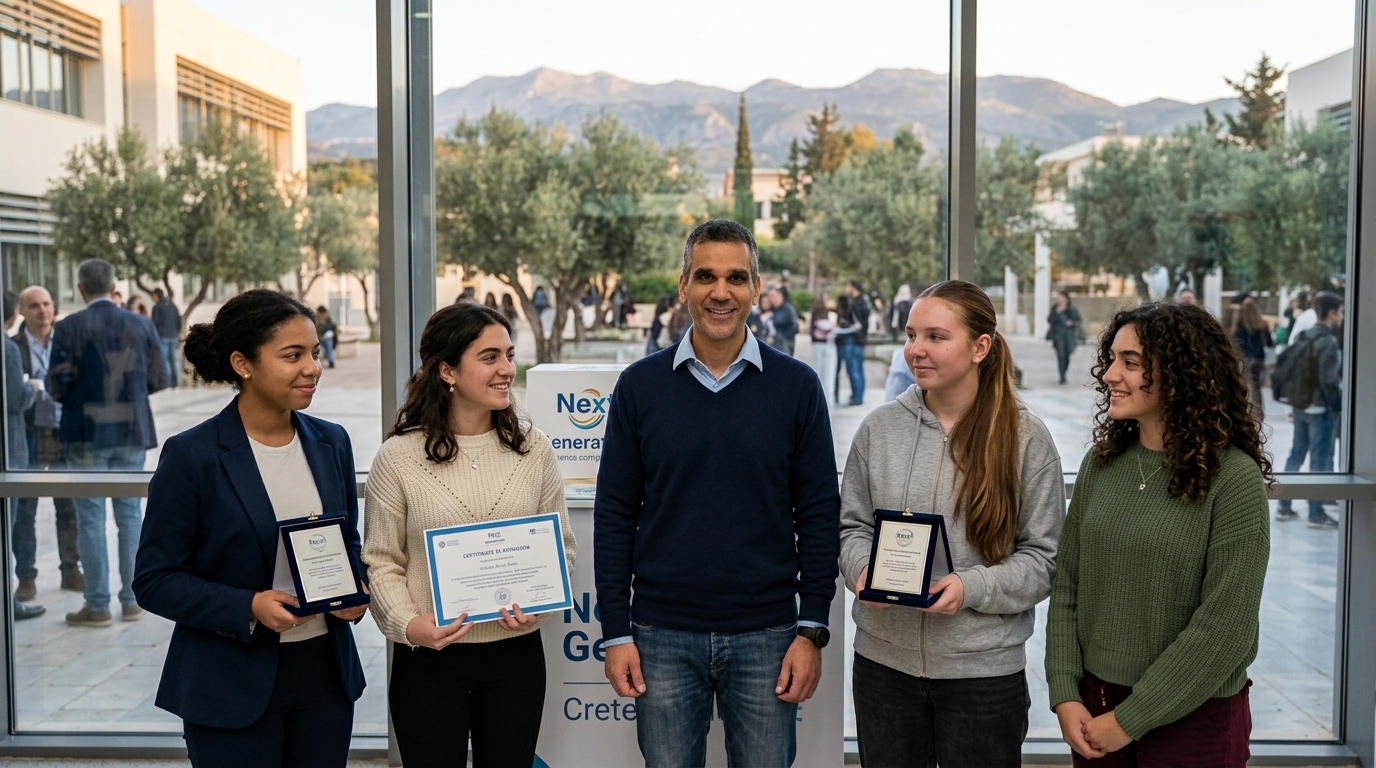
In an era where technology is frequently blamed for the alienation of youth, a group of female students from Crete has turned the narrative on its head by winning first place in the 9th Panhellenic Generation Next Competition by the Vodafone Foundation. Under the theme "Technology as an Ally: Digital Wellbeing through Innovation," the competition highlighted the creativity and social sensitivity of teenagers, who were tasked with solving modern problems using STEM tools.
Crete as a Cradle of Technological Excellence
This is not the first time Greece's largest island has taken center stage in innovation. With a robust ecosystem that includes the University of Crete and the Foundation for Research and Technology - Hellas (FORTH), the culture of research appears to permeate secondary education as well. The winning students did not merely present code or a gadget; they offered a comprehensive proposal aimed at improving quality of life. Their success underscores the need for the decentralization of knowledge and access to technological resources, proving that the provinces can lead the country's digital transition.
"Innovation knows no geographical borders or gender restrictions. These girls are living proof that the future of Greek technology is bright and inclusive," stated a representative of the Foundation.
Digital Wellbeing: Beyond the Screen
This year's competition theme, "Digital Wellbeing," strikes a sensitive chord in modern society. In a world saturated with notifications and social media algorithms, the challenge was to use technology to protect mental and physical health. Participants utilized technologies such as the Internet of Things (IoT), Artificial Intelligence, and app development to create tools that help manage stress, improve sleep, or enhance real-life social interaction. The approach of the Cretan students stood out for its practicality and empathy, offering solutions that are directly applicable to the daily lives of their peers.
Closing the Gender Gap in STEM
One of the most promising messages from this year's event is the dominance of girls in a field traditionally viewed as male-dominated. Despite global efforts, women remain underrepresented in Science, Technology, Engineering, and Mathematics (STEM). The success of these students from Crete serves as a role model for thousands of other girls in Greece, breaking stereotypes and encouraging female participation in the digital economy. STEM education is not just about learning to code; it is about developing critical thinking and problem-solving skills—essential attributes for any 21st-century citizen.
- Boosting young women's confidence in technology.
- Promoting collaborative learning through group projects.
- Linking school knowledge to real-world social issues.
- Highlighting regional areas as hubs of innovation.
The Significance of Private Initiatives in Education
While public schools often struggle with resource shortages and outdated curricula, initiatives like Vodafone Foundation's Generation Next fill a significant gap. By providing the necessary infrastructure, expert mentorship, and a framework for healthy competition, these programs allow students to experiment outside the narrow confines of the classroom. Collaboration between the private sector, non-governmental organizations, and the educational community seems to be the key to modernizing Greek education. However, the challenge remains: how to turn these individual successes into an institutional norm that reaches every student in every corner of Greece.
In conclusion, the distinction of the students from Crete is more than just an award in a competition. It is a reminder that the new generation possesses the reflexes and intelligence to use the tools of the future to fix the mistakes of the present. Their journey from the classroom to the pinnacle of digital innovation has only just begun, and Greece has every reason to invest in such minds.