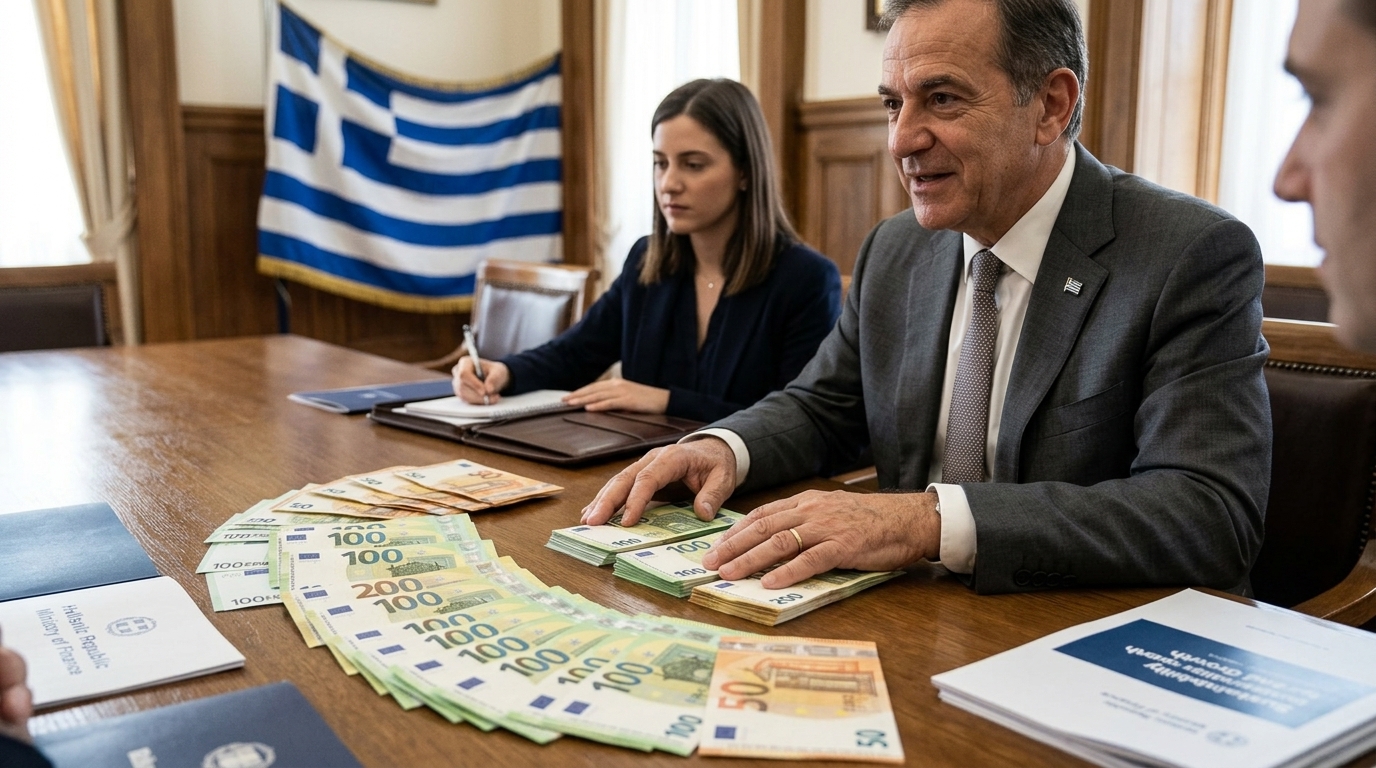
The European Commission's Spring 2026 report confirms what many analysts had predicted: Greece is no longer the 'sick man of Europe' but one of the most dynamic economies in the Eurozone. In a global environment characterized by geopolitical uncertainty and a slowdown among major European powers, the Greek economy is demonstrating remarkable resilience, supported by two pillars: the explosive growth of investments through the Recovery Fund and steady fiscal discipline leading to record surpluses.
The Investment Spring and the Recovery Fund
According to Commission data, Greece's growth rate for 2026 is expected to be 2.4%, significantly higher than the Eurozone average (1.5%). The main driver of this rise is gross fixed capital formation. Investments, which for decades lagged behind the European average, are now on a convergence path. The Recovery and Resilience Facility (RRF) acts as the ultimate catalyst, funneling capital into the green transition, digital transformation, and infrastructure.
However, the Commission points out that the challenge is not just the absorption of funds but their effective diffusion into the real economy. Reforms in the judicial system and the reduction of bureaucracy remain critical factors for maintaining foreign investment interest. Foreign Direct Investment (FDI) has recorded historical highs, focusing mainly on energy, logistics, and high-value-added tourism.
Fiscal Stability and the Debt 'Dive'
The most impressive element of the report concerns the trajectory of public debt. Greece is achieving the largest debt reduction as a percentage of GDP in the European Union. From the staggering heights of the previous decade, debt is projected to retreat toward 135% of GDP by the end of 2026, thanks to a combination of high nominal growth and primary surpluses. The primary surplus for 2025 and 2026 is estimated to exceed 2.5%, over-delivering on the set targets.
This fiscal overperformance is not accidental. The digitalization of tax audits and the fight against tax evasion have begun to bear fruit, increasing public revenues without imposing new taxes. The Commission welcomes this effort, emphasizing that Greece is creating the necessary 'fiscal space' to withstand future crises while simultaneously reducing its borrowing costs, with Greek bonds now trading at levels similar to those of France and Spain.
Challenges: Inflation, Labor, and Climate Change
Despite the positive outlook, the report does not hide the risks. Inflation, although decelerating, remains 'sticky' in the food and services sectors, putting pressure on household disposable income. The Commission highlights that the labor market is showing signs of 'tightness.' Although unemployment has fallen to a single-digit rate (9.2%), businesses are struggling to find skilled personnel, a fact that could act as a drag on growth if not addressed through retraining programs.
Furthermore, the climate crisis is emerging as a major economic risk. Natural disasters in previous years have demonstrated the need for increased spending on civil protection and infrastructure restoration. The Commission calls on the Greek government to integrate climate resilience into its long-term economic planning, ensuring that surpluses are not spent only on social transfers but also on shielding the country.
"Greece is transforming from a problem into a model of fiscal adjustment, but the real challenge is maintaining this pace over a decade," says a senior Commission official.
In conclusion, Greece in 2026 stands at a critical crossroads. The success of reforms and the proper utilization of European resources have created a strong foundation. However, geopolitical instability in the Eastern Mediterranean and demographic pressures remain the 'unpredictable factors' that will determine whether today's growth will translate into permanent prosperity for society as a whole.