In an era where technological advancement gallops at a pace that often outstrips human adaptability, Greece is taking a bold step toward digital inclusion. The Universities of the Third Age, an institution gaining significant traction in the country, are now introducing Artificial Intelligence (AI) as a central pillar of their educational process. This is not merely an attempt to familiarize seniors with new 'tools' but a profound social intervention aimed at combating the digital exclusion and isolation that frequently accompany aging.
From Digital Illiteracy to Digital Autonomy
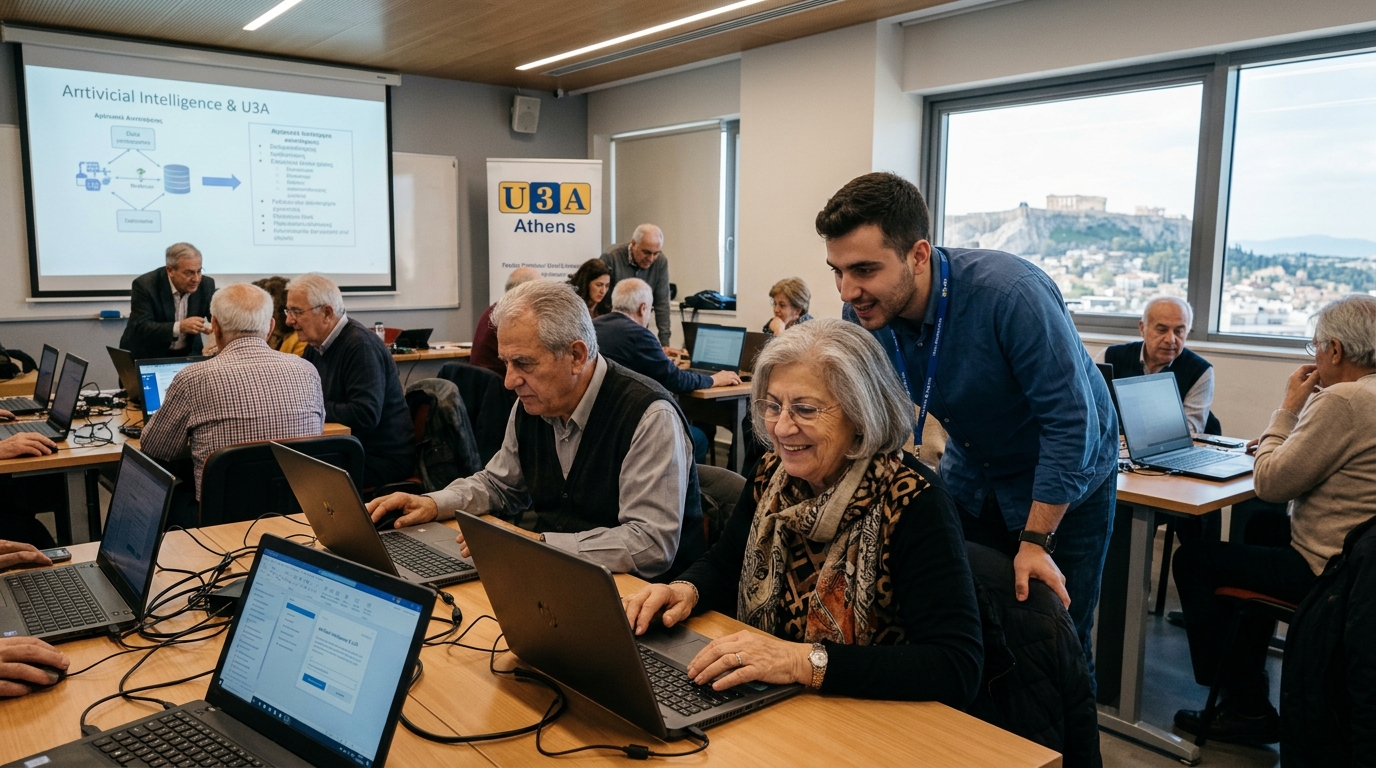
The image of an elderly person struggling to use a smartphone is becoming a thing of the past. In the lecture halls of the University of the Third Age, students are not just learning how to send emails; they are learning how to interact with Generative AI models like ChatGPT. The curriculum focuses on understanding the logic behind algorithms, enabling seniors to use technology for daily information gathering, health management, and communication with public services.
The significance of this initiative is multifaceted. Firstly, digital autonomy boosts the self-confidence of the elderly. When a person in their 70s or 80s realizes they can compose text or search for complex information via AI, the feeling of marginalization recedes. Secondly, engaging with new technologies serves as an excellent exercise for cognitive function, contributing to the prevention of dementia and other degenerative brain conditions.
Ethics and Security: Protecting the Vulnerable
However, introducing AI to the elderly is not without risks. Seniors are often targets of digital scams, and the advent of deepfakes and sophisticated AI-driven phishing methods makes cybersecurity education imperative. Curriculum designs in Greek universities place a heavy emphasis on critical thinking. Students are taught to question information, recognize the pitfalls of misinformation, and understand that AI, despite its intelligence, lacks moral judgment and consciousness.
"Technology should not be a privilege of the young, but a right for all. At the University of the Third Age, AI becomes the bridge that unites generations," notes one of the program coordinators.
Social Impact and the Future
The success of these programs in Greece relies on the collaboration between academic institutions, local government, and voluntary organizations. Integrating AI into community centers for the elderly (KAPI) and municipal universities creates a new network of social support. Furthermore, the use of AI-based voice assistants can provide invaluable help to individuals with mobility or vision impairments, allowing them to control their environment or call for help in emergencies.
Looking ahead, the challenge remains funding and expanding these programs to reach even the most remote areas of the country. Digital convergence is not just a matter of infrastructure but primarily a matter of education. Greece, with one of the oldest populations in Europe, has the opportunity to lead by transforming the elderly from passive recipients of technological changes into active participants in the digital revolution.
Ultimately, AI at the University of the Third Age serves as a reminder that learning is a never-ending process. It is the answer to alienation and the tool for a fairer, more inclusive society, where the wisdom of age meets the innovation of the future.