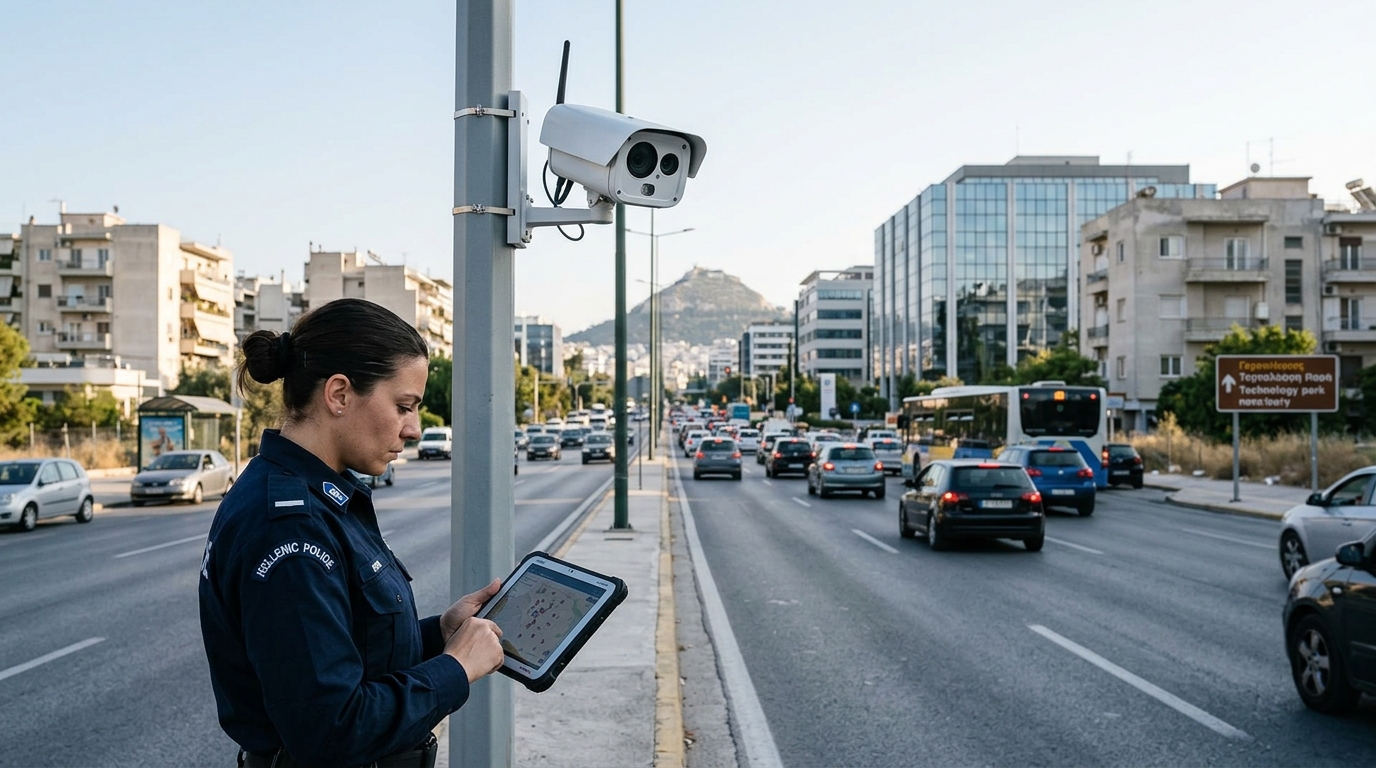
The landscape of Greek road reality, often synonymous with disorder and frequent violations, stands on the threshold of a structural transformation. The resumption of the tender for the procurement and installation of 1,000 artificial intelligence cameras on the streets of Attica and other urban centers is not merely an administrative development, but the dawn of a new era in digital policing. The system, expected to be fully operational by the summer of 2026, aims to eliminate the sense of impunity that fuels the country's high rates of traffic accidents.
The Technological Superiority of Artificial Intelligence
Unlike the traditional speed cameras we have known until now, these new devices are sophisticated sensors based on machine learning algorithms. Their capability is not limited to simple speed limit enforcement. These cameras are designed to recognize in real-time a series of violations that previously required the physical presence of a police officer.
- Mobile Phone Use: The software can detect if a driver is holding a device to their ear or in their hand by analyzing body posture and movements.
- Seatbelt and Helmet Compliance: Through advanced image processing, the system distinguishes whether passengers are adhering to safety regulations.
- Red Light Violations: Recording is instantaneous and indisputable, with footage automatically sent to the processing center.
- Bus Lane Infringements: Ensuring the free flow of public transport is now automated, preventing illegal parking or driving in restricted lanes.
Data processing is conducted in a manner that protects the personal data of non-violators, while the issuance of citations is performed digitally, reducing bureaucracy and the possibility of human error or intervention.
Timeline and Strategic Importance
The political leadership of the Ministry of Citizen Protection and the Ministry of Digital Governance has set this summer as the target for full network activation. The timing is not accidental, as the summer months traditionally see increased traffic and, unfortunately, a spike in serious accidents. The installation of the 1,000 cameras will focus on "black spots" of the road network—locations where statistics show a high frequency of recurring accidents.
The tender, which had been frozen due to legal challenges and technical specification disputes, restarts with stricter reliability criteria. This investment involves not only purchasing equipment but also creating a central violation management system (back-office), directly linked to the Taxisnet platform for immediate notification of fines to offenders. This "digital pincer" is expected to act as a significant deterrent, fostering a new culture of driving behavior.
Privacy and Ethical Considerations
As with any mass surveillance application via AI, serious questions arise regarding privacy. The Hellenic Data Protection Authority (HDPA) has already issued guidelines for the operation of such systems. It is crucial that the system does not store faces or data of citizens who have not committed a violation, while access to the archives must be strictly controlled and audited.
"Road safety is a human right, but privacy is the foundation of our democracy. The balance between the two will determine the social acceptance of the system," notes a senior official from the digital governance sector.
The project's success will depend on transparency. If citizens perceive the cameras merely as a revenue-generating tool, the backlash will be severe. However, if data shows an immediate reduction in road fatalities, then artificial intelligence will have won one of its most important battles in Greece: the battle for life.