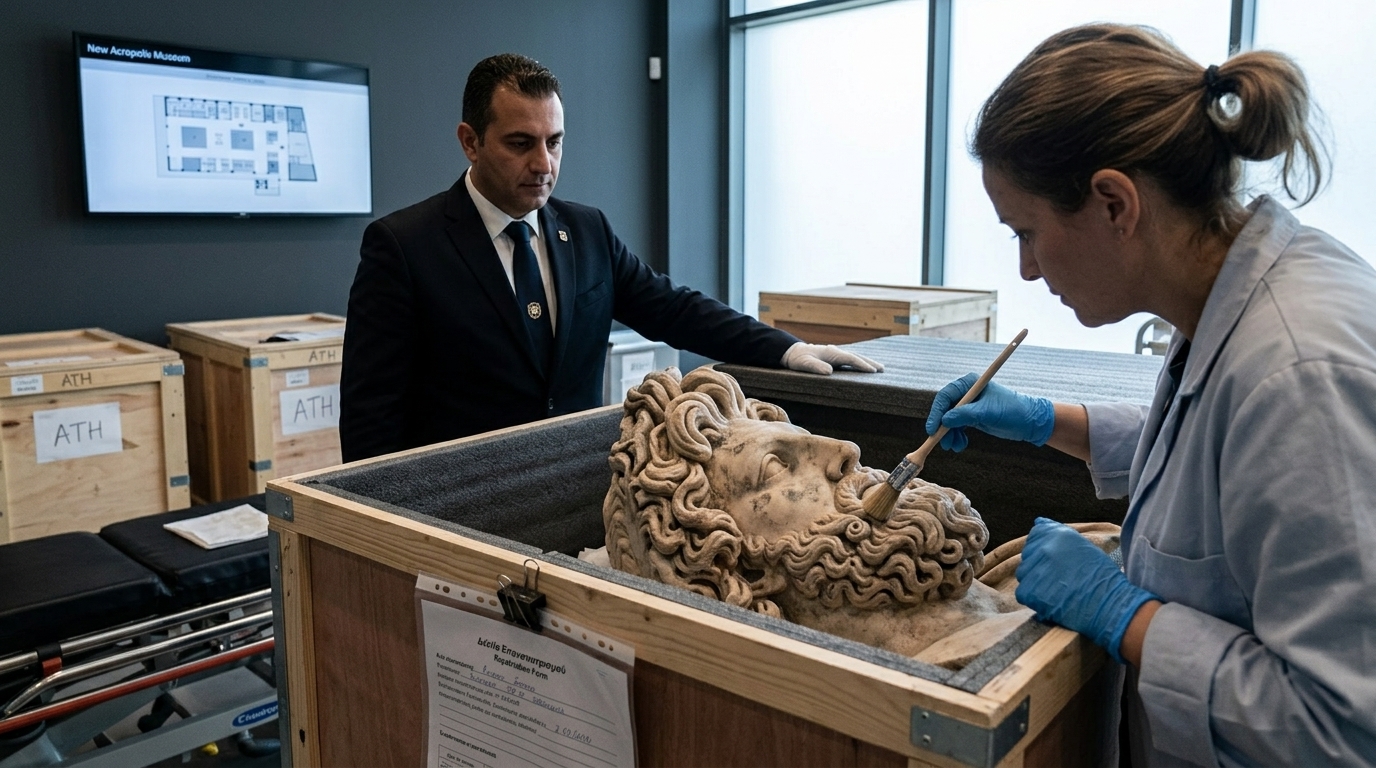
In a formal ceremony held in New York, attended by Greek Minister of Culture Lina Mendoni and Manhattan District Attorney Alvin Bragg, the return of 26 ancient artifacts illicitly removed from Greek territory was finalized. This move is not merely an act of restoring historical memory but the culmination of a multi-year, persistent investigation that exposed the operations of international networks that have preyed upon Mediterranean cultural heritage for decades.
The Investigation and the Role of the Manhattan DA
The repatriation of these items is the fruit of close cooperation between the Greek Ministry of Culture's Department of Documentation and Protection of Cultural Goods and the Antiquities Trafficking Unit (ATU) of the Manhattan District Attorney’s Office, led by Matthew Bogdanos. Bogdanos, a Greek-American former Marine, has turned the fight against antiquity trafficking into a personal crusade, targeting not just small-time smugglers but also wealthy collectors and major museums that accept items of dubious provenance.
Investigations revealed that the 26 objects originated from various illicit networks, some linked to the notorious collection of Shelby White, a prominent donor to the Metropolitan Museum of Art (MET) in New York. The White case has sent shockwaves through the art world, proving that even the most "reputable" collectors often ignored—whether intentionally or not—the illegal origins of their acquisitions.
Treasures Returning Home
Among the repatriated objects are unique specimens of Cycladic and Mycenaean art, periods that serve as the cornerstone of European civilization. Specifically, the collection includes:
- Cycladic Figurines: Iconic marble statues that inspired Modernism, looted from clandestine excavations in the Aegean islands.
- Mycenaean Vases: Intricately decorated ceramics that testify to the high level of craftsmanship and the extensive trade networks of the Bronze Age.
- Gold Jewelry and Bronze Objects: Artifacts that shed light on the social stratification and religious practices of antiquity.
The significance of these objects lies not only in their aesthetic value but primarily in the information they carry. When an object is illegally removed from its archaeological context, its "biography"—the ability of scientists to understand how and why it was used—is lost forever.
Cultural Diplomacy as a Lever of Change
The success of this operation is part of a broader Greek strategy for the repatriation of its stolen treasures. Minister of Culture Lina Mendoni emphasized that Greece will not cease to claim the return of its cultural goods using every legal and diplomatic means available. "Every object that returns to its homeland is a victory for justice and science over greed and illegality," she stated.
The international community is closely monitoring these developments as the issue of repatriating antiquities has taken on global proportions. From the Parthenon Marbles to the Benin Bronzes, pressure on major Western museums to revise their policies is intensifying. The case of the 26 artifacts from New York serves as a powerful precedent, proving that when there is political will and cooperation between law enforcement agencies, justice can prevail.
"Antiquity trafficking is not just the theft of objects. It is the theft of a people's identity and an insult to our shared human history."
Moving forward, these objects will be exhibited in Greek museums, where they will be accessible to the public and researchers, restoring the continuity of the historical narrative in the land where they were created.