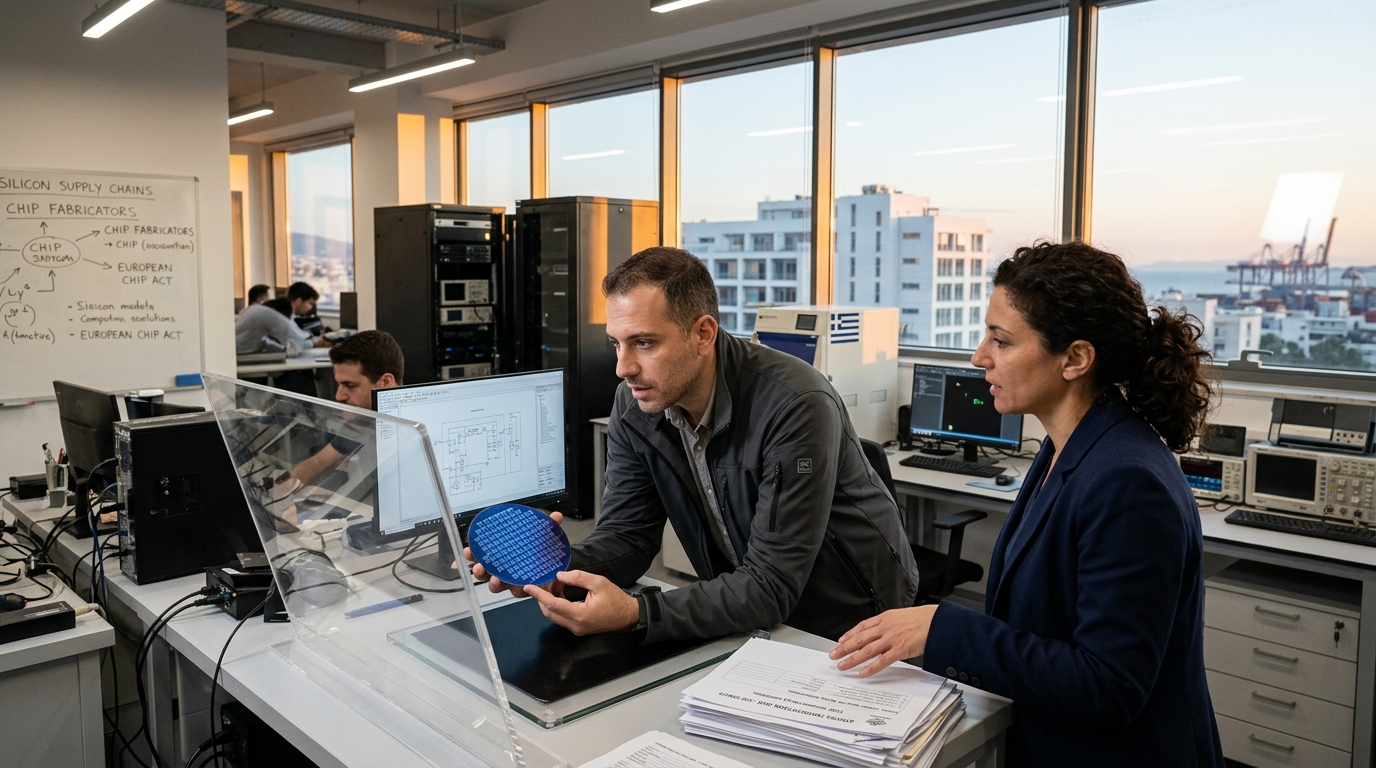
As we navigate through 2026, the technology sector faces a paradoxical reality: while artificial intelligence promises to solve humanity's most complex problems, its very existence depends on a fragile chain of physical resources. The hardware supply crisis triggered by the AI boom is no longer a transient phenomenon but a structural challenge reshaping the power balance between nations and corporations.
The Semiconductor Bottleneck
The problem isn't just about the shortage of processors themselves, like Nvidia's famous GPUs, but extends to the entire production ecosystem. TSMC's CoWoS (Chip on Wafer on Substrate) technology and the production of High Bandwidth Memory (HBM) have become the primary bottlenecks. Despite multi-billion dollar investments from giants like SK Hynix and Samsung, the demand for HBM3E and HBM4 memory exceeds all forecasts, leaving even the biggest cloud players—Amazon, Microsoft, and Google—in a constant search for available hardware.
This crisis has a direct impact on the training speed of Large Language Models (LLMs). While in 2023 the conversation centered around access to a few thousand chips, in 2026 requirements have skyrocketed to the scale of millions. This creates a "digital divide" between companies that have secured privileged deals with manufacturers and those forced to wait on lists exceeding 12 months.
Geopolitical Implications and Europe's Position
The reliance on Taiwan remains the "Achilles' heel" of the global economy. Efforts by the US and the European Union to move production to their own soil through Chips Acts are bearing fruit, but at a pace that doesn't match the speed of the AI revolution. In Greece, the discussion about attracting large-scale data centers often hits the wall of high equipment costs and the energy burden they entail.
"We are no longer just buying chips; we are buying the right to future innovation," says a senior executive from a leading tech firm.
Europe's strategic autonomy depends on its ability to be not just a consumer but also a producer of critical components. The hardware supply crisis is forcing governments to view computing not as a service, but as a critical national security infrastructure, equivalent to the power grid or water supply.
The Shift Toward Specialized Hardware
A significant development observed in 2026 is the gradual move away from general-purpose GPUs toward ASICs (Application-Specific Integrated Circuits). Companies like Apple and Tesla are developing their own chips, tailored precisely to their algorithmic needs. This "vertical integration" trend is the answer to the supply crisis: if you can't find hardware on the market, you must design it and order it directly from the foundry.
- Model training costs have increased by 40% due to shortages.
- Development of alternative architectural methods (e.g., Neuromorphic computing).
- Focus on energy efficiency as a means to reduce the need for additional hardware.
In conclusion, the AI-driven hardware supply crisis is not merely a business hurdle. It is the catalyst for a new industrial revolution, where compute is treated as the most precious commodity of the 21st century. Greece and Europe must move swiftly to secure their position on this new map, investing in both infrastructure and specialized human capital capable of optimizing the use of these limited resources.