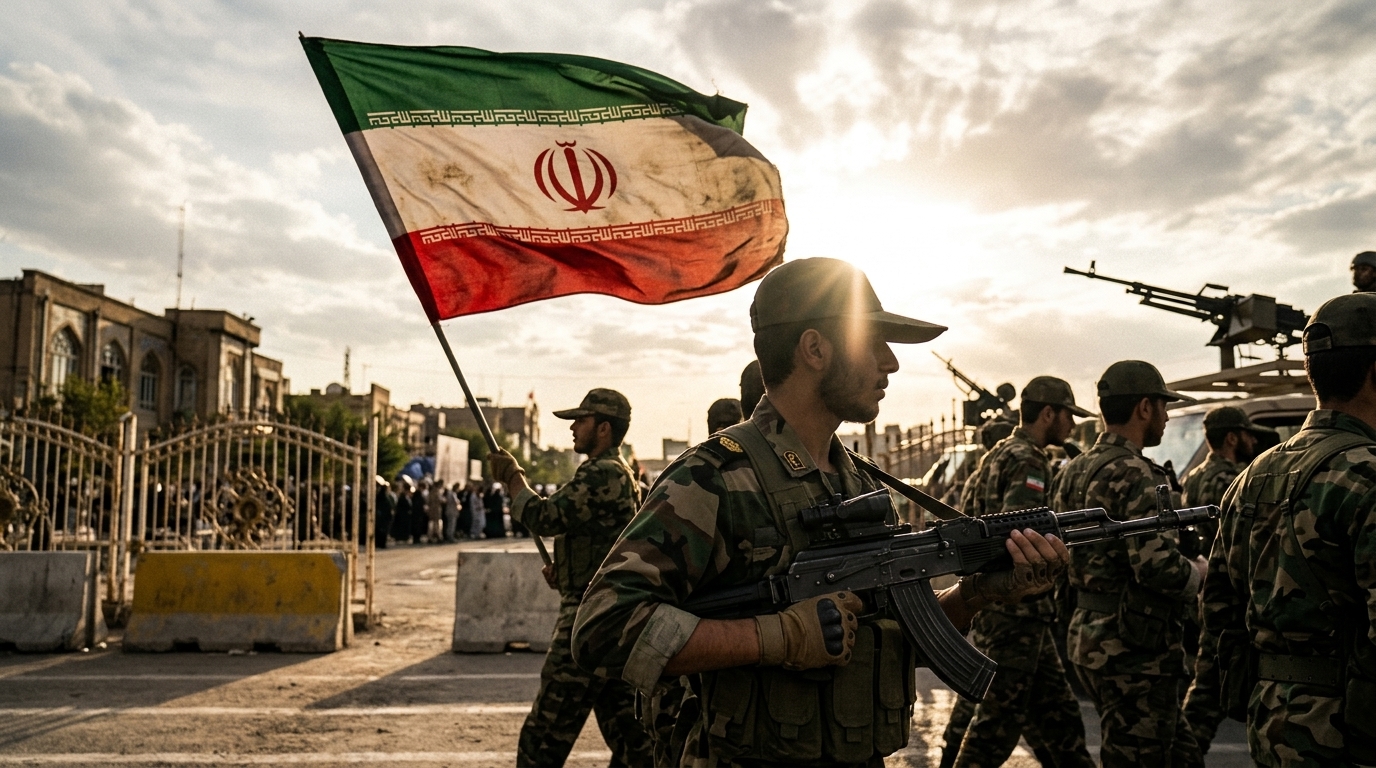
The Middle East stands at a historic crossroads, with Tehran acting as the central pivot of an equation that threatens to upend the global geopolitical balance. The question occupying analysts and diplomats is no longer merely whether Iran can survive a generalized conflict, but whether it will emerge with a fortified regional role. Iran’s strategy rests on a dual pillar: asymmetric power through its proxies and control over the Strait of Hormuz, the world’s most vital energy artery.
The Strait of Hormuz as an Economic Weapon
The Strait of Hormuz represents Tehran's ultimate geostatistical leverage. Approximately 20-30% of global oil consumption passes through this narrow waterway daily. For Iran, the threat of closing the Strait is not just rhetorical flair; it is an 'economic nuclear option.' Should Tehran perceive an existential threat to the regime, disrupting the flow of crude would trigger a global economic shock, sending energy prices skyrocketing and inducing inflationary chaos in Western economies.
However, wielding this weapon is fraught with peril. Tehran is acutely aware that such a move would alienate not just the West, but also China—its primary oil customer and a crucial strategic partner. The balance Tehran maintains is delicate: it uses the Strait as a deterrent, avoiding the total rupture that would lead to an all-out war with the United States.
The 'Axis of Resistance' and Regional Influence
The 'Axis of Resistance'—comprising Hezbollah in Lebanon, the Houthis in Yemen, and various Shiite militias in Iraq and Syria—serves as Tehran’s long arm. Despite significant losses sustained by these groups due to Israeli operations, Iran has demonstrated its ability to wage a war of attrition without directly exposing its own territory. The Houthis' ability to strike commercial shipping in the Red Sea is a microcosm of what could occur in the Persian Gulf.
- Hezbollah remains the world’s most powerful non-state military, acting as a primary deterrent against an Israeli strike on Iranian soil.
- The Houthis have transformed the Red Sea into a high-risk zone, proving that low-cost drone technology can neutralize traditional naval superiority.
- Militias in Iraq continue to pressure for the withdrawal of US forces, serving Tehran’s long-term goal of a Middle East free of Western military presence.
Internal Cohesion and the Pivot to the East
On the home front, Iran faces severe challenges, from economic stagnation due to sanctions to social unrest. Nevertheless, the leadership in Tehran bets on the nationalism triggered by external threats. The 'Look East' strategy has deepened ties with Russia and China, providing Iran with diplomatic cover at the UN Security Council and economic lifelines through BRICS and the Shanghai Cooperation Organization.
"Iran is not just playing a game of chess in its neighborhood; it is participating in a global realignment of power where the West is no longer the sole arbiter," international relations experts suggest.
In conclusion, whether Iran emerges stronger depends on its capacity to maintain deterrence without triggering a catastrophic direct confrontation. Tehran is banking on Western fatigue and the global need for energy market stability, believing that time is on its side. If it manages to preserve its proxy network and impose a new 'normal' in the region, its influence will be more entrenched than ever before.