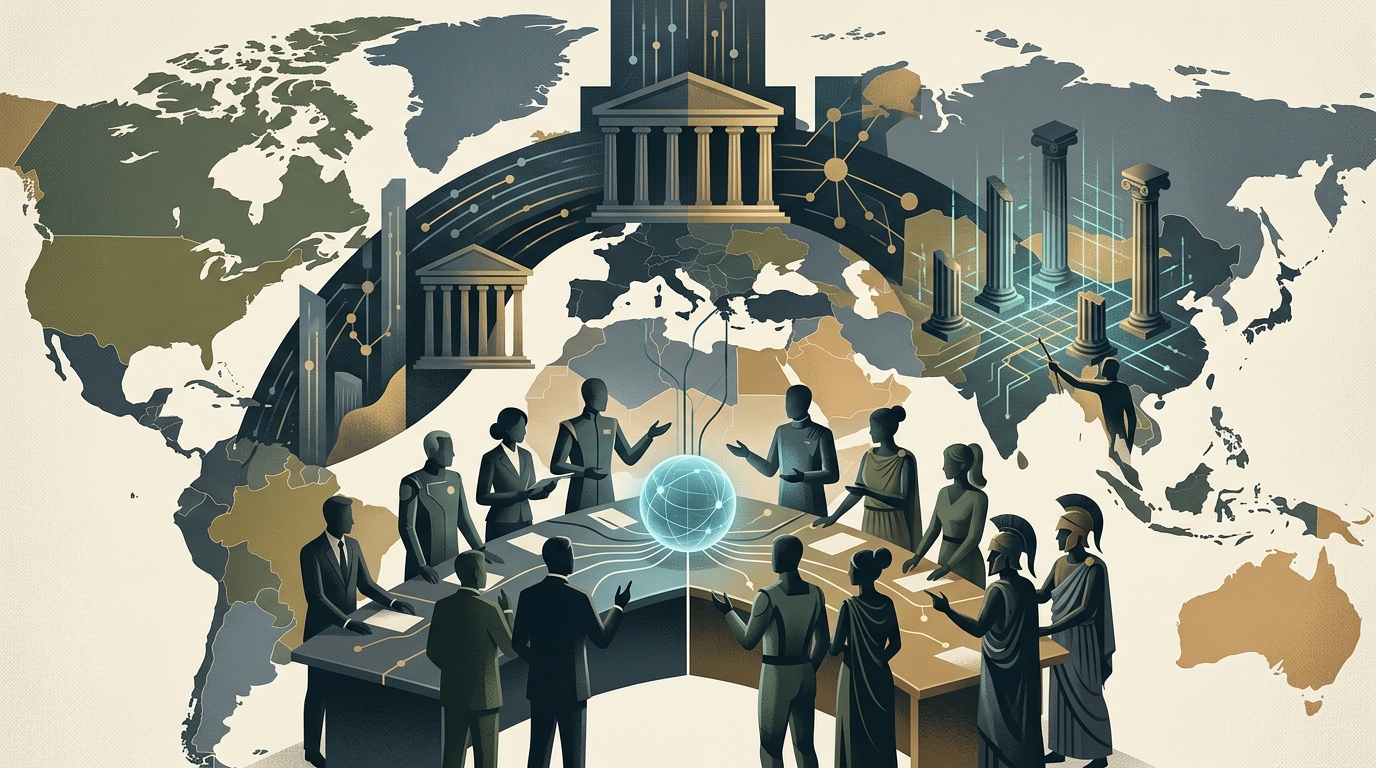
In the heart of 21st-century geopolitical competition, Artificial Intelligence (AI) has transformed from a productivity tool into a critical national security front. Washington, having already imposed strict export controls on high-end semiconductors to China, is now turning its gaze in the opposite direction: the import and use of Chinese AI models by American corporations. However, the emergence of "open-weight" models, such as those from DeepSeek, has created a technical and legal challenge that traditional sanctions struggle to address.
The DeepSeek Rise and the Market Shock
Until recently, Silicon Valley's dominance was taken for granted. Models like OpenAI’s GPT-4 and Anthropic’s Claude set the standards. But the arrival of China’s DeepSeek changed the calculus. With its DeepSeek-V3 and the subsequent R1 model, the company proved it could deliver frontier-level performance at a fraction of the training cost of its American rivals. More importantly, these models are offered with open weights.
Unlike "closed" AI, where the user interacts with the model via an API (Application Programming Interface) controlled by the provider, open-weight models allow companies to download the entire code and model parameters to their own servers. This means an American firm can run Chinese AI locally, with no external connection to Beijing, making regulatory oversight and enforcement extremely difficult.
National Security vs. Corporate Competitiveness
For the U.S. Department of Commerce and the National Security Council, the presence of Chinese AI within the fabric of the American economy is seen as a "Trojan Horse." Concerns range from hidden vulnerabilities (backdoors) to the collection of sensitive training data and the reliance of U.S. infrastructure on Chinese intellectual property. Lawmakers fear that if American banks, energy giants, and logistics firms rely on Chinese algorithms, Beijing will gain a lever of influence that could be pulled in the event of a conflict.
On the other hand, American businesses are in a bind. Chinese AI is often more cost-effective and, in some cases, more efficient for specific tasks like coding or data analysis. Banning these tools could increase operational costs and reduce the competitiveness of U.S. firms against European or Asian rivals who are not bound by similar bans. The question arises: Can Washington enforce a software "Iron Curtain" in a globalized digital world?
The Technical Futility of Bans
Traditional sanctions work well for physical goods or centralized services. If the government bans TikTok, it can pressure app stores to remove it. If it bans Alibaba’s closed AI, it can block the IP addresses of its servers. But with open weights, the genie is out of the bottle. Once DeepSeek-R1 was uploaded to platforms like Hugging Face or GitHub, thousands of copies were dispersed worldwide.
Enforcing a ban would require the U.S. government to police the internal networks of every major corporation to identify "illegal" code. This would represent an unprecedented intervention into corporate autonomy and require massive resources. Furthermore, developers can easily fine-tune these models, changing their "fingerprint" and making detection via automated systems nearly impossible.
Toward a New Cold War Internet Architecture
The current standoff suggests we are heading toward a fragmentation of the internet (splinternet), not just at the content level, but at the level of computational intelligence. Washington is now considering new legislative frameworks that would require companies to disclose the origin of the AI models they use, imposing heavy fines for non-compliance. However, the history of technology has shown that open source tends to bypass geopolitical borders.
The battle for AI is no longer just about who has the fastest processors, but about who controls the "weights" that define machine thought. As China continues to invest in open AI as a means to bypass U.S. containment, Washington must decide whether to sacrifice the open nature of technological innovation at the altar of national security.