In the mid-summer of 2026, the artificial intelligence landscape bears little resemblance to the early days of the LLM explosion. While Western discourse remained entangled in safety debates and regulatory frameworks, China launched a strategic offensive that analysts are calling the "AI token takeover." This is not merely a technological leap; it is a coordinated economic and geopolitical gambit aimed at seizing control of the world’s digital infrastructure.
The Token Price War: Commoditizing Intelligence
Over the past several months, Chinese tech giants including Alibaba, Baidu, and Tencent, alongside agile newcomers like DeepSeek and Moonshot AI, have engaged in a brutal price war. The cost per million tokens—the fundamental unit for measuring AI processing—has plummeted by over 90%. In many instances, access to models performing at GPT-4 levels is now being offered to developers for near-zero costs.
- Alibaba Cloud slashed prices for its Qwen models by up to 97%.
- ByteDance entered the fray with its Doubao model, offering rates that make American alternatives economically unviable for high-volume enterprise use.
- DeepSeek introduced architectures that require significantly less computational overhead than their Western counterparts.
This strategy is not about immediate profitability. Instead, it is a classic "blitzscaling" move to ensure vendor lock-in. By turning intelligence into a commodity with zero marginal cost, Beijing is shifting the locus of power from those who own the model to those who control the scale and the integration of the ecosystem.
Geopolitical Resilience and the Sanctions Pivot
The Chinese "token takeover" serves as a direct counter-maneuver to U.S. export controls on high-end semiconductors, such as Nvidia’s H100 and B200 series. Rather than simply attempting to clone the hardware, China has pivoted toward algorithmic efficiency—developing models that can achieve state-of-the-art results on less sophisticated hardware or domestic chips from Huawei and Biren.
"Innovation in China is no longer driven by resource abundance, but by the necessity of overcoming constraints. Token efficiency is our new strategic deterrent," says a senior tech executive based in Shanghai.
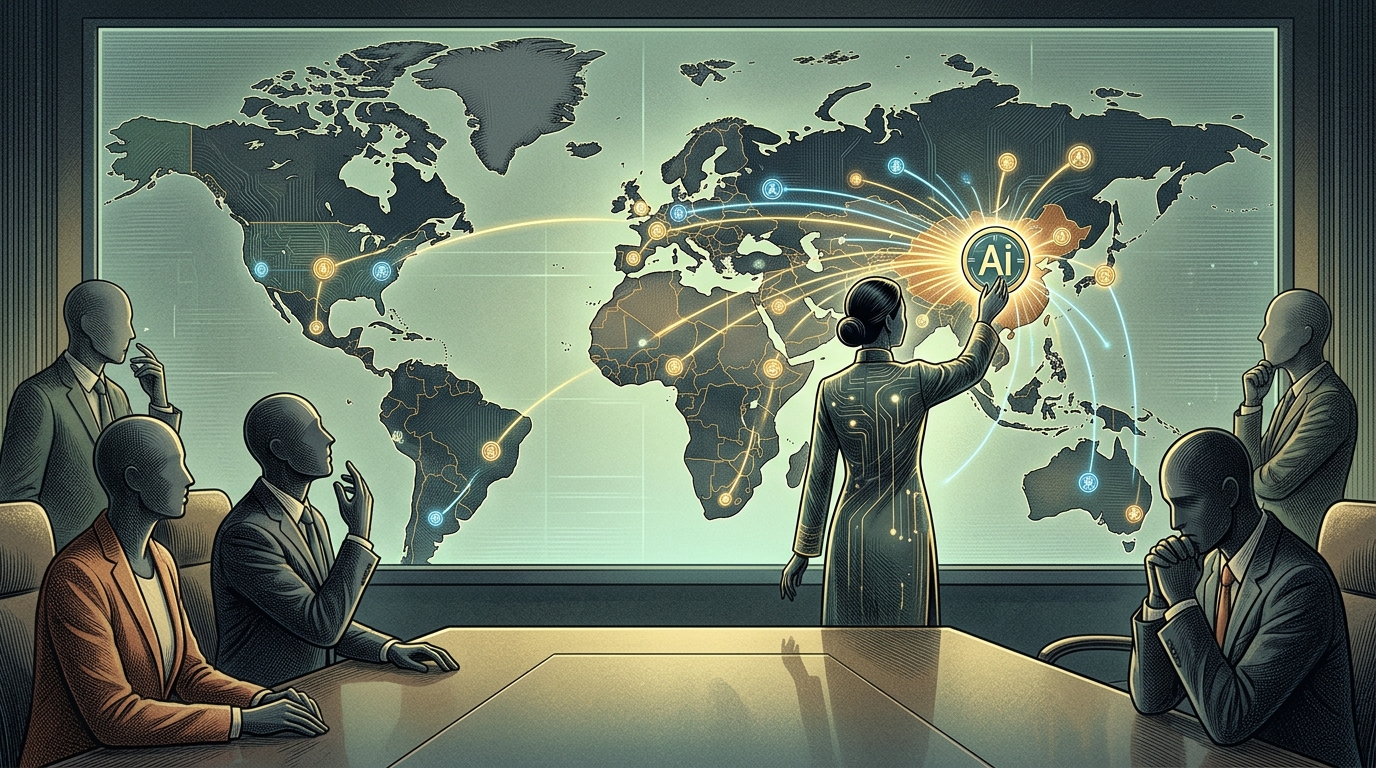
The geopolitical implications are profound. Nations across the Global South, from Southeast Asia to Africa and Latin America, are increasingly gravitating toward Chinese AI solutions. The combination of low costs, high performance, and the absence of Western-style political conditionalities makes Chinese tokens the preferred choice for governments looking to digitize their bureaucracies and economies without the premium price tag of Silicon Valley.
The DeepSeek Disruption: A New Paradigm
DeepSeek has emerged as the standard-bearer for this new era. With the release of its V3 and R1 models, it demonstrated that China could produce top-tier AI that not only rivals OpenAI and Anthropic but surpasses them in cost-effectiveness. DeepSeek’s ability to train world-class models at a fraction of the traditional budget has shattered the myth that AI development is solely a game of whoever has the most capital and the most GPUs.
The result is a nascent bipolar AI world. China is exporting artificial intelligence as a public utility—much like electricity or water—establishing a new form of digital dependency. As Western companies focus on high-margin enterprise software, China is building the foundation of the global AI economy, one token at a time.