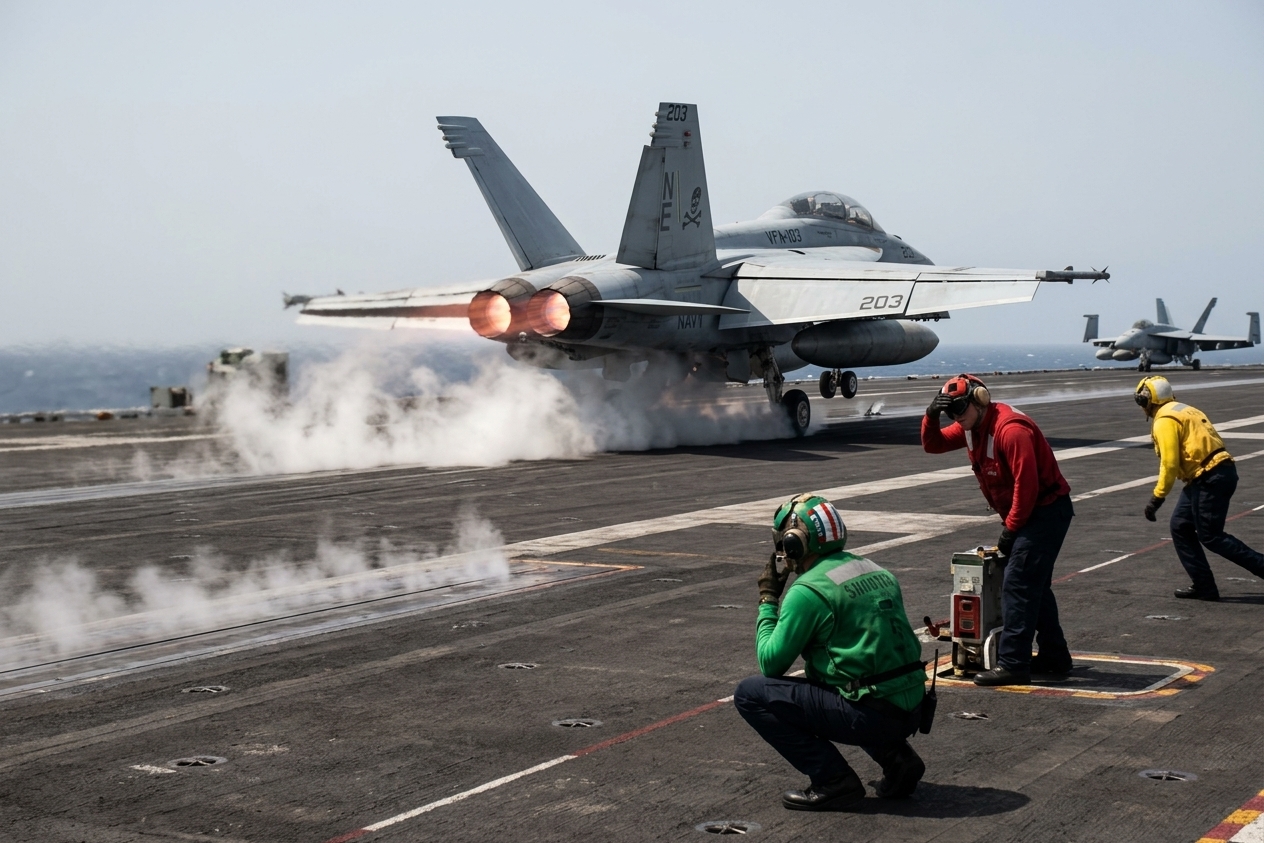
The geopolitical chessboard of 2026 is undergoing a violent reshaping as the escalating conflict with Iran begins to expose the limits of American military might and, more critically, its industrial capacity. In a move that has sent shivers through European capitals, the State Department and the Pentagon have formally notified London and Warsaw that scheduled deliveries of critical weapon systems—including Patriot interceptors and precision-guided munitions—will face significant delays. The reason is stark: the necessity of shielding American forces and regional allies in the Middle East against the Iranian threat has become Washington’s absolute priority.
The Strategy of 'Hard Choices'
For decades, American defense doctrine was predicated on the ability to fight two major regional wars simultaneously. However, the reality of 2026 demonstrates that theory fails when supply chains are pushed to their breaking point. Iran, through its extensive use of drone swarms and ballistic missiles, has forced the US to expend vast quantities of interceptor missiles. These missiles, the 'crown jewels' of the US air defense umbrella, are not being produced at rates that allow for the simultaneous coverage of three fronts: the Middle East, Ukraine, and the reinforcement of NATO’s Eastern Flank.
The warning to the UK and Poland is not merely a bureaucratic hiccup; it is a profound political statement. Poland, which has embarked on the most ambitious rearmament program in its post-Cold War history, relies on American guarantees to deter Russian aggression. The delay in delivering Patriot systems and HIMARS launchers creates a security vacuum that Warsaw views as existential. Meanwhile, London, the US’s closest ally, sees its own defense modernization 'frozen' as stocks intended for the Royal Navy are redirected to the US Central Command (CENTCOM).
The Defense Industrial Bottleneck
The problem is not just financial; it is structural. The US defense industrial base, despite billions of dollars in investment over recent years, is struggling with shortages of rare earth materials, skilled labor, and antiquated production lines that cannot scale overnight.
"We cannot 3D-print missiles in a single night," a senior Pentagon official remarked, highlighting the gap between geopolitical ambitions and industrial reality.
This situation bolsters voices within the European Union calling for "strategic autonomy." If Washington is forced to choose between protecting Israel and its Gulf bases over reinforcing Poland, then Europe must ask itself: what happens if a crisis erupts in Taiwan? Dependence on a single supplier, no matter how powerful, is proving risky in a multipolar world where hotspots ignite simultaneously.
Implications for Eastern Europe
In Warsaw, the news was met with restrained fury. The Polish government has invested massive political capital in the belief that the US will always be there. These delays allow Moscow to project the narrative that the West is "running out of steam." While the US reassures that its commitment to NATO’s Article 5 remains ironclad, the physical absence of hardware on the ground speaks louder than diplomatic platitudes.
In conclusion, Washington's warning is a flare sent up for the entire Western security architecture. The conflict with Iran is not a regional skirmish but a catalyst forcing the superpower to admit it can no longer be the "world's policeman" without cost to its traditional allies. The era of weapon abundance is over, and the era of strategic rationing has begun.