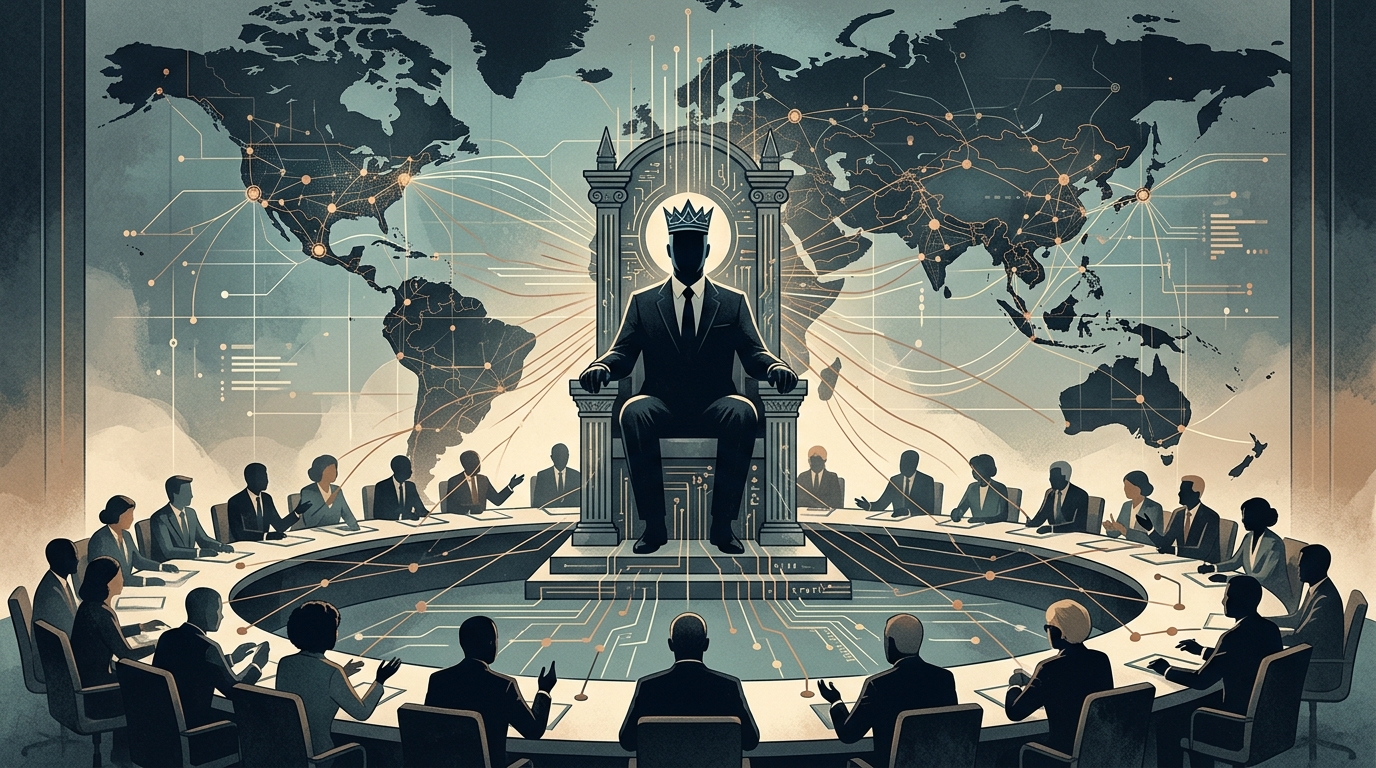
In a move reminiscent of the most intense periods of the Cold War, the United States State Department has issued an unprecedented global warning to allied governments and the private sector. At the heart of this diplomatic firestorm is DeepSeek, the Chinese AI startup that recently rattled Silicon Valley by announcing a model that delivers GPT-4 class performance at a fraction of the training cost. According to a confidential diplomatic cable (demarche) revealed by Reuters, Washington contends that this "efficiency" is not merely a product of Chinese ingenuity, but the result of systematic intellectual property theft and the circumvention of export controls.
Washington's Diplomatic Counter-Offensive
The State Department has instructed its embassies worldwide to brief host nations on the risks associated with adopting Chinese AI technologies. The U.S. government alleges that DeepSeek and other Chinese firms utilize illicit methods to gain access to Western training data and model architectures. The concern is not merely commercial; it is deeply geopolitical. Artificial Intelligence is now regarded as the "dual-use technology" of the 21st century, with applications ranging from cybersecurity to the design of advanced weaponry.
The demarche specifically mentions that DeepSeek may have employed "model distillation" techniques on Western models without authorization—essentially "distilling" the knowledge gathered through billions of dollars in investment by companies like OpenAI, Google, and Meta. This practice, while technically sophisticated, allows a follower to bypass the costly trial-and-error stages of development, achieving the same results with minimal expenditure.
The DeepSeek Phenomenon and Market Panic
Why has DeepSeek triggered such an alarm now? A few weeks ago, the company released its R1 model, claiming it was trained for a mere $5.6 million, whereas comparable U.S. models require hundreds of millions or even billions in Nvidia GPU infrastructure. This "Chinese miracle" sent shockwaves through stock markets, leading to a temporary loss of billions in market capitalization for U.S. semiconductor giants, as investors feared the competitive moat of Nvidia and Big Tech was evaporating.
However, the U.S. is pushing back with the argument that DeepSeek is not an independent startup but an arm of Chinese state strategy for AI dominance. The fact that the company is linked to High-Flyer Quant, a powerful Chinese quantitative investment firm, and has access to massive compute clusters despite sanctions, raises questions about how it acquired the necessary hardware. Washington suspects a network of shell companies is funneling high-end chips into China, violating the restrictions currently in place.
National Security and the Future of Open Source
One of the most thorny aspects of this case is DeepSeek's use of the open-source model. The company published its model weights, allowing anyone to download and run them. While this was hailed by the developer community as a democratic move for AI, the State Department views it as a "Trojan horse." The concern is that through these models, China could harvest data from global users or insert backdoors that could be exploited in future cyberattacks.
Furthermore, Washington fears that reliance on Chinese AI models will grant Beijing the ability to control global information flows and impose its own ethical and political parameters on algorithms. "It's not just about stealing code; it's about stealing the future of digital governance," a senior U.S. official reportedly stated in the cable.
Conclusions and Outlook
This move marks a new phase in the U.S.-China technological rivalry. It is no longer enough to ban chip exports; the U.S. is now attempting to build a global front against Chinese AI software. The implications for businesses will be immense, as they will be forced to choose sides in a bifurcated digital ecosystem. DeepSeek, for its part, denies the allegations, citing "technological bullying" and an attempt by the U.S. to maintain a monopoly that is now crumbling due to Chinese innovation.
The remaining question is whether diplomacy can stop the spread of code that is already on the internet. The battle for Artificial Intelligence is no longer fought only in labs, but in embassies and national security councils, making it clear that the algorithm is the most powerful currency of our time.