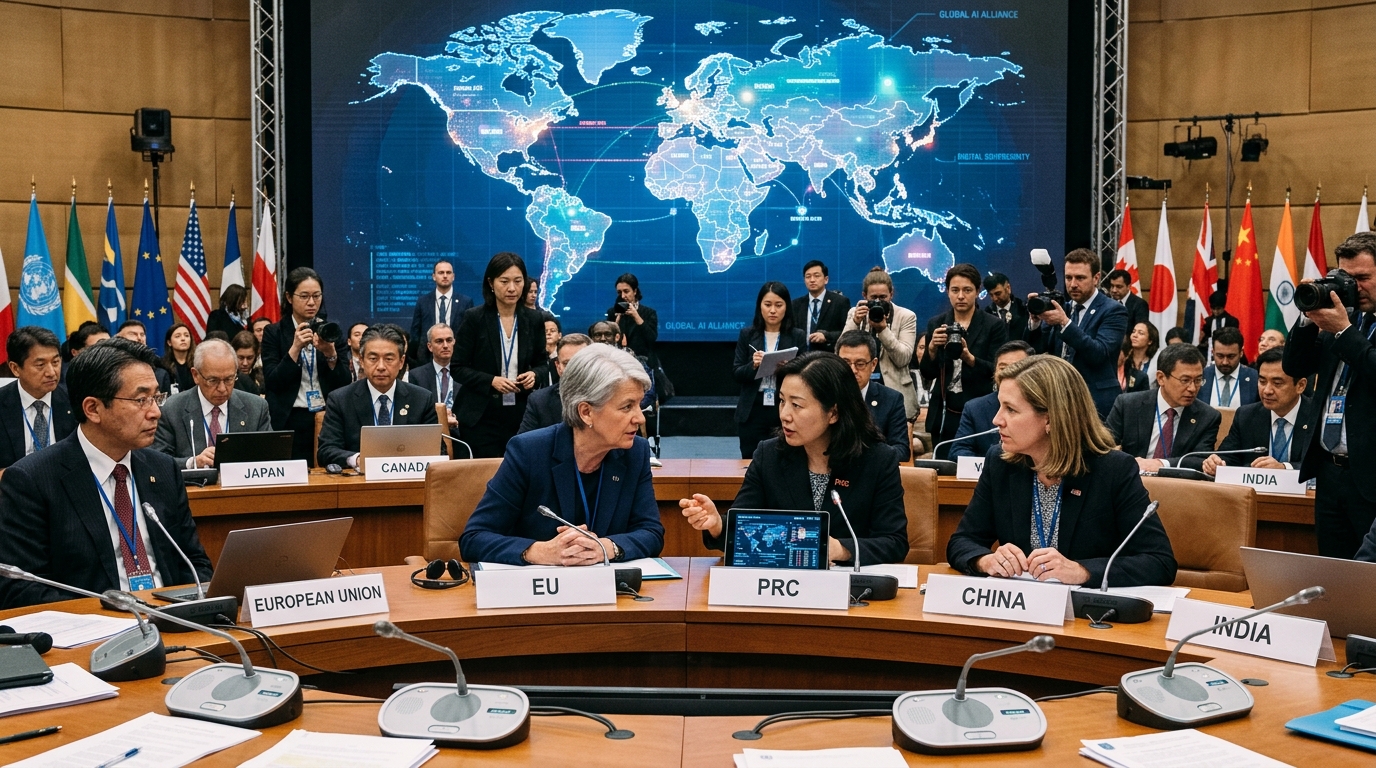
The global AI chessboard is shaking following revelations of a sophisticated smuggling network for high-end semiconductors. According to a Bloomberg report, US authorities now harbor strong suspicions that Nvidia chips, strictly controlled under export mandates, are reaching the warehouses of Chinese tech titan Alibaba through third-party intermediaries, with Thailand serving as a primary hub. This development highlights the immense difficulty of enforcing technological blockades in a globalized economy where the hunger for compute power overrides legal and ethical boundaries.
The Southeast Asian Network and the Thailand Connection
Thailand, traditionally a major logistics hub in Asia, appears to have transformed into a 'laundry' for semiconductors destined for China. US intelligence agencies and the Department of Commerce have been monitoring the flow of H100 and A100 Graphics Processing Units (GPUs) for months. These units are essential for training Large Language Models (LLMs). The method is simple yet effective: shell companies based in Bangkok or the Rayong province order the chips from legitimate distributors, claiming they are for local data centers or academic research. Once the cargo lands on Thai soil, it is repackaged and covertly shipped via land or sea to China.
The fact that Alibaba is allegedly the end recipient of these shipments complicates the situation. Alibaba is not just an e-commerce company; it is China’s largest cloud provider and a leader in domestic AI development. For Beijing, access to Nvidia’s technology is a matter of national survival in the race for AI supremacy, as domestic alternatives, though improving, still lag significantly in performance and software ecosystem support.
The Impotence of Export Controls
Washington has invested massive political capital in enforcing the restrictions of October 7, 2022, and their subsequent updates. However, the reality on the ground suggests these controls are akin to trying to hold water with bare hands. The black market for chips in China is booming, with prices for an H100 card sometimes reaching double their original value. Intermediaries in Thailand, Malaysia, and Vietnam are reaping enormous profits, exploiting legislative loopholes and the inability of local authorities to inspect every container crossing the border.
"It is no longer a question of whether chips reach China, but how fast and in what quantities," says a security analyst monitoring Asian trade flows. "The supply chain is so fragmented that Nvidia, despite its efforts, cannot know where every chip ends up after the second or third resale."
Geopolitical Consequences and Washington’s Response
This case is expected to trigger a new round of diplomatic tension between the US and Thailand. Washington may pressure the Bangkok government to tighten customs controls, potentially threatening secondary sanctions on Thai firms. Meanwhile, within the US, voices are growing louder for even more drastic measures, such as requiring Nvidia and other manufacturers to embed geofencing systems into chip hardware, allowing them to be remotely disabled if detected in unauthorized territories.
For Alibaba and other Chinese giants like Tencent and Baidu, the risk is existential. If the US manages to seal the Thailand route, the development of Chinese LLMs could slow down significantly, giving a lead to US firms like OpenAI and Google. However, history has shown that as long as there is a technological gap and a financial incentive, smuggling routes will always find new paths—perhaps through Central Asia or the Middle East—making the tech war a perpetual game of cat and mouse.