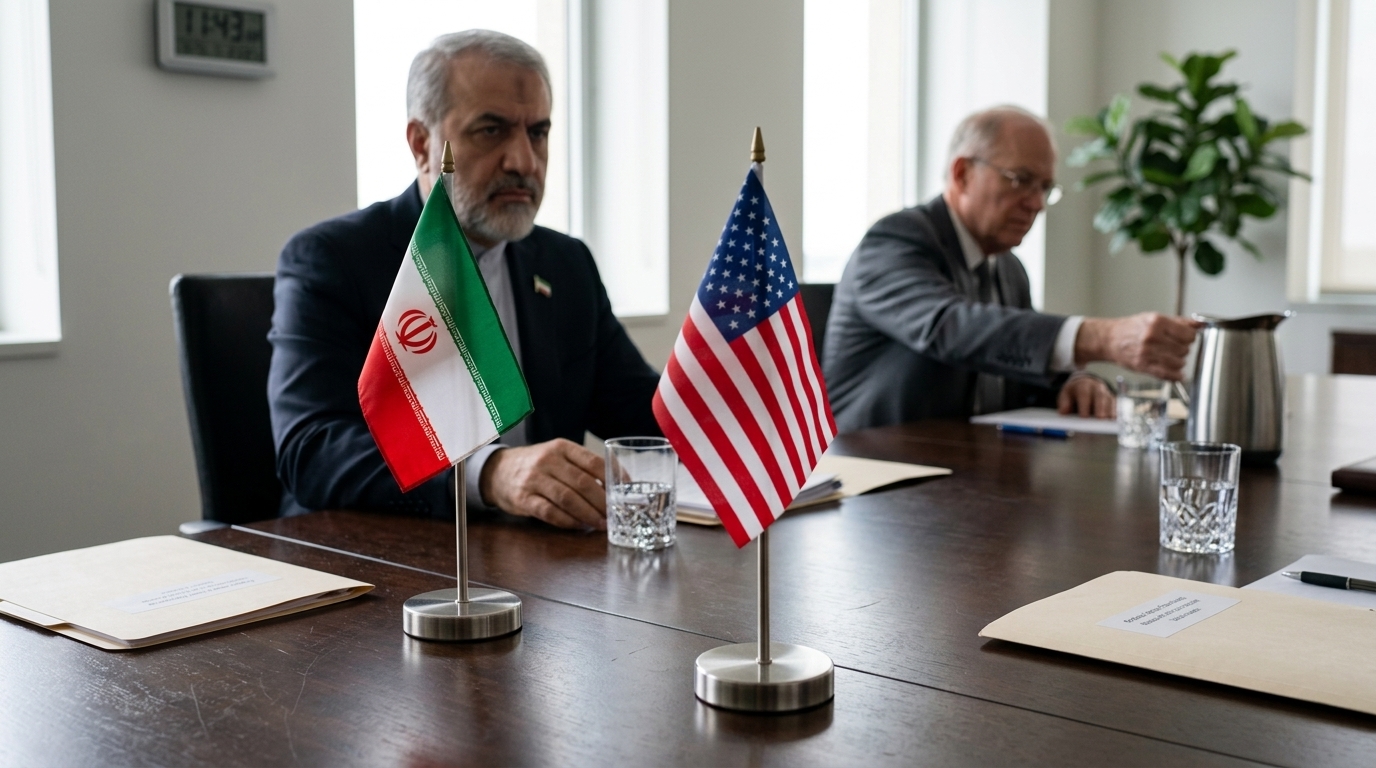
At a critical juncture for international security, diplomatic efforts between the United States and the Islamic Republic of Iran appear to be yielding results, as a seven-point draft agreement comes to light. Following months of back-channel negotiations in third-party locations such as Oman and Qatar, the memorandum of understanding revealed by Bloomberg and echoed by international media is not merely a ceasefire, but a roadmap for redefining the balance of power in the Middle East. The timing is particularly sensitive, as the region remains trapped in a vicious cycle of violence that threatens to escalate into a full-scale regional war.
The Core of the Deal: 7 Points to Change the Game
The proposed draft is not limited to a simple ceasefire in Gaza or Lebanon; it spans a broad spectrum of geopolitical and economic issues. The first and perhaps most significant point concerns the immediate and complete cessation of hostilities by all Iranian "proxies" in the region, including Hezbollah and the Houthis. In exchange, the US commits to a gradual easing of the economic sanctions that have been strangling the Iranian economy in recent years.
The second point focuses on the security of navigation in the Red Sea, an issue that has caused tremors in global trade. Iran is called upon to guarantee the termination of Houthi attacks, ensuring the flow of goods through the Suez Canal. The third point addresses Tehran's nuclear program, reintroducing stricter inspections by the IAEA, without, however, fully reviving the 2015 JCPOA, which is now considered obsolete by Washington.
The fourth and fifth points concern humanitarian aid and prisoner exchanges. The plan envisions the creation of a secure corridor for aid into Gaza and the reconstruction of infrastructure in southern Lebanon. Simultaneously, a new formula for the release of Western detainees from Iran and Iranian citizens from the US is on the table. The final two points focus on the future security architecture: a commitment to no further expansion of Israeli settlements and the creation of a regional dialogue forum including Gulf states, Iran, and Israel.
The Proxy Challenge and the Domestic Front
Implementing this agreement faces massive hurdles. For Washington, the greatest risk is Tehran's credibility. Can Ayatollah Khamenei truly exert full control over Hezbollah or the Houthis, who have acquired their own operational autonomy? Furthermore, the Biden administration faces intense pressure from Congress, where many view any deal with Iran as "capitulation."
On the other hand, Tehran is in a dire economic position. Inflation and social unrest are forcing the regime to find a way out of isolation. However, hardliners within the Islamic Revolutionary Guard Corps (IRGC) see the deal as a threat to their regional influence. The "strategic patience" Iran has exhibited over the past months seems to have been the prelude to this negotiation, but the internal power struggle in Tehran remains a volatile factor.
Geopolitical Impact: Israel and Saudi Arabia
Israel is monitoring developments with extreme suspicion. For the Netanyahu government, any recognition of Iran's role in the Middle East constitutes an existential threat. However, the pressure from Washington for a comprehensive solution is stronger than ever. Saudi Arabia, conversely, seems to favor such a development, as it wishes to focus on its economic Vision 2030, away from regional conflicts.
The success of the deal would signify a transition from a "hot" proxy war to a "cold" peace, where competition is conducted through economic and diplomatic means. If the draft becomes reality, we would be talking about the most significant diplomatic achievement of the 21st century in the Middle East, which could stabilize energy prices and prevent a global economic shock.
Conclusion
The 7-point draft is a bold attempt to end a war that has no winners, only losers. Yet, the distance from a "draft" to "signing" and "implementation" is vast. The coming weeks will show whether diplomacy can prevail over arms or if we are merely in a pause before the next, more violent flare-up.
- The deal aims for a total cessation of attacks by Iranian proxies.
- Gradual sanctions relief is offered in exchange for nuclear monitoring.
- Red Sea security is a top priority for global trade stability.
- Israel remains the most challenging player in the acceptance equation.