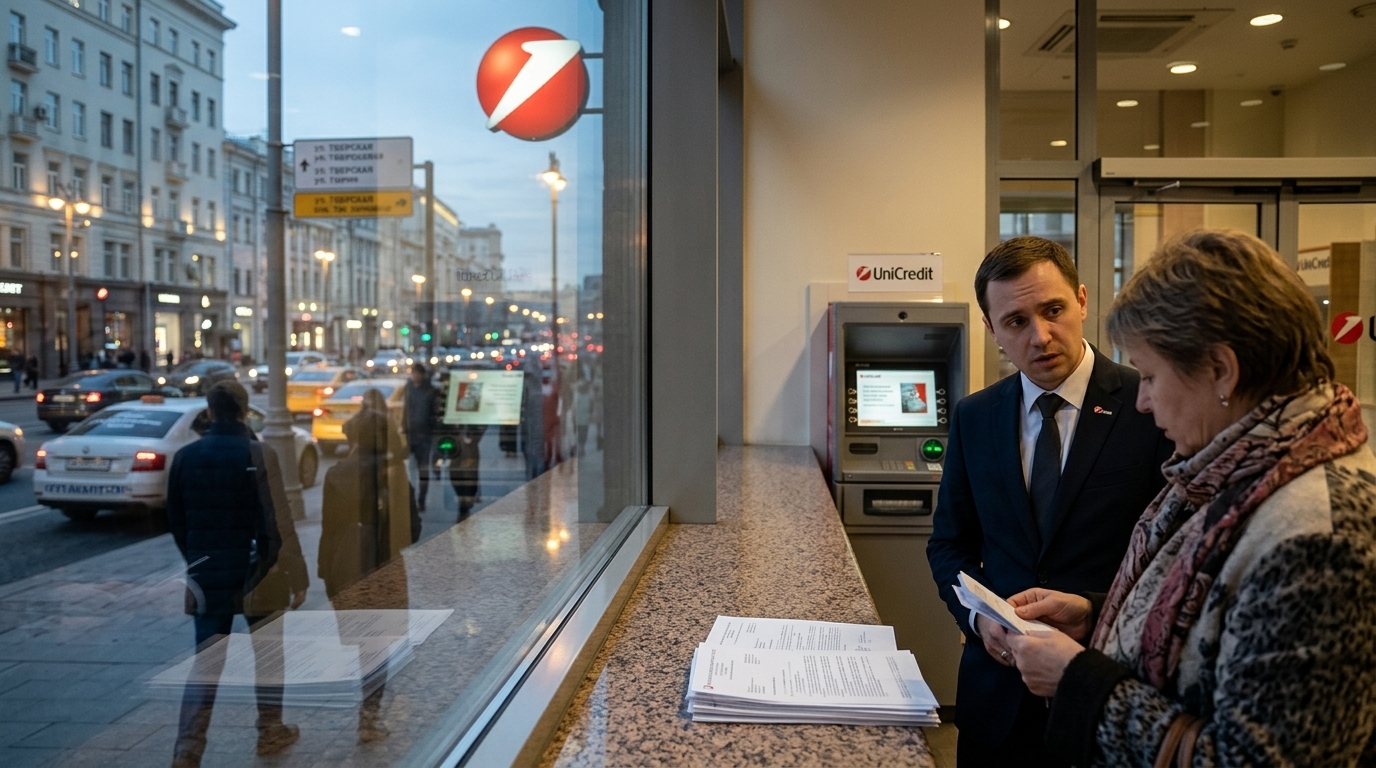
UniCredit’s announcement regarding the sale of a significant portion of its Russian operations to an investment vehicle from the United Arab Emirates (UAE) is far more than a routine banking update. It is the culmination of a two-year struggle to extricate itself from a geopolitical quagmire that threatened not only its profitability but its standing in Western capital markets. This multi-billion euro move marks the beginning of the end for one of the largest European presences in the Russian economy, coming at a time when the European Central Bank (ECB) is intensifying pressure for a complete decoupling.
Strategic Deadlock and the Gulf Escape Route
Since the onset of the invasion of Ukraine in 2022, UniCredit, under the leadership of CEO Andrea Orcel, has found itself in an extraordinarily difficult position. With assets once exceeding €10 billion in Russia, the bank was trapped between the demands of Frankfurt’s regulators and the draconian laws of the Kremlin, which prohibit the sale of banking assets without the personal approval of Vladimir Putin.
The choice of a UAE-based investor is calculated. The Emirates have emerged as a critical financial intermediary, maintaining a stance of "active neutrality" that allows them to engage with both the West and Moscow. For UniCredit, this deal serves as a "bridge," enabling the transfer of risk and capital to a jurisdiction that is not bound by the same sanctions as the EU, yet remains integrated into the global financial system. The agreement involves the transfer of equity stakes and a gradual reduction of the bank’s exposure to Russian loans—a process the ECB is monitoring with extreme scrutiny.
ECB Pressure and the Risk Factor
Frankfurt has never hidden its concerns. European banks remaining in Russia—most notably UniCredit and Austria’s Raiffeisen Bank International (RBI)—have been accused of indirectly financing Russia’s war machine through the taxes paid to the Russian state. Furthermore, the risk of asset seizure as retaliation for Western sanctions has remained a constant threat. Recently, Russian courts ordered the freezing of hundreds of millions of euros in UniCredit assets following legal disputes related to canceled gas projects, proving that the environment has turned decisively hostile.
Andrea Orcel, known for his aggressive and rationalist approach, had to balance the preservation of shareholder value with compliance with geopolitical mandates. Selling to an Emirati investor allows UniCredit to "cleanse" its balance sheet of toxic Russian elements, even if it means recognizing significant losses or accepting a valuation below book value. In essence, the bank is buying its freedom.
Implications for the European Banking Sector
This move by UniCredit sets a precedent that will place immense pressure on Raiffeisen, which remains the most exposed Western bank in Russia. If UniCredit successfully completes the transfer without drawing the ire of Moscow or a veto from Washington, it will have provided a roadmap for a "backdoor exit."
- Systemic Risk Reduction: Exiting Russia improves UniCredit’s risk profile, allowing it to focus on its European expansion and M&A strategy.
- Geopolitical Realignment: The UAE is solidifying its role as the new "clearing house" for troubled East-West financial relations.
- Legal Hurdles: The deal must navigate a minefield of international sanctions and Russian counter-sanctions.
In conclusion, UniCredit’s exit from Russia is a lesson in the new world order. Economic globalization as we knew it has given way to a fragmented reality where banks must choose sides. UniCredit has chosen the West, utilizing the Gulf as the necessary intermediary to close a door that should never have remained open for this long.