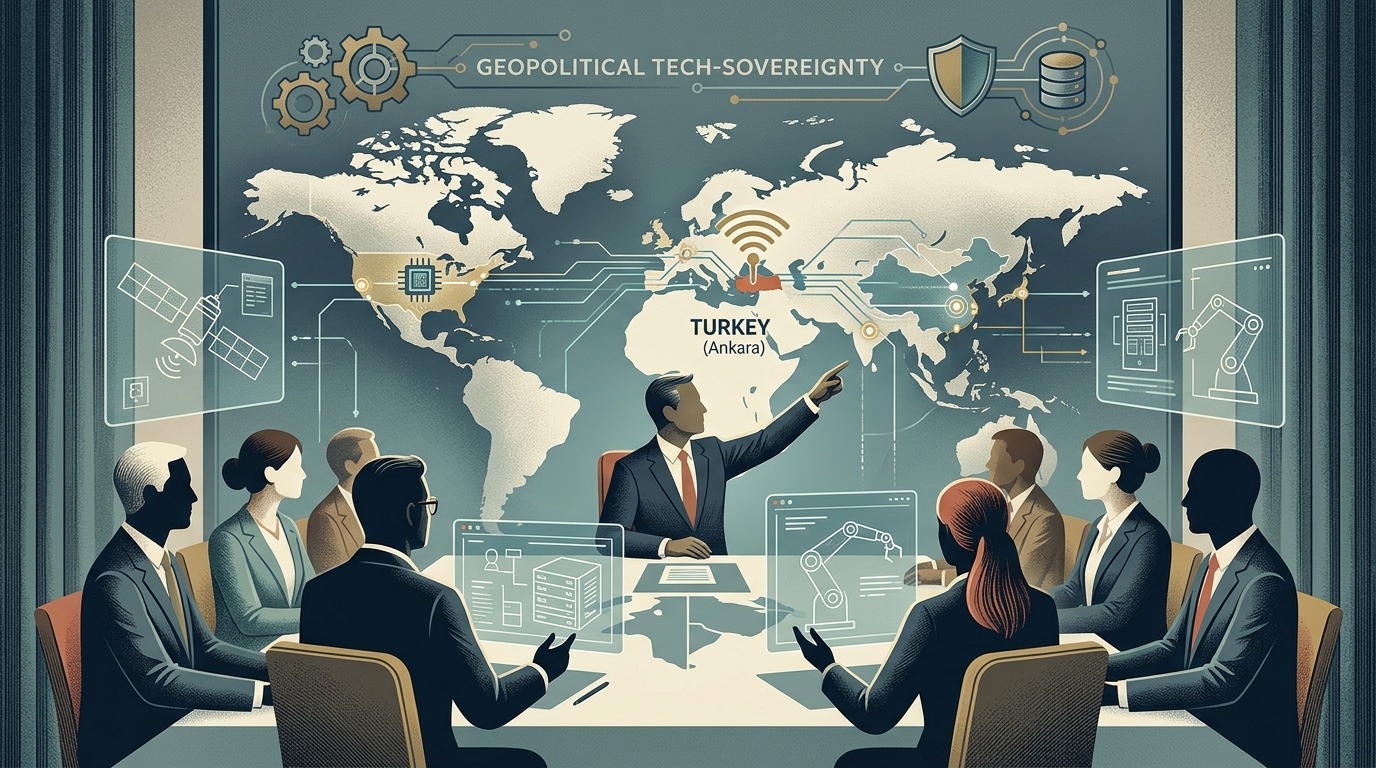
At the crossroads of two continents, Turkey is attempting a leap into the future that transcends mere geography. The recent emergence of the Turkish vision for Artificial Intelligence (AI), as highlighted by international media and government officials, is not just a modernization effort; it is a strategic choice for national survival and power in the 21st century. Ankara, under the doctrine of the "National Technology Move" (Milli Teknoloji Hamlesi), seeks to transform from a technology consumer into a cutting-edge creator, aiming for digital sovereignty.
The Defense Industry as an Engine of Innovation
One cannot analyze Turkey's technological rise without referencing its defense sector. The Bayraktar TB2 drones and the more advanced Akinci have become symbols of a new era. However, the real news is not the airframes themselves, but the algorithms that guide them. Turkey is investing heavily in autonomous navigation and AI-driven target recognition, creating an ecosystem where military technology feeds civilian innovation.
"Technology is no longer a support tool, but the foundation upon which national independence is built," sources from the Turkish Ministry of Industry and Technology suggest.
This approach has produced a generation of engineers trained in real-market conditions. TEKNOFEST, the world's largest aerospace and technology festival held in Turkey, attracts millions of young people, fostering a culture of "techno-nationalism." This strategy aims to stem the brain drain by offering incentives for young scientists to remain and create within the country's borders.
Togg: The Smart Car as a Mobile Data Hub
Another pillar of this vision is Togg, Turkey's first domestic electric vehicle brand. For Ankara, Togg is not just a car; it is a "smart device" integrating AI, 5G connectivity, and cloud services. Togg’s success in the domestic market and its planned expansion into Europe represent the country's bet on dominating the Internet of Things (IoT) landscape.
The integration of AI into Togg allows for personalized driver experiences, predictive maintenance, and optimized energy consumption. Through this, Turkey seeks to create an entire mobility ecosystem where local startups can develop applications on the car's platform, turning the nation into a laboratory for digital solutions.
The Geopolitics of Tech and the Digital Silk Road
On the international stage, Turkey positions itself as a "third pole" between the West and China. Its AI strategy includes building large data centers and investing in connectivity infrastructure to link Europe with Asia and Africa. Ankara realizes that whoever controls the flow of data and the algorithms that process them will hold the upper hand in future diplomatic negotiations.
However, challenges remain. Economic instability and inflation in Turkey make financing long-term research programs difficult. Furthermore, the international community watches with skepticism the use of AI for surveillance purposes and the control of digital spaces. The balance between technological progress and democratic freedoms will be the critical test for the Turkish vision.
Conclusion: The Challenge of Implementation
Turkey's vision for 2030 is ambitious. It aims to rank the country among the top 20 economies in the field of AI globally. To achieve this, it requires not only technological prowess but also a stable institutional framework to attract foreign investment. Turkey seems to be betting on the fact that Artificial Intelligence is the great "equalizer" that can allow emerging powers to bypass decades of industrial lagging. If this bet pays off, Ankara will no longer be just a geographical mediator, but a digital protagonist.