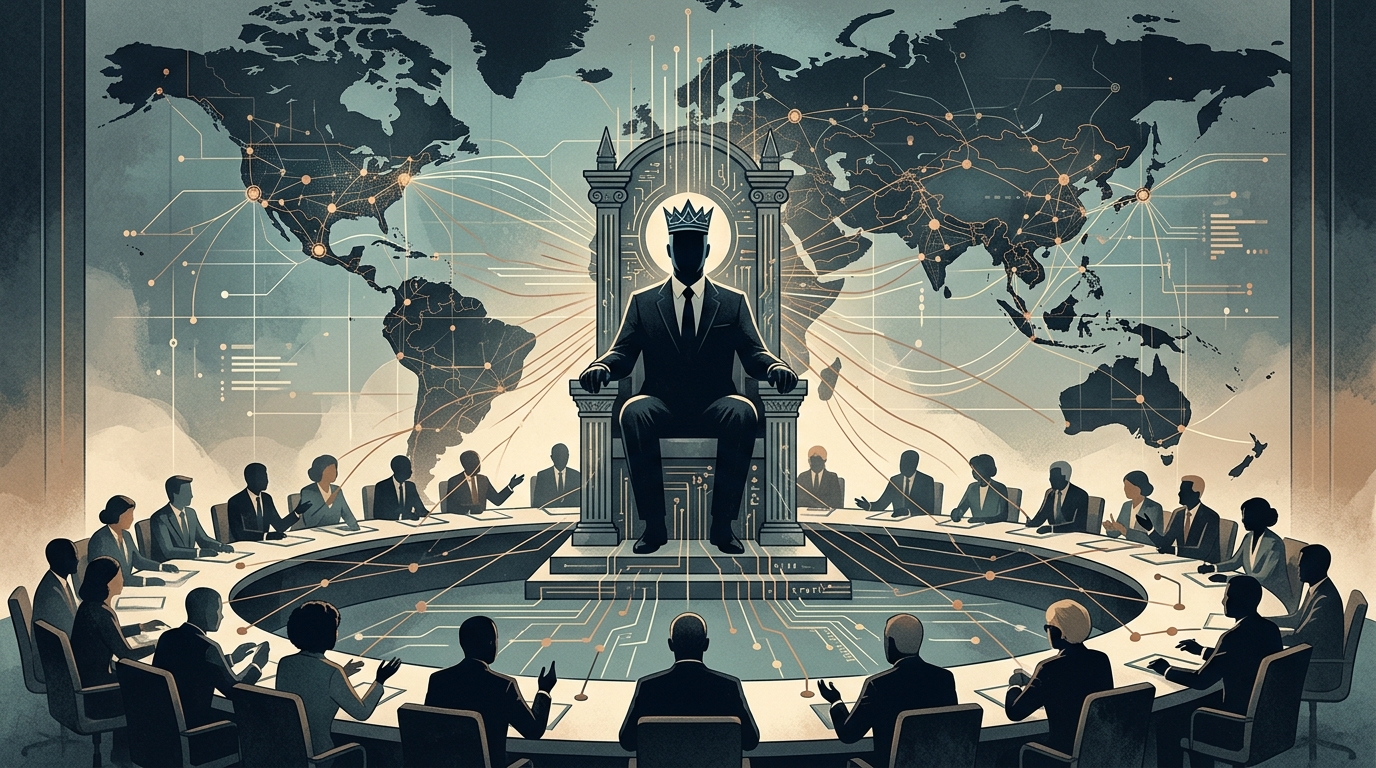
In a historic pivot of American industrial policy, the Trump administration has announced an unprecedented $2 billion support package for quantum technology. This move is not merely a research grant; it is a strategic intervention, as the US government takes direct equity stakes in IBM and eight other leading firms in the sector for the first time. The decision marks the end of the 'laissez-faire' era in high technology and the beginning of a period where the state assumes the role of an investor-general.
The Geopolitics of Quantum Supremacy
Washington's move is far from accidental. In the geopolitical chessboard of 2026, quantum computing is considered the 'Holy Grail' of national security. Whoever manages to build a fully functional, fault-tolerant quantum computer will possess the ability to break all traditional encryption systems currently protecting bank transactions, military secrets, and state communications. China has already invested billions in this field, and the Trump administration seems determined not to allow a 'Quantum Sputnik' moment.
The choice of IBM as a leading force in this consortium is expected. The company has shown significant progress with its quantum processors (such as Condor and Heron), but state participation provides the necessary capital security to accelerate the transition from the laboratory to commercial application. The other eight companies, including names like IonQ and Rigetti, cover different technological approaches—from trapped ions to superconducting circuits—ensuring the US bets on all possible winning scenarios.
State Interventionism as a New Doctrine
The decision for the state to acquire equity in private companies represents a radical departure from traditional Republican ideology. However, proponents of the move argue that quantum technology is too critical to be left solely to market forces. By acquiring shares, the government is not just offering subsidies; it is gaining a seat at the table for decisions regarding technology exports and ensuring that innovations remain on American soil.
"This is no longer about free trade; it's about the survival of our technological sovereignty," said a senior White House official. "If China reaches the quantum computer first, the West will find itself in a permanent state of strategic vulnerability."
This approach strongly echoes the DARPA model, but on a much larger scale and with direct participation in profits and governance. Critics, however, warn of the risk of creating 'national champions' that could stifle competition from smaller startups not selected for the program.
Technical Challenges and the 'Quantum Winter'
Despite the influx of capital, the road to quantum utility remains paved with obstacles. Error correction is the biggest gamble. Today's quantum computers are extremely sensitive to noise and heat, often making them unreliable for complex calculations. The $2 billion investment targets exactly that: the development of hardware and software that will allow stable qubit operation.
There is also the fear of a 'Quantum Winter'—a period where investment dries up if results do not materialize quickly. Government intervention acts as a safety net, ensuring that research will continue even if Wall Street loses its patience. For IBM and the other firms, this partnership is a vote of confidence, but also a heavy responsibility, as their success is now directly tied to US national power.
Conclusion: A New Era for Technology
The Trump administration's move to invest $2 billion in quantum technology is the boldest experiment in state capitalism in US history. As we enter the second half of 2026, the battle for dominance in the microcosm of atoms will determine the balance of power in the macrocosm of global politics. IBM and its partners now have the mandate to turn theoretical physics into a geopolitical weapon, with the American state holding the reins.