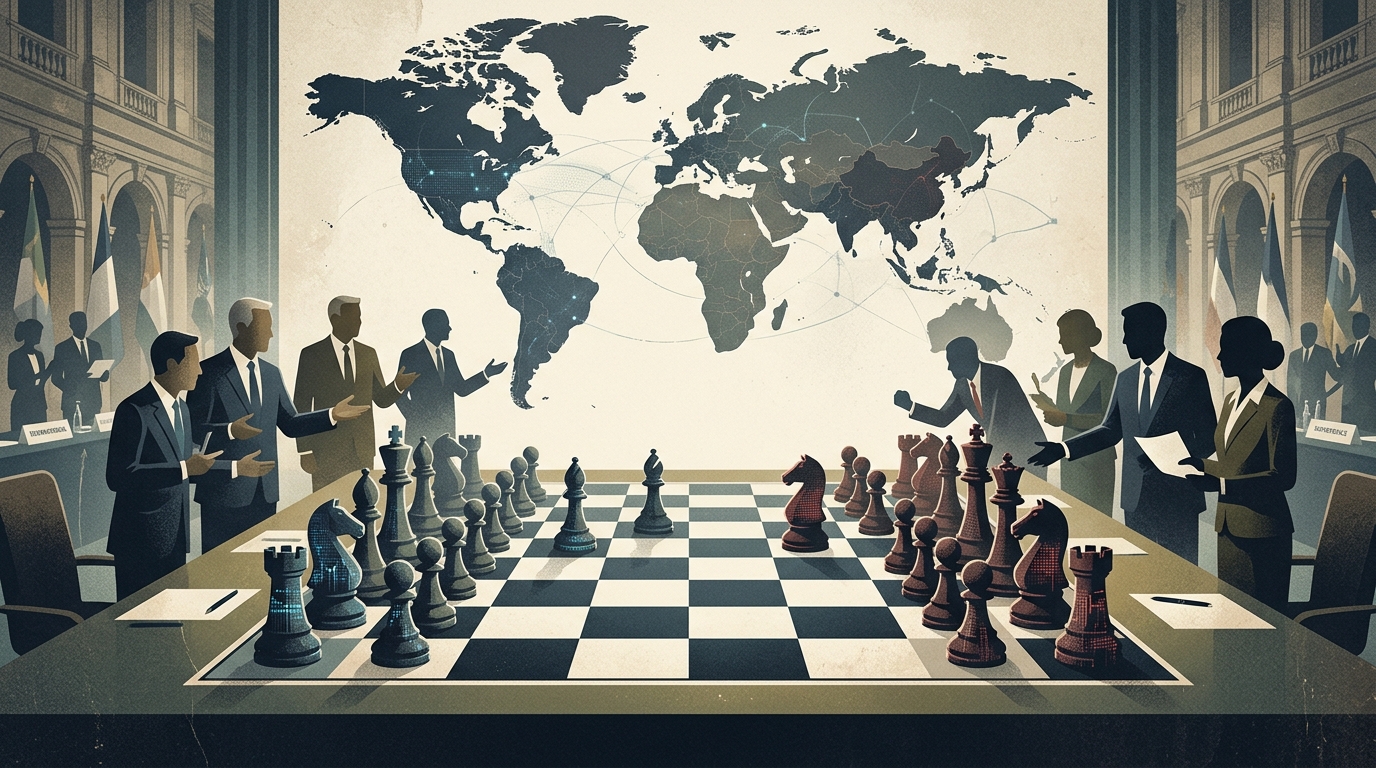
As we navigate the middle of 2026, the global geopolitical landscape has reached a defining moment where power is no longer measured solely by nuclear stockpiles or GDP, but by data processing capacity and algorithmic autonomy. The Trump administration’s recent National Security Memorandum (NSM) on Artificial Intelligence, as analyzed by the Council on Foreign Relations (CFR), stands as a landmark document attempting to codify the American response to China’s ascent and the imperative for technological hegemony.
This memorandum is far from a mere list of technical specifications; it is a manifesto for "digital sovereignty." The administration’s approach focuses on accelerating AI adoption across the entire federal apparatus, with a heavy emphasis on the armed forces and intelligence agencies. However, as analysts point out, the rush for speed may leave behind critical safety guardrails that are essential for long-term stability.
Focus on Infrastructure and the Energy Mandate
One of the memorandum's strongest pillars is the recognition that AI is not an ethereal software challenge but a massive industrial undertaking. The Trump administration correctly identifies that to win the AI race, the U.S. requires three fundamental elements: chips, data, and, above all, energy. The NSM proposes an aggressive strategy for constructing new data centers and bolstering the energy grid, often bypassing environmental regulations viewed as "dead weight" in the competition with Beijing.
The logic is straightforward: compute is the new oil. Without the necessary physical infrastructure, the U.S. risks falling behind a China that is pouring billions into state-led projects. The memo promotes the creation of "AI Innovation Zones," where bureaucratic red tape is slashed to a minimum, allowing the private sector to scale at speeds reminiscent of the Manhattan Project. This industrial-scale focus is a pragmatic acknowledgment of the physical realities of AI development.
The Weaponization of Innovation
Perhaps the most controversial aspect of the memorandum concerns the full integration of AI into weapons systems. The administration argues that the ethical use of AI in warfare is best ensured when the U.S. sets the standards, rather than ceding the field to authoritarian regimes. The directive is clear: AI must be utilized for real-time decision-making, spanning from logistics and predictive maintenance to target identification and autonomous response.
However, the CFR analysis highlights that the memo leaves significant questions regarding "responsible use" unanswered. What happens when an algorithm fails in a kinetic environment? Who bears the accountability? The emphasis on speed over verification creates a perilous risk of accidental escalation, where machines react faster than human diplomacy can intervene, potentially leading to conflicts that neither side intended. The "black box" nature of advanced neural networks remains a significant hurdle for military transparency.
Gaps in International Cooperation and Safety
Where the memorandum appears to falter is in the realm of international governance. The "America First" approach to AI tends to isolate allies, viewing even European regulatory efforts (such as the AI Act) as impediments to growth rather than collaborative frameworks. The CFR underscores that the lack of a shared roadmap with allies could lead to a fragmented technological world, compromising the interoperability of NATO systems and weakening the collective democratic front against digital autocracy.
Furthermore, the issue of "existential risk" from AI is largely downplayed. While the previous administration had emphasized AI safety and red-teaming, the new memo views these concerns as exaggerated or even weaponized by adversaries to slow American progress. This deregulation may spur short-term innovation, but it leaves society vulnerable to sophisticated cyberattacks or AI-driven disinformation campaigns that could undermine the very democratic institutions the memo seeks to protect.
Conclusion: A High-Stakes Strategy
The Trump National Security Memorandum is a bold admission that the 21st century will be won or lost on silicon chips. It succeeds in mobilizing national resources and providing a clear, uncompromising direction for industry and the military. However, the omission of robust safety protocols and the dismissal of international diplomacy could prove to be a strategic Achilles' heel.
The challenge for the United States is not just to possess the most powerful AI, but the most reliable and legitimate one. In a world where technology diffuses rapidly, true security stems not only from raw power but from the ability to lead through rules that protect humanity as a whole. The stakes are immense, and the window for getting it right is closing.