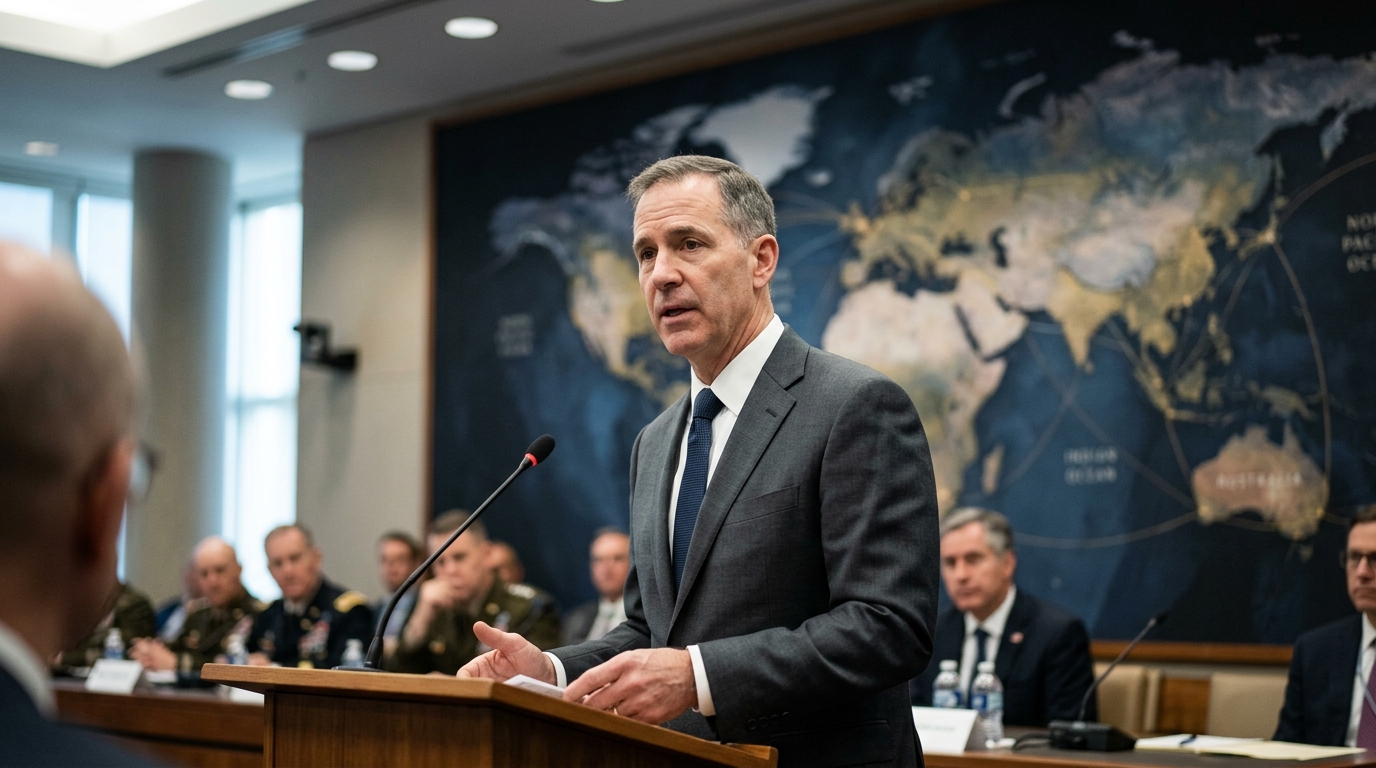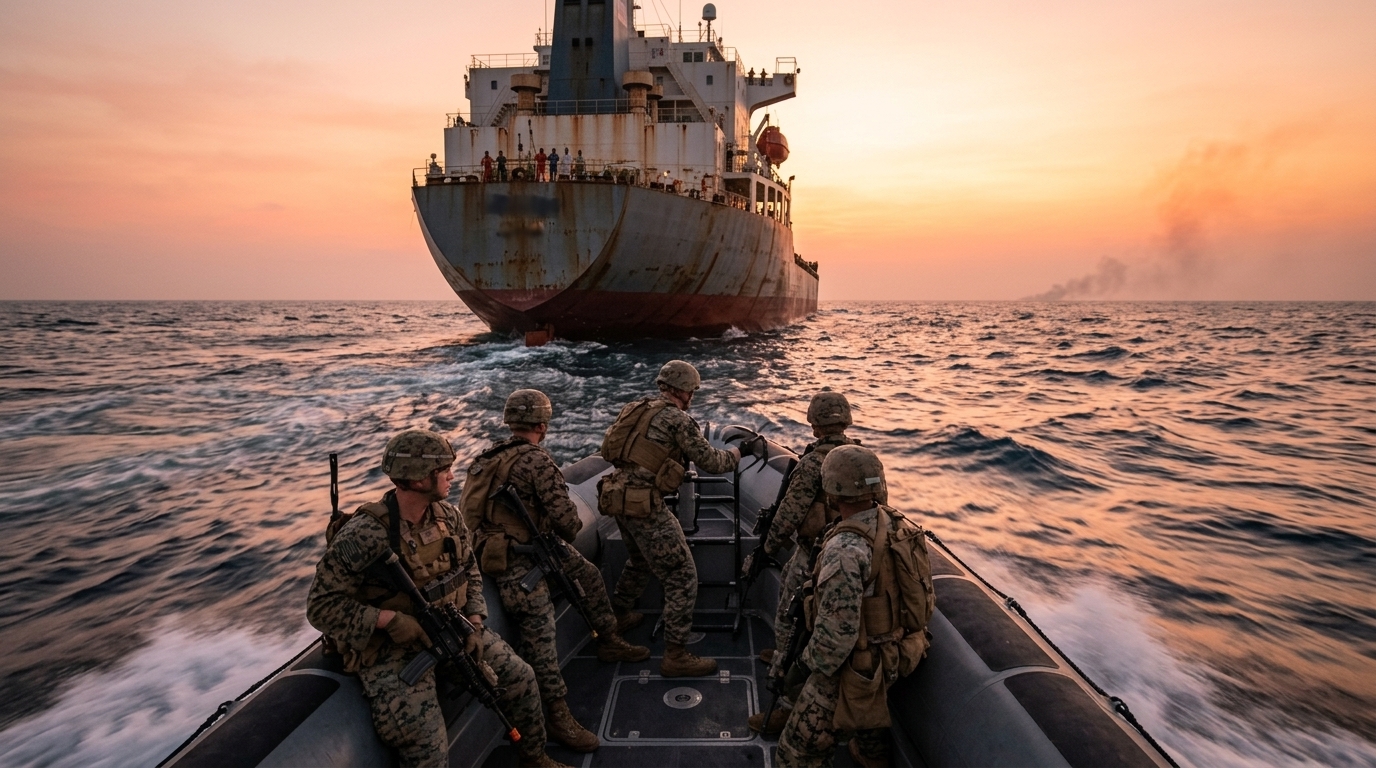
In a move that threatens to ignite a broader regional conflict, U.S. forces have seized an Iranian-flagged cargo ship in the Gulf of Oman. According to statements from President Trump, the operation was executed after the vessel ignored repeated warnings from a U.S. Navy guided-missile destroyer. The engagement culminated when the American warship opened fire, creating a controlled “hole in the engine room” to disable the vessel before Marines conducted a high-stakes boarding operation.
Chronicle of the Engagement
The incident took place early Sunday morning in a region that has served as the geopolitical melting point for global energy trade for decades. The Iranian vessel, reportedly carrying cargo in violation of recent sanctions, was identified by AI-driven surveillance systems deployed in the theater. When the ship refused to alter its course and attempted to accelerate toward the strategic Strait of Hormuz, the order to intervene was issued directly from the White House.
The use of kinetic force to disable a commercial vessel is a rare and highly aggressive tactic. Analysts point out that the precision strike on the engine room demonstrates an advanced targeting capability, likely assisted by automated firing algorithms that allow for the neutralization of a target's propulsion without sinking it or causing mass casualties. However, the symbolic weight of U.S. Marines boarding an Iranian-flagged ship cannot be overstated.
The 'Maximum Pressure 2.0' Strategy
This action fits into a broader strategy that Washington describes as the “restoration of deterrence.” Following months of harassment of commercial shipping by Tehran-aligned forces, the Trump administration appears to be adopting a policy of direct confrontation. The blockade currently enforced in the region aims to economically strangle exports that fund regional proxy militias.
According to Pentagon sources, the operation relied on real-time intelligence from autonomous surveillance drones. These AI systems process data from thousands of vessels daily, identifying anomalies in course, speed, or displacement that could indicate smuggling. The ability of AI to “read” a captain's intent before they even react to a warning is fundamentally altering the rules of engagement at sea.
Economic and Legal Implications
News of the seizure caused immediate ripples through global markets. Crude oil prices spiked as traders feared retaliation from Iran, which has historically threatened to close the Strait of Hormuz. Maritime insurance companies have already hiked war-risk premiums for all vessels transiting the Gulf, adding a significant cost burden to international trade.
Legally, the seizure of a ship in international waters remains a gray area. While the U.S. cites the right to self-defense and the enforcement of international sanctions, Tehran has denounced the act as “piracy” and a violation of national sovereignty. The international community is watching with bated breath as diplomacy appears to be sidelined in favor of raw military power.
The Role of Technology in Modern Naval Warfare
In this new era, conflicts are determined not just by the size of the fleet, but by the speed of data processing. The destroyer involved in the operation utilized the Aegis Combat System, enhanced with AI processing units, to calculate the exact ballistic trajectory needed to disable the ship without triggering a fuel explosion. This “surgical” approach to maritime warfare is the result of billions of dollars in defense tech investment.
Yet, technology cannot resolve the underlying political impasse. The seizure of the Iranian vessel is a reminder that on the global chessboard, pieces move based on power. The next move belongs to Tehran, and analysts warn that the response may not be conventional; it could involve cyberattacks on critical infrastructure or asymmetric operations in other global theaters.
Conclusion
The boarding of the ship by U.S. Marines marks the end of a period of relative restraint. Backed by cutting-edge technology and the political will for direct confrontation, the United States is sending a loud message. The question remains whether this message will lead to compliance or to an uncontrollable wildfire in the Middle East that no artificial intelligence will be able to extinguish.