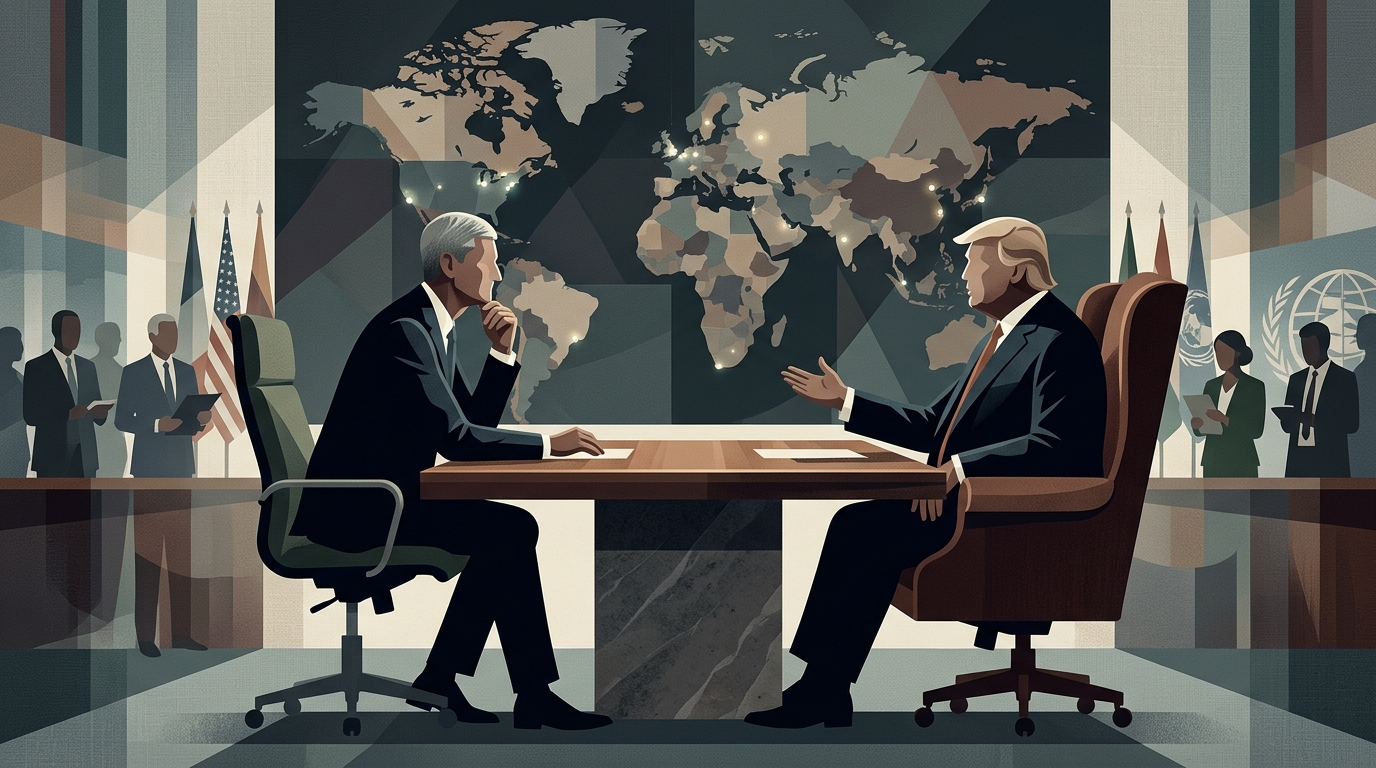
In the high-stakes world of technology, leadership transitions are rarely just about organizational charts. In Apple's case, Tim Cook’s move from CEO to Executive Chairman marks a strategic pivot that extends far beyond the borders of Cupertino. As we navigate through 2026, it is becoming increasingly clear that Cook is not retiring; rather, he is specializing in a role that perhaps no one else in the world can perform with equal success: that of the key diplomat for relations with the Trump administration.
The Art of Corporate Diplomacy
The history between Tim Cook and Donald Trump is not one of ideological alignment, but a masterclass in pure pragmatism. While other Silicon Valley leaders chose public confrontation or a cold distance, Cook cultivated a direct line of communication with the White House. This strategy bore fruit during Trump's first term, securing critical tariff exemptions for Apple that would have crippled the iPhone’s profit margins. Today, with Cook in the role of Executive Chairman, Apple is formalizing this function. The company recognizes that its survival depends less on the next technical specification of a chip and more on its ability to navigate the murky waters of economic nationalism.
The Geopolitical Chessboard and China
The biggest thorn in Apple’s relationship with Washington remains its dependency on China. In an era where the rhetoric of "decoupling" dominates, Cook is tasked with explaining how an American flagship company can remain so deeply rooted in Chinese soil without compromising national security. As Executive Chairman, Cook will have the freedom to focus exclusively on these long-term challenges. Apple Intelligence and dominance in AI have now become matters of national power, and Cook is the man who can translate Big Tech’s needs into a language the political leadership understands: jobs, domestic investment, and technological supremacy over Beijing.
A New Leadership Structure
The appointment of a new CEO for day-to-day operations allows Apple to maintain its operational momentum while Cook functions as a corporate "Secretary of State." This model is not unprecedented—think of Bill Gates or Eric Schmidt—but in Cook’s case, the stakes are higher due to the current polarization. Cook has proven he can listen without public judgment, negotiate without fully surrendering, and, most importantly, keep Apple out of the crosshairs of the most extreme regulatory attacks. His tenure as the "Trump whisperer" is an insurance policy for shareholders, a promise that Apple will always have a seat at the decision-making table, regardless of how turbulent the political climate becomes.
- Maintaining access to the White House as a strategic asset.
- Managing the supply chain amidst rising tariffs and trade wars.
- Promoting Apple Intelligence as a tool of national sovereignty.
- Shielding the company from antitrust litigation through political leverage.
In conclusion, the Apple of 2026 is a company that understands technology is now inseparable from geopolitics. Tim Cook, even without the CEO title, remains the most powerful player in Cupertino, not because he controls the code, but because he controls the relationships that allow that code to move freely across the globe. His ability to whisper into the ears of the powerful will define Apple’s trajectory for the next decade.