May 17, 2026, will be recorded in the annals of modern military history as the day the war in Ukraine definitively shifted scale, bringing terror to the heart of the Russian capital. The massive unmanned aerial vehicle (UAV) attack launched by Kyiv in the early morning hours was not merely a retaliatory operation, but a demonstration of technological maturity and strategic audacity. With at least four confirmed deaths and dozens of injuries, Moscow faced its greatest security challenge since the beginning of hostilities.
The Anatomy of a Multilayered Strike
According to reports from Naftemporiki and international news agencies, the attack was not limited to Moscow. Regions such as Belgorod, Bryansk, and Kursk were simultaneously hit, indicating a level of coordination that requires advanced command and control systems. The Russian air defense, despite claims from the Ministry of Defense regarding the interception of dozens of targets, appeared to be "penetrated" by low-radar cross-section (low-RCS) drone swarms.
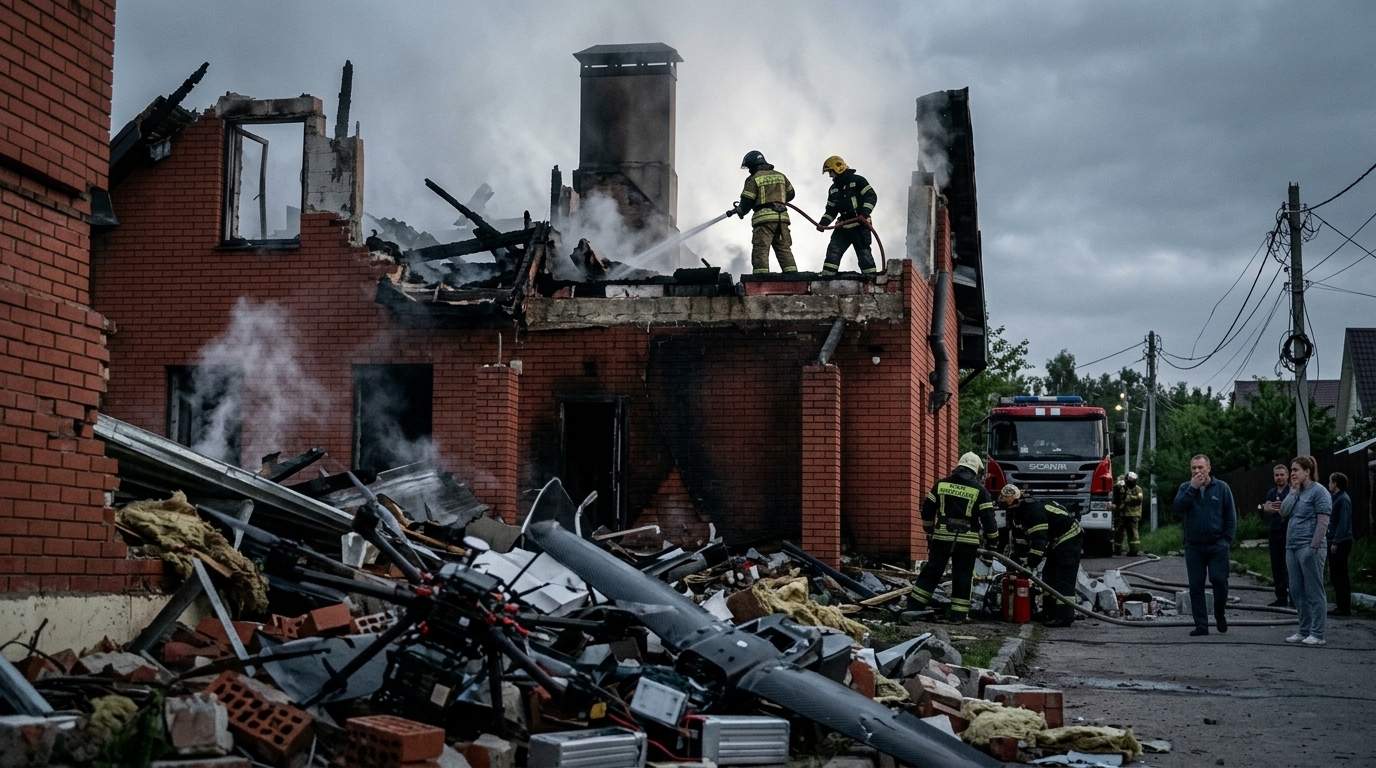
The reports of the four fatalities primarily concern residential areas in the suburbs of Moscow, where debris from intercepted drones fell onto apartment buildings, sparking fires. This "collateral damage" highlights the great dilemma of modern metropolises: intercepting a threatening object over a densely populated area can be just as lethal as the strike itself.
Technological Evolution: From 2022 to 2026
In 2026, the drones used by Ukraine bear no resemblance to the early models of 2022. These are autonomous systems with integrated Artificial Intelligence for target recognition and Electronic Warfare (EW) resistance. The use of "smart swarms," where drones communicate with each other to saturate enemy air defenses, appears to be the new norm.
- Navigation Autonomy: Drones no longer rely exclusively on GPS, which is frequently jammed by Russia, but instead utilize terrain-based optical navigation.
- Cost-Effectiveness: While a Pantsir or S-400 interceptor missile costs millions, Kyiv-produced drones cost a few thousand dollars, causing economic hemorrhaging for the defender.
- Range: The ability to strike at depths exceeding 1,000 kilometers has abolished the sense of security Russian citizens enjoyed far from the front lines.
Geopolitical Tremors and the Home Front
For the Kremlin, this attack represents a massive blow to the narrative of a "special military operation" conducted far from home. Moscow, the showcase of Russian power, proved vulnerable. The psychological impact on the population is immeasurable, as the war is no longer something they watch on television, but something they hear from their windows at dawn.
"The security of the capital is the red line of any state. When this line is repeatedly violated, the political pressure for escalation becomes almost irresistible," note international relations analysts.
On the Ukrainian side, the strategy is clear: transferring the cost of the war to Russian soil is the only way to force the Russian leadership into concessions. With the help of Western expertise but now with domestic production, Kyiv seeks to create a "balance of terror."
Conclusion: The Permanent State of Exception
As we approach mid-2026, the drone war has evolved into a continuous race between algorithms and sensors. Today's attack with four fatalities in Russia is not an isolated incident but the precursor to a new phase of the war, where borders are porous and technology has democratized the capacity for strategic strikes. The international community watches with bated breath, as escalation seems to be the only constant in an equation with many unknowns.