In an era where the global geopolitical chessboard resembles shifting sands, Nouriel Roubini—the economist who earned the moniker "Dr. Doom" for his timely prediction of the 2008 crisis—returns with an analysis that sends shivers through international markets. The escalation of tension between Israel and Iran is no longer a distant possibility but an active threat that could redraw the world's economic map. According to Roubini, the stakes are not just regional stability, but the return of stagflation: a toxic cocktail of high inflation and economic stagnation.
The Shadow of the 1970s
Roubini’s analysis begins with a historical retrospective of the oil crises of 1973 and 1979. Back then, geopolitical conflicts in the Middle East led to a spike in energy prices, triggering a decade of economic hardship in the West. Today, despite the energy transition, the global economy remains extremely vulnerable to fluctuations in crude oil. A conflict in the Strait of Hormuz, through which 20% of global oil consumption passes, could push prices above $140 per barrel, undoing central banks' efforts to tame inflation.
The Four Conflict Scenarios
Roubini categorizes the evolution of the crisis into four distinct scenarios, each with its own economic consequences:
- Scenario 1: Controlled Escalation. In this case, attacks remain targeted and limited. Markets react with jitters, but oil flow is not permanently disrupted. The global economy avoids recession, but inflation remains "sticky."
- Scenario 2: Regional Proxy War. The conflict spreads to Lebanon, Syria, and Yemen. Oil prices stabilize in the triple digits, causing a mild recession in Europe and Asia, while the US struggles with a "bumpy landing" for its economy.
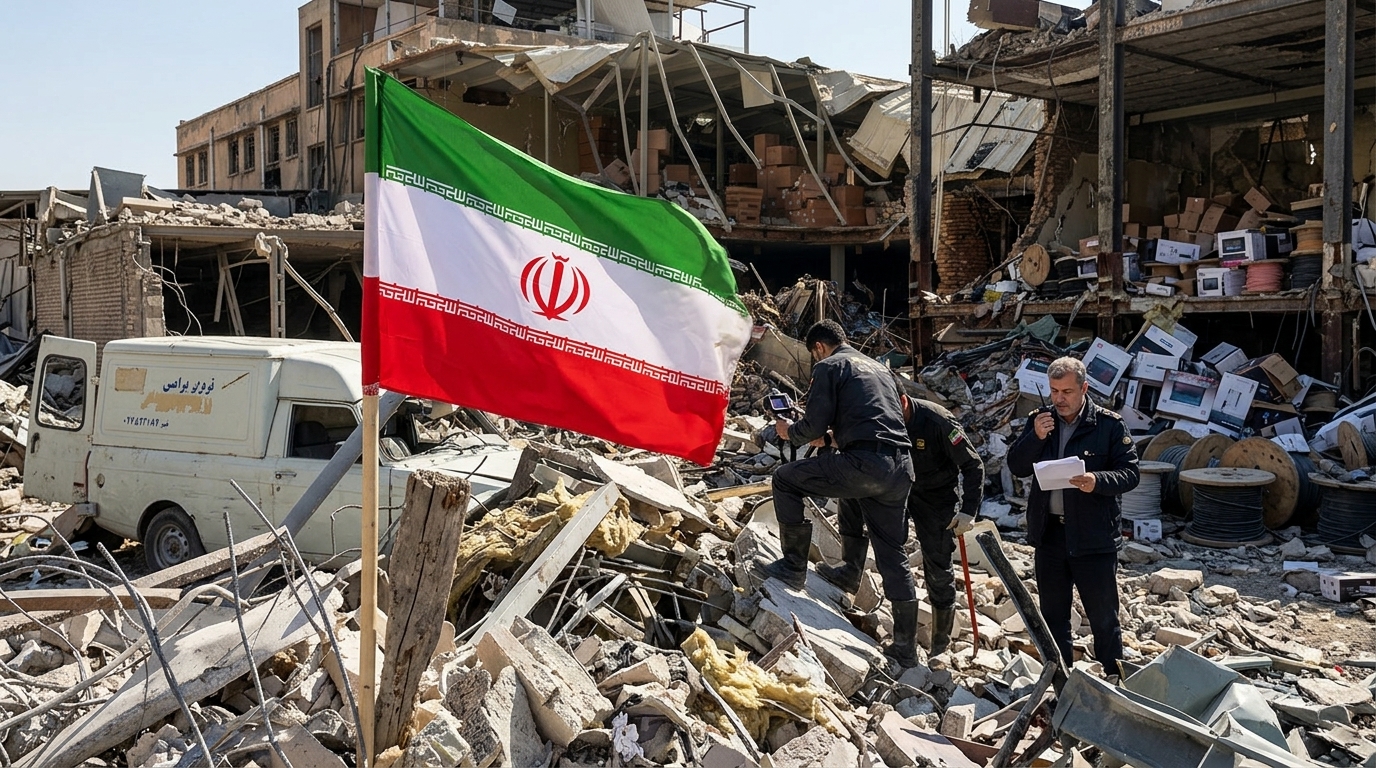
- Scenario 3: Direct Israel-Iran Conflict. This is the "Black Swan" scenario. The destruction of energy infrastructure in Iran and retaliation against Gulf facilities lead to an energy shock. Stagflation becomes the new normal, and stock markets collapse by 20-30%.
- Scenario 4: Regime Change or Internal Collapse. While the most uncertain, this scenario predicts a long period of chaos within Iran. While it could lead to long-term stability, the immediate cost would be massive uncertainty that freezes global investment.
Great Power Geopolitics
Roubini does not limit himself to the Middle East. He points out that a conflict with Iran would force China and Russia to take a clear stand. China, as the world's largest oil importer, has every reason to avoid war but simultaneously seeks to weaken American influence. Russia, on the other hand, could benefit from high energy prices, using them as leverage in Ukraine and Europe. This "multipolar" instability makes today’s crisis much more dangerous than those of the 20th century.
"We are not just facing an economic cycle, but a structural shift in global risk," the economist notes.
AI and Modern Warfare
An interesting aspect of the analysis is the role of technology. The war between Iran and Israel will not be fought with tanks alone, but with cyber-attacks and AI-powered drone swarms. Iran’s ability to strike digital infrastructure in the West represents an asymmetric risk that markets have not yet priced in. A paralysis of banking systems or energy grids via cyber-warfare could cause economic asphyxiation without a single bullet being fired.
Conclusion: Europe in the Eye of the Storm
For the Eurozone, Roubini’s predictions are particularly alarming. With Germany’s economy faltering and energy costs remaining high, a new shock in the Middle East could lead to social unrest and political instability. Greece, as an energy gateway and due to its proximity to the region, is called to balance on an extremely tight rope. Roubini’s warning is clear: the era of cheap energy and geopolitical complacency is over for good.