In the corridors of the Pentagon and the laboratories of DARPA, the traditional way of waging war is undergoing a radical transformation. "War games," which once relied on physical maps and plastic markers, have been replaced by sophisticated algorithms that process millions of data points in fractions of a second. According to recent reports, the U.S. military is now employing Generative AI to predict enemy movements, optimize logistics, and propose tactics that the human mind would struggle to conceive under the intense pressure of combat.
The Digital Simulation of Conflict
The use of AI in war games is not merely a technological upgrade; it is a paradigm shift. These simulations allow commanders to test "what-if" scenarios with unprecedented precision. From the Taiwan Strait to Eastern Europe, AI models are fed geopolitical data, weather patterns, weapon system capabilities, and psychological profiles of world leaders. The result is a dynamic map of probabilities that helps minimize casualties and maximize operational effectiveness.
However, this integration brings new risks. Dependence on data means that if the input is flawed or biased, AI decisions could lead to catastrophic escalation. Pentagon officials insist that a "human-in-the-loop" remains central to the process, but the sheer speed of decision-making in the digital age makes meaningful human oversight increasingly difficult to maintain.
Project Maven and the Replicator Initiative
Two pillars anchor this new strategy. Project Maven, which began as an effort to use AI for analyzing drone footage, has evolved into a comprehensive target identification system. Meanwhile, the "Replicator" initiative aims to deploy thousands of inexpensive, autonomous systems—drones and robots—that can operate as AI-guided swarms to overwhelm traditional military forces.
- Automated target recognition in real-time environments.
- Predictive maintenance to prevent equipment failure in the field.
- Strategic analysis of hundreds of simultaneous scenarios.
- Reduction of reaction times from minutes to milliseconds.
Ethical questions also arise from the military's collaboration with Silicon Valley tech giants. While there was significant pushback from employees at Google and other firms in the past, current geopolitical instability seems to have eroded those resistances, fueled by the incentive of multi-billion dollar defense contracts.
The Geopolitical Chessboard and Algorithmic Competition
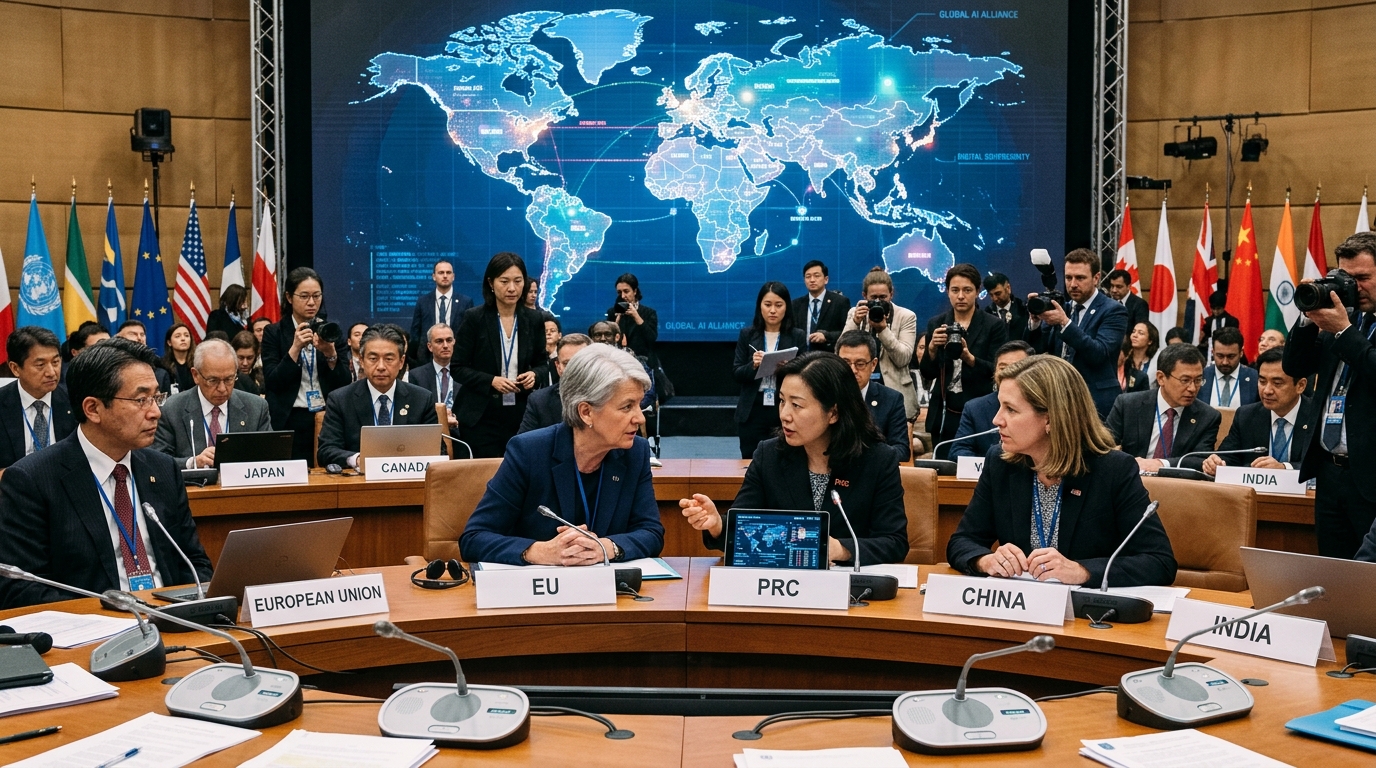
The U.S. is not alone in this pursuit. China has announced its goal to become the global leader in AI by 2030, with a clear military focus. This is leading to a new type of "arms race," where dominance is measured not by nuclear warheads, but by algorithmic quality and access to high-end semiconductors. The fear of "flash escalation"—where two opposing AIs could trigger a conflict before humans have time to intervene—is now a serious subject of study for security analysts.
"The war of the future will not be won by those with the most firepower, but by those who can process information the fastest," a high-ranking U.S. Navy official noted.
In this environment, transparency and the establishment of international norms for AI in warfare are more urgent than ever. Without a framework for "digital ethics," the risk of an accident triggering a global conflict remains alarmingly high. The challenge lies in balancing the strategic advantages of AI with the existential necessity of human control.