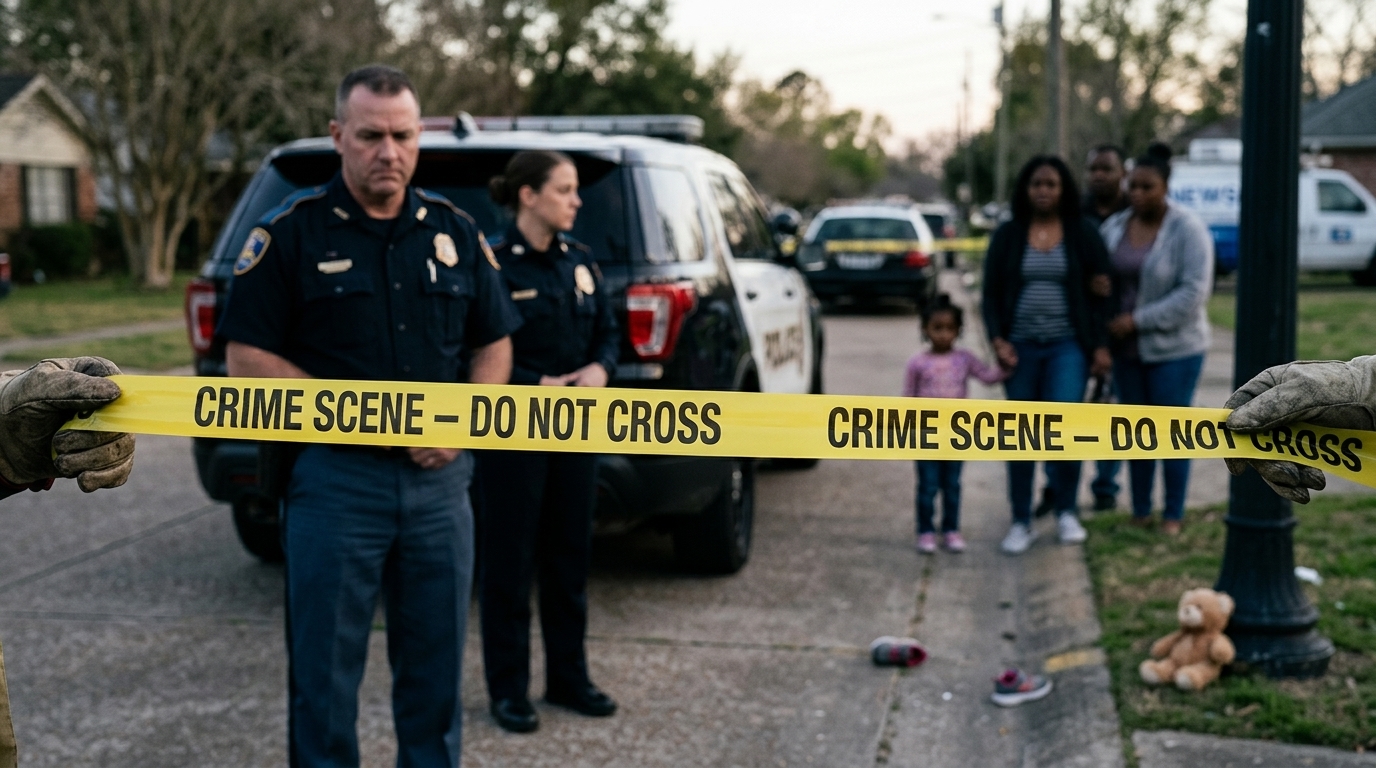
The news emerging from the quiet neighborhoods of Louisiana in the early hours of Sunday was not merely another police bulletin; it was a cry of despair from the very heart of American society. Eight minors, the future of a community already grappling with its own struggles, lay dead following a series of shootings in different residences. Local police have described the scene as one of the most heinous in decades, a horror that transcends local crime and strikes at the existential chords of a nation trapped in an endless cycle of violence.
A Chronicle of Terror and Social Paralysis
According to preliminary reports, the shootings occurred at sequential locations, suggesting a premeditated or at least systematic manifestation of violence. Authorities, though guarded with details due to the ongoing investigation, speak of a scene that would haunt even the most seasoned officer. Louisiana, a state of deep contrasts—rich in cultural heritage yet plagued by high poverty rates—finds itself once again at the center of global attention for all the wrong reasons.
The question looming over the wreckage of these families is "why." Not just the perpetrator's motive, but why a society allows itself to produce such levels of barbarity. Access to firearms, a lack of adequate social welfare, and the erosion of the family fabric form an explosive cocktail that, in Louisiana's case, led to a national tragedy. Residents describe the victims as children who had their entire lives ahead of them, victims of a violence they did not choose and could not comprehend.
The Politics of Stalemate: Second Amendment vs. Human Life
Whenever a mass killing occurs in the United States, the debate inevitably returns to the Second Amendment. The right to bear arms, considered sacred and inviolable by its proponents, clashes head-on with the fundamental right to life and safety. In Louisiana, gun laws are among the most permissive in the country, a reality many link directly to the ease with which personal disputes or mental health crises escalate into bloodbaths.
- Political polarization in Washington obstructs any meaningful legislative change.
- Gun lobbies like the NRA continue to exert immense influence over lawmakers in Southern states.
- Public opinion remains divided, though a majority now favors stricter background checks.
This tragedy highlights the failure of the political system to protect its most vulnerable members. The "thoughts and prayers" offered by political leaders ring hollow to parents burying their children. The geopolitical dimension of this domestic crisis is also significant: how can a superpower project power and moral authority abroad when it fails so spectacularly to guarantee the safety of its children in their own homes?
The Geopolitics of Internal Security
While the incident is treated as a domestic issue, its repercussions resonate globally. The United States, as the leading Western power, is constantly judged by its social model. The ongoing plague of gun violence is an "open wound" that weakens the country's soft power. Rival powers often use these incidents to highlight the perceived decay of Western democracy and the inability of the American state to maintain order.
"A society that cannot protect its children from itself is in a state of deep moral and political crisis," notes a sociology analyst at Louisiana State University.
The international community watches with bewilderment. While the US spends trillions on defense against external enemies, the real danger appears to lie within its borders. Violence in American cities is not just a matter of crime; it is a national security issue requiring a radical reassessment of state priorities. Louisiana mourns today, but tomorrow the entire nation must look in the mirror and decide if the freedom to bear arms is worth the price of childhood innocence.