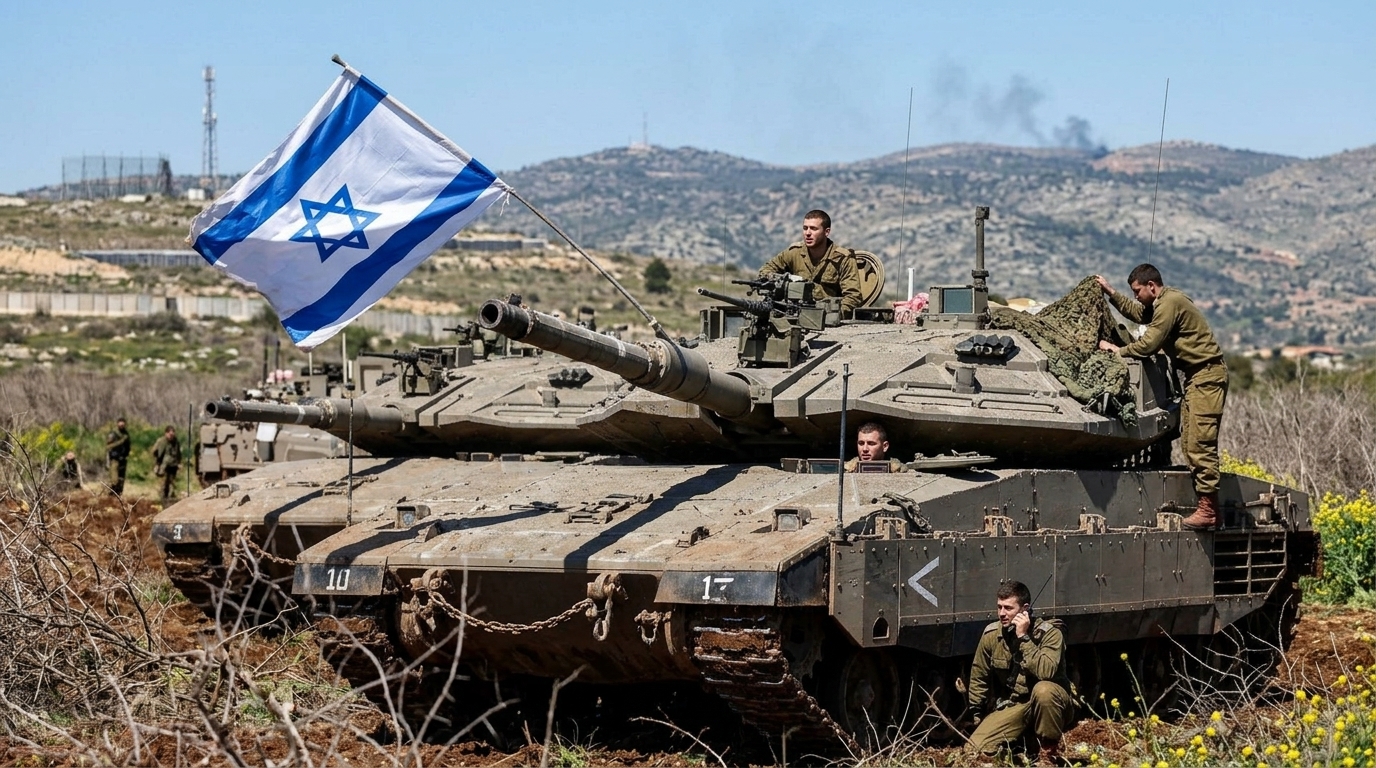
The night along the Lebanon-Israel border has never truly been silent, but the events of the past week underscore in the most dramatic fashion that diplomacy is retreating in the face of military might. Hezbollah's announcement that it struck a military installation in northern Israel is not merely another news item in the fine print of international agencies. It is the confirmation that the ceasefire reached after the hostilities of March 2, 2026, is breathing its last, leaving the region at the mercy of an uncontrolled escalation.
The Chronicle of the Attack and the Failure of Diplomacy
According to the organization's official statement, the attack was carried out using "precision-guided weapons," targeting a camp considered pivotal for Israeli Defense Forces (IDF) operations in the Galilee region. Sources from Lebanon report that this move was a response to ongoing airspace violations by Israeli drones, but the geopolitical reading is much deeper. The March ceasefire, which had been hailed by the international community as a "breather" for the civilian population, is proving to have been merely a period of regrouping.
Analysts point out that Hezbollah, under Tehran's guidance, seeks to maintain a "front of attrition" that forces Israel to keep massive forces on its northern borders, distracting them from other critical fronts. The use of advanced technology in this attack shows that the organization has upgraded its arsenal, integrating systems that can bypass traditional air defenses.
The Technological Dimension: Drones and AI in the Field
In the war of 2026, artificial intelligence is no longer a science fiction scenario but a daily reality on the battlefield. The attack in northern Israel highlights the increasing capability of non-state actors to use AI-guided drones for precision strikes. These "smart" munitions have the ability to recognize targets via optical sensors and adjust their flight path in real-time, making them extremely difficult to intercept by systems like the Iron Dome.
- Use of autonomous drone swarms to saturate air defenses.
- Integration of machine learning algorithms to evade electronic jamming.
- Real-time analysis of satellite data to identify vulnerabilities in military infrastructure.
On its part, Israel responds by developing AI-based systems to predict attacks before they manifest. However, the asymmetry of war remains: while Israel must defend every inch of its territory, Hezbollah only needs one successful penetration to deliver a strategic blow.
Geopolitical Balances and the Role of Great Powers
This conflict is not just about Lebanon and Israel. It is a pawn on a broader chessboard where the US, Russia, and Iran are testing their endurance. Washington, despite internal political pressure, continues to support Israel's right to self-defense while simultaneously trying to prevent an all-out war that would drag the entire Middle East into the abyss. Tehran, on the other hand, uses Hezbollah as its long arm, sending messages of power to the West.
"The Middle East is at a turning point where the old rules of deterrence no longer apply. Technology has democratized destruction," says a senior UN diplomat in Beirut.
The situation in Lebanon itself is desperate. The country, plagued by an unprecedented economic crisis, is held hostage by the military choices of an organization that operates as a state within a state. Lebanese citizens watch with terror the possibility of a generalized Israeli invasion, which would level the country's already collapsing infrastructure.
The Deadlock and the Day After
The question now is not whether there will be an escalation, but what form it will take. The international community seems powerless to impose a viable solution, as the parties involved have diametrically opposed interests. The March ceasefire, though well-intentioned, failed to address the root causes of the conflict: Hezbollah's presence at the border and Israel's need for security.
In conclusion, the recent attack on the camp in northern Israel is a reminder that peace requires more than a signature on a piece of paper. It requires a new security architecture that takes into account technological developments and regional ambitions. Until then, the Galilee and South Lebanon will remain the theater of a drama that seems to have no end.