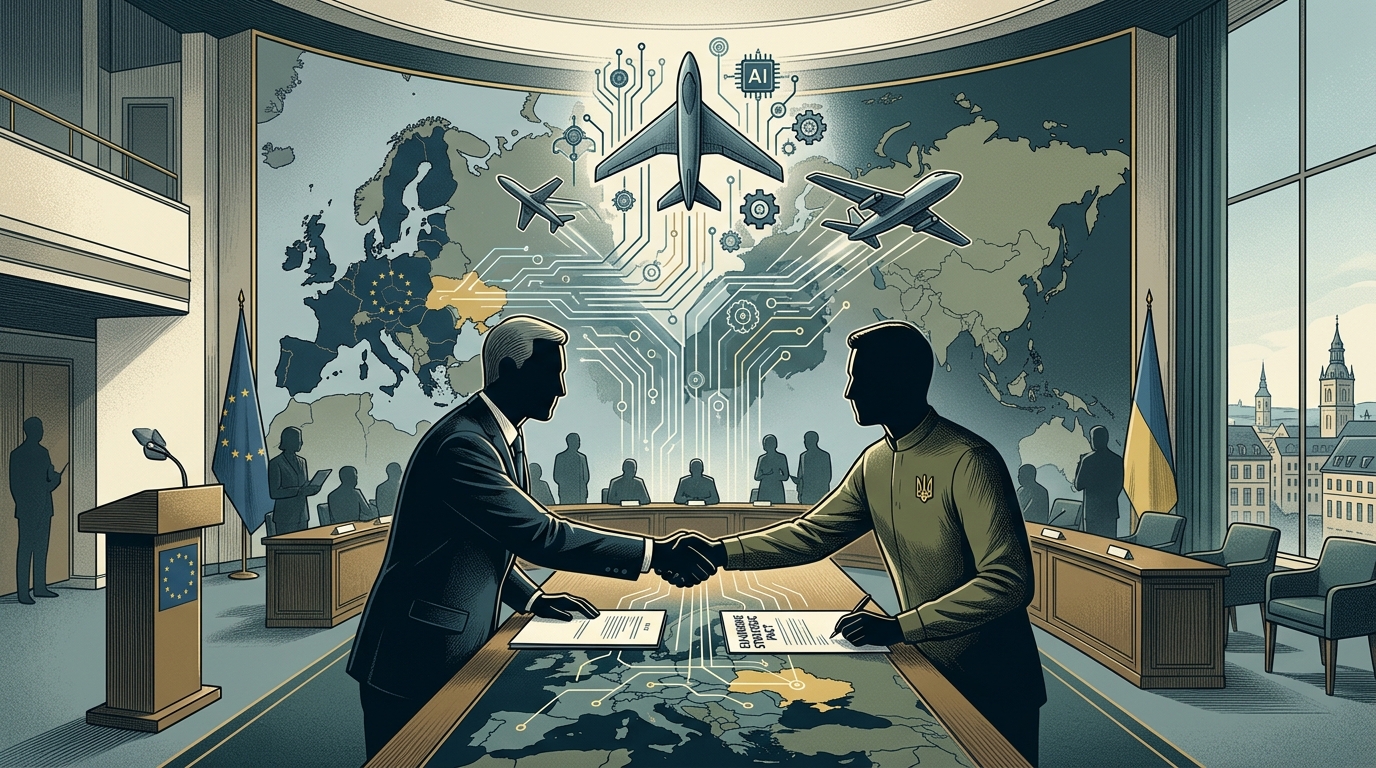
In the modern geopolitical landscape, power is no longer measured solely by nuclear warheads or oil reserves, but by the capacity to process information and develop advanced algorithms. The recent revelation that Chinese tech giants are employing a technique known as 'knowledge distillation' to train their own artificial intelligence models—relying on the outputs of top-tier American systems like OpenAI's GPT-4 and Anthropic's Claude—has sent shockwaves through Washington. This is not merely an optimization technique; it is a strategic maneuver for survival and dominance in a world where the US is desperately trying to choke China's access to critical hardware and software.
What is 'Knowledge Distillation'?
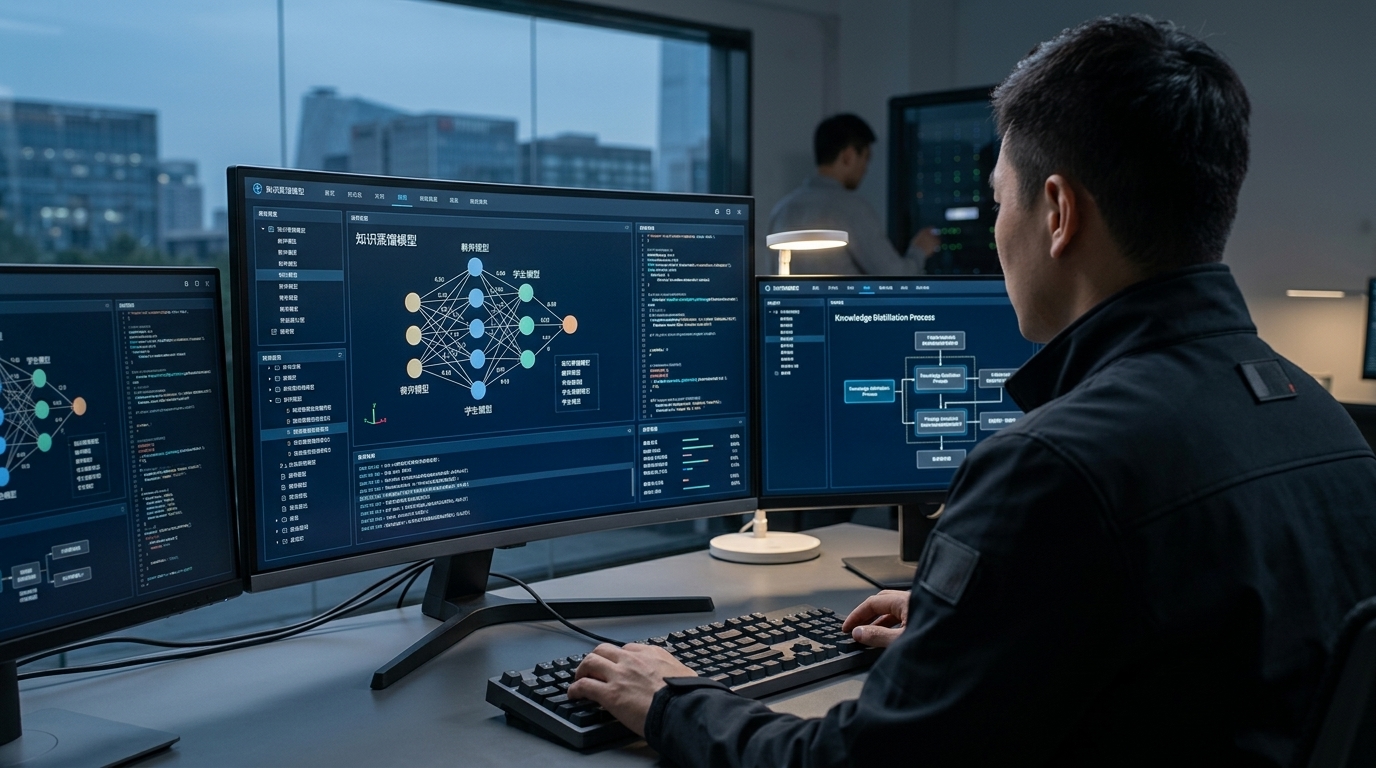
At its core, knowledge distillation is a machine learning method where a smaller, more efficient model (the 'student') is trained to mimic the behavior and outputs of a much larger, more complex model (the 'teacher'). Imagine a world-class professor condensing years of research into a concise textbook for their students. In the AI realm, the 'teacher' is a model with hundreds of billions of parameters, requiring massive computational power to operate. The 'student' is a leaner model that, through distillation, manages to retain a high percentage of the teacher's intelligence while consuming significantly fewer resources.
This process is not illegal per se; it is widely used in the industry to make models faster and cheaper to deploy. However, China has weaponized this technique as a form of 'reverse engineering.' Instead of spending billions of dollars and years of R&D to discover how to train a model from scratch, Chinese firms utilize the APIs of American models, feed them millions of prompts, and use the resulting answers as the 'gold standard' to train their own domestic systems.
The Geopolitics of the Bypass
The United States has imposed strict export controls on Nvidia's advanced chips to China, hoping that a hardware deficit would stall Beijing's progress. Knowledge distillation, however, offers an ingenious workaround. Because 'student' models require far less computational power to train and run, China can achieve GPT-4-level results using older-generation chips or fewer processing units. This renders sanctions less effective, as the battlefield shifts from hardware to software and data sovereignty.
- Cost Reduction: Training a model from scratch costs hundreds of millions. Distillation costs a fraction of that.
- Speed: China can close the gap with the US in months rather than years.
- Independence: Once the Chinese model has 'distilled' the knowledge, it no longer requires access to American APIs.
Recent examples, such as the DeepSeek-V3 model, have demonstrated that Chinese companies can now produce models that rival top Western offerings while spending only a tiny fraction of the capital invested by Google or Meta. Anthropic and OpenAI have attempted to fortify their systems, prohibiting in their Terms of Service the use of their outputs to train competing models, but enforcing these rules on a global scale is practically impossible.
The Ethical and Legal Gray Zone
The question arises whether knowledge distillation constitutes the 'theft' of intellectual property. Technically, China is not stealing the code or the model weights. It is stealing the 'logic.' It is akin to someone reading every book by an author and then writing their own book by mimicking the style and knowledge found within. In intellectual property law, this is difficult to prosecute. However, at the scale of AI, where information moves in seconds, traditional notions of patents and copyrights are collapsing.
"Knowledge is like water; it always finds a crack to leak through, no matter how high the walls we build," market analysts suggest.
The West now faces a dilemma: cut off API access entirely, risking revenue loss and isolation, or accept that its technological lead will be continuously eroded by such practices. China, for its part, is proving that it doesn't need to reinvent the wheel as long as it knows how to copy it and improve it using its own massive datasets.
Conclusion: The New Normal
Knowledge distillation is more than a technical nuance; it is the hallmark of a new era of Industrial Espionage 2.0. In this age, borders are digital, and leaks occur through prompt-and-response cycles. As Anthropic and OpenAI develop even more powerful models, they may inadvertently be providing a better 'teacher' for Chinese 'students.' The battle for AI supremacy will be decided not just by who has the most chips, but by who can protect their 'intelligence' from becoming the rival's training manual.