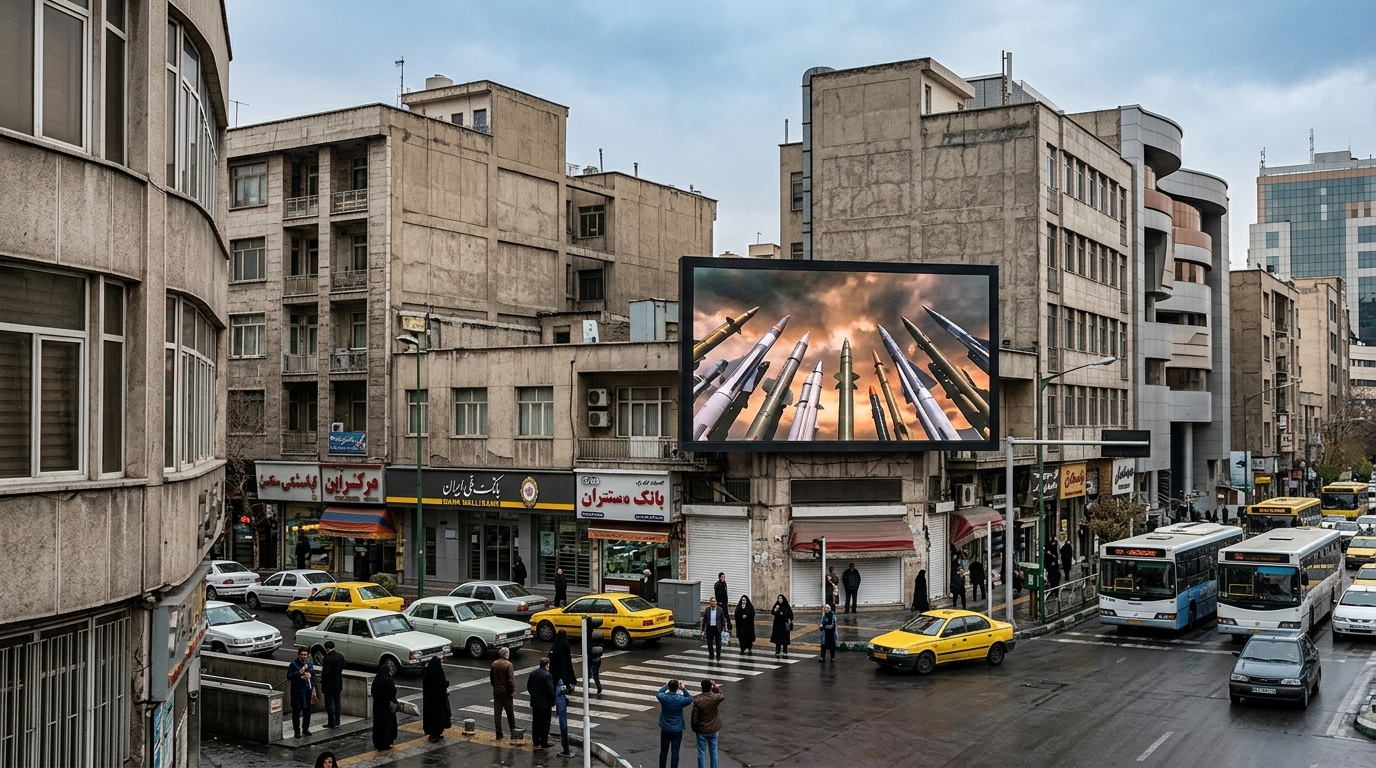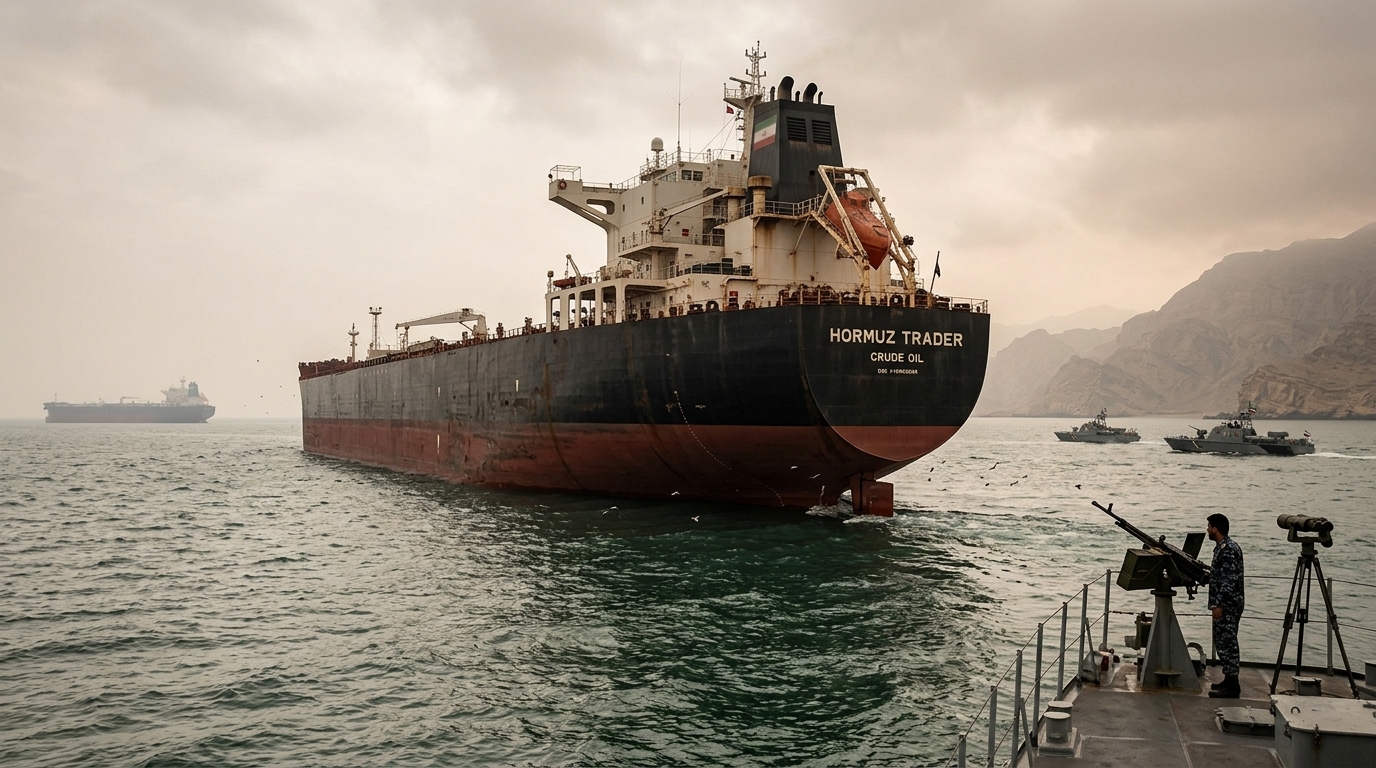
The recent admission by Iran’s Islamic Revolutionary Guard Corps (IRGC) that controlling the Strait of Hormuz is a "decisive strategy" for national security is more than a mere military pronouncement; it is a calculated warning to the international community. At a time when the Middle East is in a state of perpetual flux, Tehran is doubling down on its most potent geopolitical asset: the ability to impose an energy stranglehold on the global economy.
The Strait of Hormuz, a narrow waterway connecting the Persian Gulf with the Gulf of Oman, serves as the world’s most vital artery for oil and gas. Approximately 20% to 30% of the world’s total oil consumption passes through this chokepoint daily. For Iran, dominance over these waters is not just a matter of territorial integrity but a strategic deterrent against Western sanctions and military posturing.
The Geopolitics of Energy and the 'Panic Button'
The IRGC’s strategy is rooted in the principle of asymmetric warfare. While the United States and its allies possess overwhelming naval superiority in terms of conventional tonnage and aircraft carriers, Iran has invested heavily in a decentralized network of "smart" mines, fast-attack craft, and, increasingly, swarms of loitering munitions (suicide drones). The IRGC leadership's statement underscores that Tehran views the Strait as its sovereign domain, challenging the international norms of free navigation established by the United Nations Convention on the Law of the Sea (UNCLOS).
Analysis of Iran’s maritime maneuvers reveals a sophisticated integration of AI-driven surveillance systems. By monitoring every vessel entering or exiting the Gulf in real-time, the IRGC has effectively turned the Strait into a high-tech checkpoint. The capacity to close the Strait, even for a brief duration, would trigger an unprecedented spike in crude oil prices, threatening to destabilize global markets and ignite inflationary pressures across the globe.
Technological Upgrades and the Gray Zone
Beyond traditional naval assets, the IRGC has significantly enhanced its capabilities in cyber and electronic warfare. Intelligence reports suggest that Iran is experimenting with GPS jamming and spoofing techniques capable of disorienting commercial tankers, potentially luring them into Iranian territorial waters for seizure. This "gray zone" activity allows Tehran to exert pressure without crossing the threshold into full-scale kinetic conflict.
- Deployment of Unmanned Surface Vessels (USVs) for persistent ISR (Intelligence, Surveillance, Reconnaissance).
- Fortification of coastal batteries with long-range anti-ship cruise missiles.
- Expansion of the Bandar Abbas naval facility as a central command hub.
- Utilization of machine learning algorithms to predict and counter Western naval movements.
This strategy is not merely defensive; it is a clear signal to neighboring Gulf states, such as Saudi Arabia and the UAE. Iran seeks to demonstrate that regional security is inextricably linked to Tehran’s interests and that any attempt to bypass or isolate the Islamic Republic will carry an unbearable economic and security cost.
International Response and the Risks of Escalation
The international community, led by the U.S. Navy’s Fifth Fleet, has responded by increasing patrols and establishing maritime security coalitions like Operation Prosperity Guardian. However, geography remains Iran's greatest ally. At its narrowest point, the Strait is only 21 miles wide, making even the most advanced warships vulnerable to low-cost, high-volume asymmetric attacks. The European Union, while attempting to maintain a diplomatic channel, remains deeply concerned about energy security, particularly as it seeks alternatives to Russian energy supplies.
"Control of the Strait is not just a military duty; it is our sacred mission to protect the Revolution from foreign interference," stated a high-ranking IRGC commander.
In conclusion, the IRGC’s recent declarations formalize what analysts have long suspected: the Strait of Hormuz is no longer a guaranteed international thoroughfare but a strategic lever in a global geopolitical confrontation. The balance of terror in the region persists, with emerging technologies adding dangerous new dimensions to an already volatile equation. The next move on the Hormuz chessboard could dictate not only the future of the Middle East but the stability of the global economic order for years to come.