Geography has always been the destiny of nations, and for Greece, a country with its eyes fixed on the sea, developments in the Strait of Hormuz are not just international news but a matter of national economic survival. The Strait of Hormuz, a narrow strip of water separating Iran from Oman, is the most critical artery of the global energy system. With 20% to 30% of global oil consumption passing through this point, any disturbance translates instantly into tremors in the Athens Stock Exchange, at the fuel pumps, and in the operating costs of Greek shipping.
Greek Shipping in the Eye of the Storm
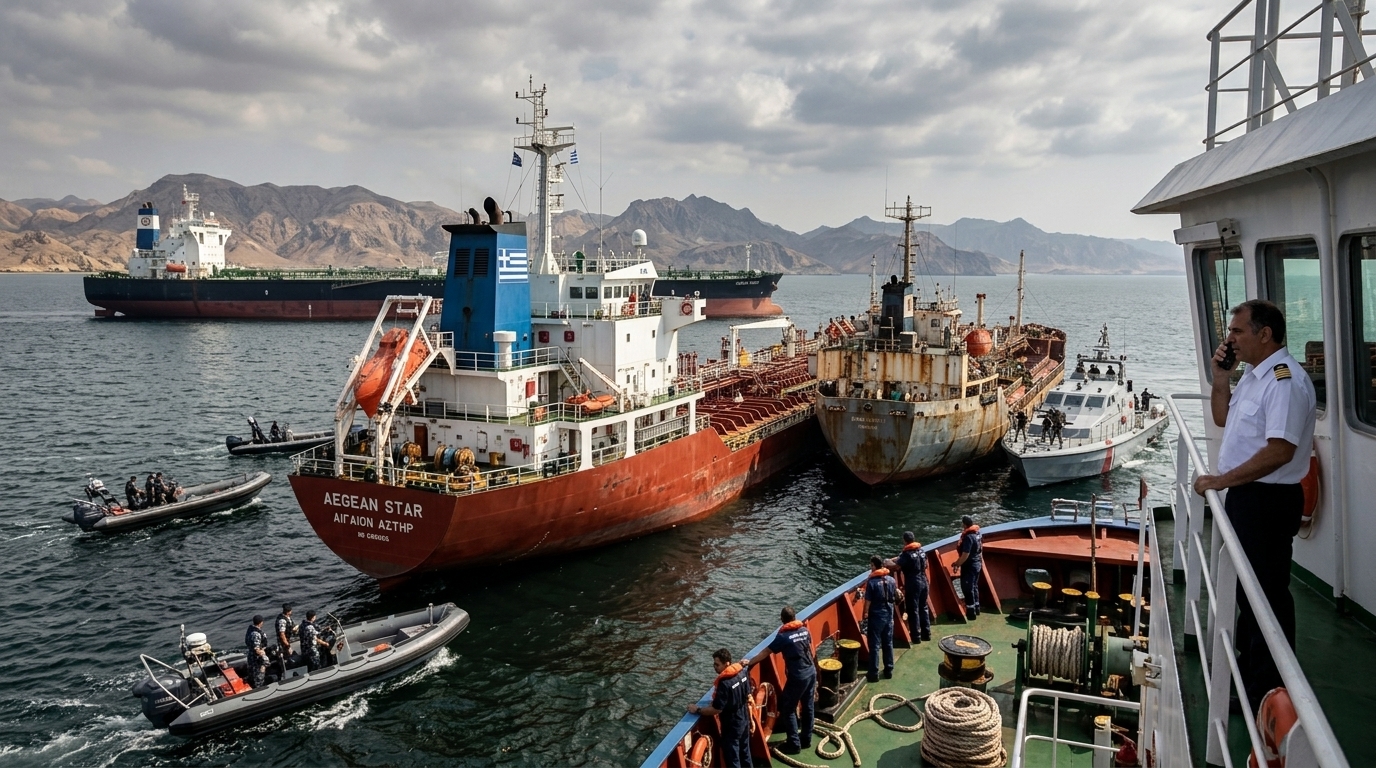
Greece owns the largest merchant fleet in the world in terms of deadweight tonnage (dwt), and a significant portion of this fleet consists of tankers. When tensions escalate in Hormuz, Greek shipowners are on the front line of risk. The implications are multi-layered. First, insurance costs—specifically war risk premiums—skyrocket. For a vessel carrying cargo worth millions of dollars, an increase in premiums can make a voyage economically unviable or extremely hazardous.
Furthermore, the need for rerouting or delays in transit creates bottlenecks in the supply chain. While higher freight rates during crisis periods might theoretically boost profits for some companies, the uncertainty and the risk to human lives and assets far outweigh any short-term gain. The Greek shipping community closely monitors the movements of Iran and Western powers, knowing that a full-scale conflict could "freeze" transportation in a region upon which global industry depends.
Energy Costs and the Greek Consumer
For the Greek economy, which is struggling to tame inflation, the Hormuz crisis acts as an accelerator of price hikes. Greece imports the majority of the oil and natural gas it consumes. A rise in the international price of Brent crude, driven by fears of a strait closure, is passed on almost immediately to the domestic fuel market. Gasoline and diesel prices affect everything: from the transportation costs of agricultural products to the final price on the supermarket shelf.
Greek refining companies, such as Motor Oil and HELLENiQ ENERGY, must manage price volatility and supply security. Although Greece has diversified its sources, the global nature of the oil market means no country is immune. Inflation, which is already pressuring Greek households, is threatened with a new flare-up, undermining purchasing power and social cohesion.
Inflation and the Supply Chain
Beyond fuel, the Hormuz crisis affects the total cost of imports. Greece, as a gateway for products entering Europe via Piraeus, depends on the smooth flow of international trade. Delays and increases in freight rates for container ships add extra costs to imported goods, from electronics to industrial raw materials. This phenomenon, known as "imported inflation," is particularly difficult to combat using domestic monetary or fiscal tools.
"The safety of navigation in Hormuz is not just a technical issue; it is the backbone of global trade. For Greece, the disruption of this balance is equivalent to an economic shock," say market analysts.
Geopolitical Challenges and Greece's Position
In the geopolitical arena, Greece is called upon to balance its obligations as a NATO and EU member with its own strategic interests in the region. Greece's participation in international missions to protect navigation (such as Operation "Aspides") highlights its role as a pillar of stability but also exposes it to regional confrontations. Athens seeks to maintain open channels of communication while strengthening its energy alliances with countries like Saudi Arabia and the United Arab Emirates.
In conclusion, the crisis in the Strait of Hormuz is a constant reminder of the vulnerability of the modern economic model. For Greece, shielding itself against such crises requires a faster transition to renewable energy sources, further diversification of energy routes, and continuous diplomatic vigilance. The stake is not just the price of gasoline, but the stability of an entire economy sailing in troubled waters.