In an unprecedented joint advisory, the intelligence agencies of the 'Five Eyes' alliance—comprising the United States, United Kingdom, Canada, Australia, and New Zealand—have issued a stark warning regarding the urgent cyber risks posed by the rapid evolution of Artificial Intelligence (AI). According to the report highlighted by Reuters, new AI models are no longer merely productivity tools but are transforming into 'force multipliers' for cybercriminals and hostile nation-states, threatening global digital stability.
The Democratization of Cybercrime
The core concern of the intelligence community lies in the fact that AI drastically lowers the 'barrier to entry' for aspiring hackers. Historically, executing a sophisticated cyberattack required deep programming knowledge and months of reconnaissance. Today, Large Language Models (LLMs) allow even novices to generate malicious code or draft hyper-realistic phishing emails in any language, devoid of the grammatical errors that typically flagged such attempts in the past.
As the report details, the ability of AI to automate the discovery of vulnerabilities in critical infrastructure is particularly alarming. "We are no longer talking about isolated incidents, but an industrial scale of threat production," noted a senior official from the UK's NCSC. The alliance warns that the speed at which AI models can scan networks for security gaps far outpaces the capabilities of current human-led defensive mechanisms.
Geopolitical Rivalry and State Actors
Beyond common criminality, the Five Eyes warning carries significant geopolitical weight. The alliance explicitly points toward state-sponsored actors from countries such as China, Russia, Iran, and North Korea as primary sources of concern. These nations are reportedly investing heavily in tailoring AI models for espionage and sabotage. The use of AI to generate deepfakes and orchestrate disinformation campaigns is another critical facet, as it can be weaponized to destabilize democratic processes and undermine social cohesion.
"Artificial Intelligence is not just changing the game; it is changing the very stadium where geopolitical competition takes place," the report asserts.
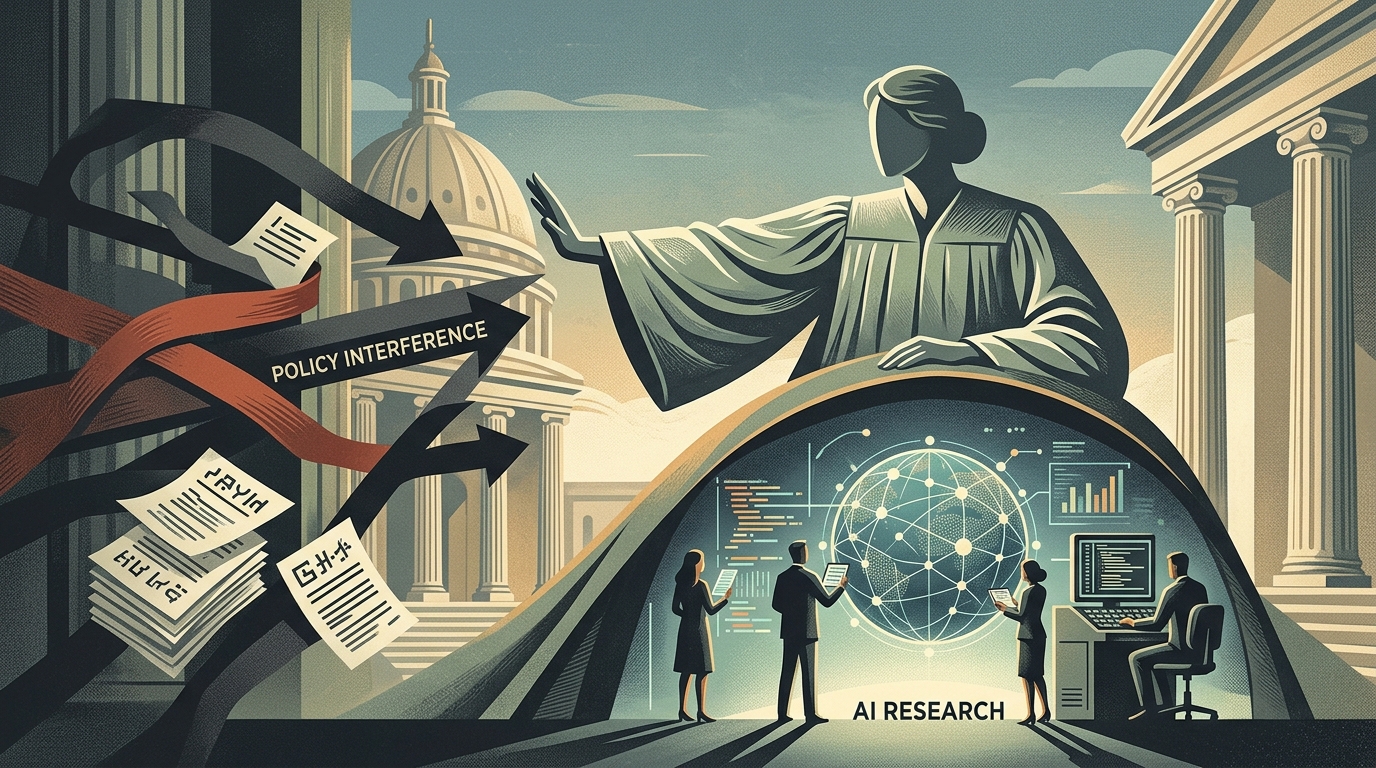
The anxiety is heightened by the fact that many of these tools are open-source or available via commercial platforms, making the control of their proliferation nearly impossible. The alliance is calling on tech giants to implement more rigorous safety protocols and ensure that their models cannot be easily subverted to produce offensive cyber capabilities.
The 'Secure-by-Design' Strategy
In response to these escalating threats, the Five Eyes propose a radical paradigm shift: the adoption of 'Secure-by-Design' principles. This means that security should not be an afterthought or a patch, but the foundational layer during the development of any new AI model. The advisory urges developers to integrate digital watermarking and robust auditing mechanisms to prevent the misuse of their systems.
- Strict monitoring of prompts submitted to AI models to detect and block malicious intent.
- Public-private partnerships to facilitate the real-time exchange of threat intelligence.
- Enhancing the cyber-resilience of critical infrastructure (energy, health, finance) using defensive AI.
The challenge is immense, as the balance between fostering innovation and ensuring national security is incredibly delicate. The Five Eyes emphasize that without immediate action, the strategic advantage will shift permanently to the attackers, turning the digital realm into a site of perpetual and uncontrollable conflict.
Conclusion: A Race with No Finish Line
The warning from the Five Eyes alliance marks a milestone in the history of cybersecurity. It acknowledges that AI is a double-edged sword: while it promises to solve some of humanity's most complex problems, it simultaneously offers unprecedented tools to those seeking to sow chaos. The international community must now decide whether to continue the unbridled AI arms race or establish the norms that will ensure this technology remains a servant to humanity rather than its most potent adversary.