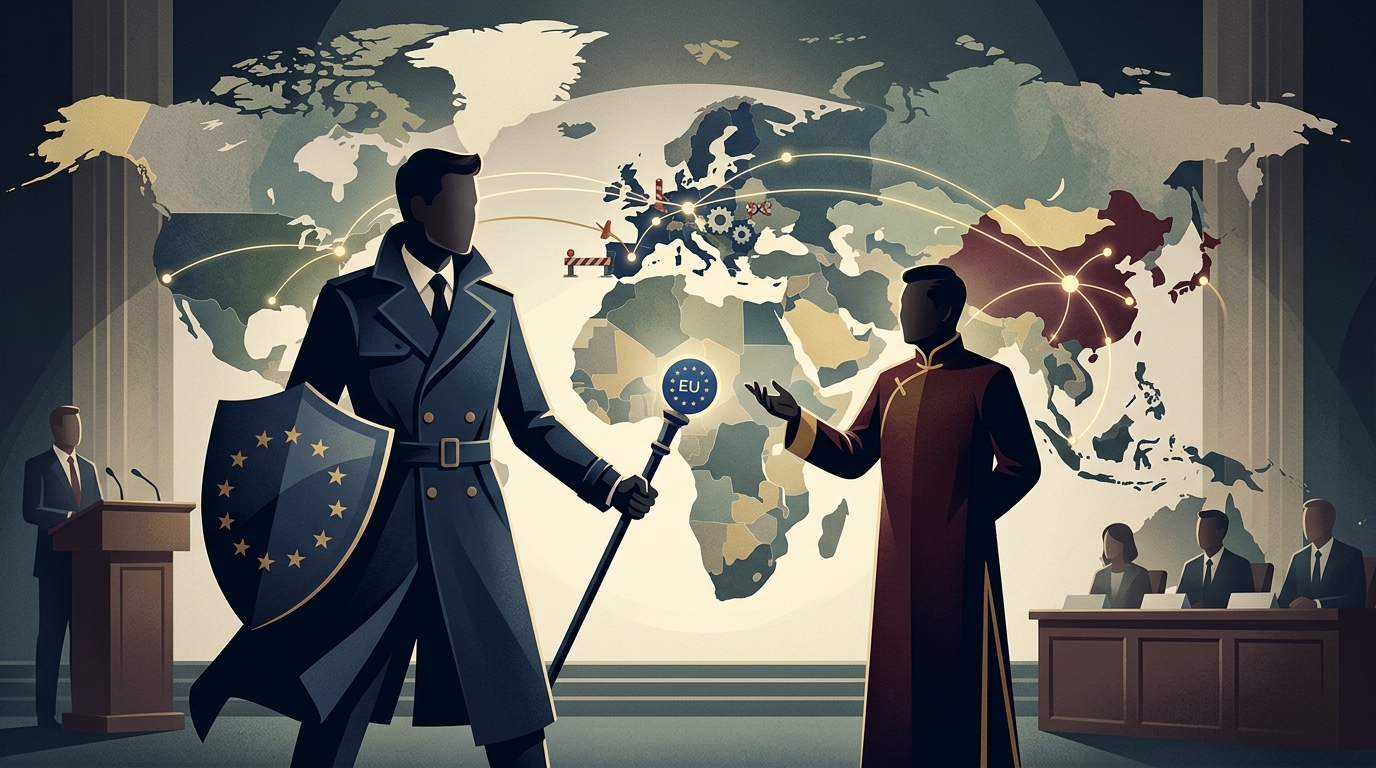
The era of European naivety regarding global trade practices is coming to a definitive end. As we move through the first half of 2026, the European Union, under the leadership of Ursula von der Leyen, is shifting from the theoretical concept of "de-risking" to an active and, according to many, aggressive protection of its strategic sectors. The recent escalation of trade tensions with China is not merely a dispute over tariffs; it is an existential struggle for the future of European manufacturing at the dawn of the green transition.
A Strategy of Assertive Defense
For decades, Europe acted as the primary champion of free trade, often at the expense of its own industrial base. However, the massive influx of subsidized Chinese products—ranging from electric vehicles (EVs) to solar panels and wind turbines—has forced Brussels to re-evaluate its stance. The European Commission has launched a series of anti-subsidy investigations, arguing that Beijing is distorting competition by providing unfair state support to its companies.
The epicenter of this conflict is the automotive industry. Chinese EVs, benefiting from a complete battery production ecosystem and generous state aid, are entering the European market at prices up to 20% lower than comparable European models. The EU's response with provisional tariffs marked the first serious blow, signaling that access to the single market will no longer be free for those who do not play by WTO rules.
The Phenomenon of Industrial Overcapacity
The fundamental issue, according to analysts in Brussels, is China's structural overcapacity. With domestic demand in China remaining sluggish due to the ongoing property crisis, Beijing is directing its massive industrial machine toward exports. This "wave" of products threatens to drown European businesses before they can complete their digital and green transformations.
"We cannot allow China to export its unemployment to Europe," said a senior Commission official. "Industrial sovereignty is not a luxury; it is a prerequisite for our political independence."
This strategy, however, carries significant risks. China has already threatened retaliation, targeting European products such as pork, dairy, and large-engine luxury cars. This creates a vicious cycle of protectionism that could raise prices for consumers and slow the adoption of clean energy technologies.
Internal Fractures: The Berlin Dilemma
Despite the Commission's unified voice, member states remain divided. France leads the "hardline" faction, seeking protection for its domestic manufacturers. In contrast, Germany appears more hesitant. German automotive giants (VW, BMW, Mercedes) are heavily dependent on the Chinese market for their sales and fear that a trade war would be catastrophic for their bottom lines.
- France is pushing for stricter content rules and tariffs to level the playing field.
- Germany advocates for negotiations and mutual concessions to avoid escalation.
- Nordic countries worry about the disruption of global supply chains and trade flows.
- Eastern European nations balance the need for Chinese investment with European solidarity.
This internal discord is China's greatest weapon, as Beijing frequently employs a "divide and conquer" tactic, offering bilateral deals to selected states to undermine the collective European position.
Conclusion: A New Geopolitical Reality
The EU-China trade conflict is not a passing phenomenon. It reflects the transition to a multipolar world where trade is used as a tool of geopolitical power. Europe is attempting to find a "middle ground": protecting jobs and its technological base without isolating itself from the world's second-largest economy. The success of this strategy will determine whether the Old Continent remains a front-line industrial player or if it will transform into a mere museum of technologies developed elsewhere.