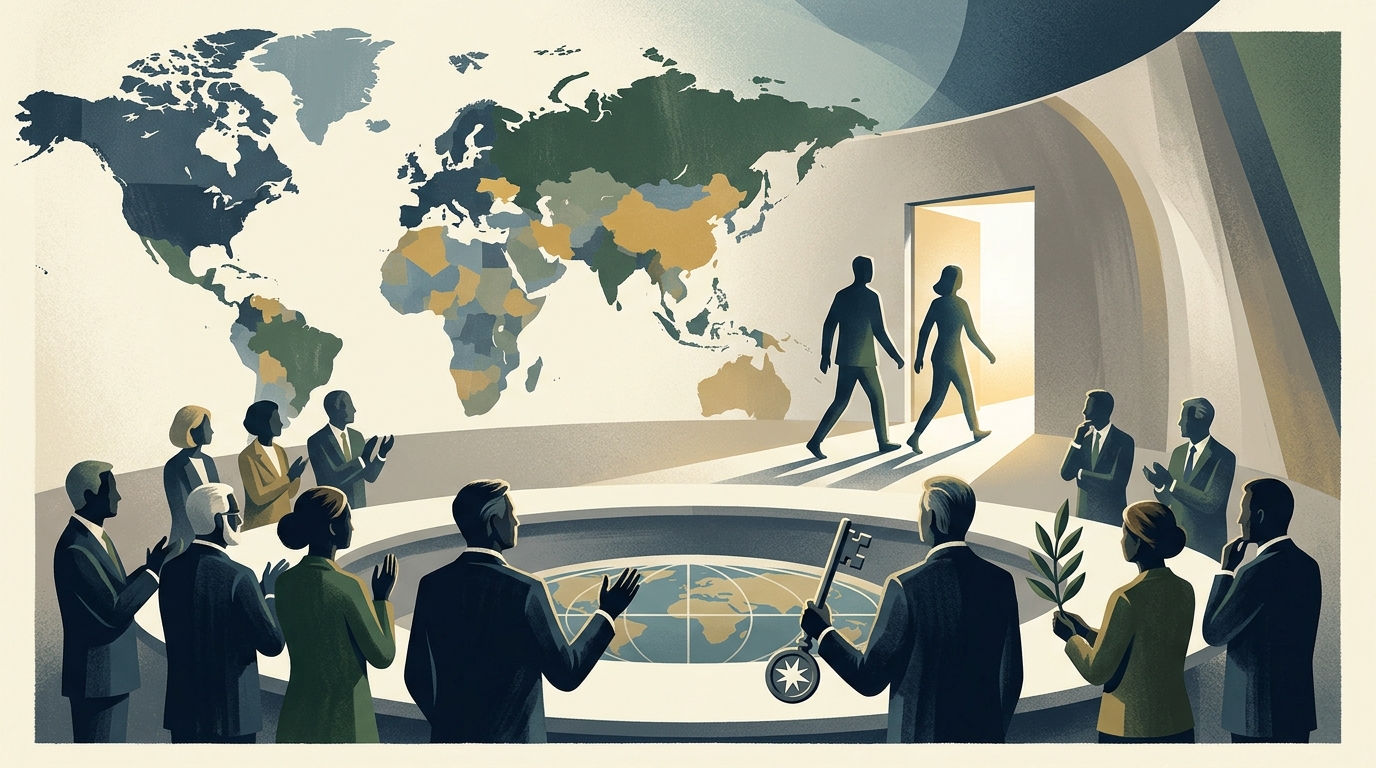
The decision by European Union member states to give the "green light" for the commencement of accession negotiations with Ukraine and Moldova is far more than a bureaucratic milestone in Brussels. It is an act of high symbolism and profound geopolitical significance, reshaping the map of Europe and laying the foundations for a new security architecture on the continent. At a time when the Russian invasion of Ukraine continues to shake the foundations of the international order, the EU has chosen to respond with its most potent form of "soft power": the prospect of membership.
The Geopolitical Stakes and the Enlargement Strategy
For decades, EU enlargement was viewed as a technical, almost mechanical process based on strict adherence to the Copenhagen criteria. However, the cases of Ukraine and Moldova break this mold. Here, political will precedes technical readiness. The EU recognizes that leaving these countries in a "gray zone" of influence would be a constant source of instability and an invitation for further Russian revisionism.
Moldova, under the leadership of pro-European President Maia Sandu, has made Herculean efforts to decouple itself from Moscow's energy and political dependence, despite the presence of Russian troops in the breakaway region of Transnistria. On the other hand, Volodymyr Zelenskyy’s Ukraine views EU membership as the final divorce from its Soviet past and the only guarantee for a democratic and prosperous future. The decision by the 27 was reached after intense deliberations, as resistance from countries wary of a sudden shift in the Union's internal balance had to be overcome.
Obstacles: From Orban’s Veto to Domestic Reforms
The path to "yes" was not paved with rose petals. Viktor Orban’s Hungary was the primary stumbling block, raising objections concerning the rights of the Hungarian minority in Ukraine and the EU's broader strategy regarding the war. The final agreement required delicate diplomatic maneuvering and, as whispered in the corridors of the Berlaymont, certain concessions to Budapest on other fronts of the European agenda.
However, the real work begins now. Accession negotiations are a long and arduous process involving 35 chapters. Ukraine must tackle deep-seated corruption, reform its judicial system, and harmonize its legislation with the acquis communautaire, all while fighting a war of survival. Moldova faces similar challenges, with the added burden of a fragile economy and the need for radical administrative reform. The EU will need to find a way to "reward" progress incrementally, perhaps through access to the single market before full membership is granted.
The Day After: A Union of 30+ Members
The entry of Ukraine—a country with a massive agricultural sector and a population of over 40 million (pre-war)—will fundamentally alter the EU's internal equilibrium. The Common Agricultural Policy (CAP) and Cohesion Funds will need to be completely overhauled, as Ukraine would become one of the largest recipients of funds, turning current net beneficiaries into net contributors. This is already causing anxiety in states like Poland and France, which view competition in agricultural products as a threat.
Furthermore, enlargement necessitates deepening. An EU of 30 or 32 members cannot function under current unanimity rules in critical areas like foreign policy and taxation. The debate over abolishing the veto and implementing qualified majority voting (QMV) is expected to intensify, causing new frictions between member states. The "green light" for Kyiv and Chisinau is therefore also a commitment for the EU itself to reform if it wishes to remain functional and powerful in the 21st century.
- The start of negotiations is the first step in a process that could last over a decade.
- Ukraine must prove its commitment to the rule of law, even under wartime conditions.
- Moldova is the "key" to stability in Southeastern Europe.
- The EU is called upon to redefine its budget and decision-making processes.
In conclusion, this decision represents a victory of hope over fear. Europe is showing that it is not a closed club for the wealthy, but a living political vision that continues to inspire nations fighting for their freedom. The journey will be long and the challenges immense, but the direction has now been irrevocably set.