In a move reminiscent of the tensest periods of the Cold War, the Chinese government has recently expanded its national security guidelines to directly target the workforce of private artificial intelligence companies. According to reports surfacing this week, leading researchers and engineers at tech giants such as Alibaba, Tencent, and Baidu, as well as emerging startups, are now facing stringent restrictions on their travel outside the country. This decision marks a critical turning point in the geopolitical struggle for technological supremacy, effectively transforming scientists from independent actors into strategic state assets.
The Human Component of the Tech War
For years, the battle between Washington and Beijing focused on semiconductors and source code. However, as of May 2026, China has come to realize that its most significant advantage is not infrastructure, but human capital. New regulations require employees in "sensitive" AI sectors to obtain special clearance from state security agencies before any foreign travel, even for personal reasons. Furthermore, many have been instructed to surrender their passports to their companies' human resources departments, which now function as de facto branches of the Ministry of State Security.
This strategy has a dual objective. On one hand, it seeks to prevent the "brain drain" to the United States and Europe, where salaries and research conditions remain highly attractive. On the other, it aims to protect intellectual property and state secrets that these scientists might carry with them. In an era where Generative AI is viewed as a dual-use technology—with both civilian and military applications—Beijing no longer recognizes a meaningful distinction between the private and public sectors.
From the "Great Firewall" to a "Human Firewall"
This move upends decades of globalized scientific collaboration. Chinese researchers have traditionally been the backbone of international AI conferences, such as NeurIPS or ICML. With these new restrictions, the Chinese presence at such forums is expected to diminish drastically, leading to an isolation that many analysts describe as a "technological Sino-American schism." The implications for global innovation are troubling, as siloed knowledge tends to stagnate.
"Knowledge cannot be imprisoned without dying. When you restrict the movement of the people who think about the future, you restrict the future itself," says an anonymous researcher from Shanghai.
Private companies are in an exceptionally difficult position. On one hand, they must comply with Communist Party mandates to survive. On the other, they see their ability to attract international talent vanishing. What foreign scientist would agree to work for a Chinese firm knowing they might be barred from leaving the country? This inward-looking stance may long-term damage the competitiveness of Chinese AI models, despite the vast domestic market and abundant data.
Economic and Ethical Implications
These restrictions are not just about security; they are about economic control. Workers deemed "high-value" are under constant surveillance, with their communications and social contacts filtered. This creates a climate of fear and self-censorship that is antithetical to the culture of innovation. China is betting that state funding and access to massive computing power will compensate for the loss of personal freedom. However, history has shown that creativity flourishes in environments of liberty and the free exchange of ideas.
- Restriction on participation in international research programs.
- Strict monitoring of contacts with foreign technological entities.
- Mandatory reporting to authorities regarding any professional offers from abroad.
- Potential imposition of "quarantine periods" after resigning from a firm before travel is permitted.
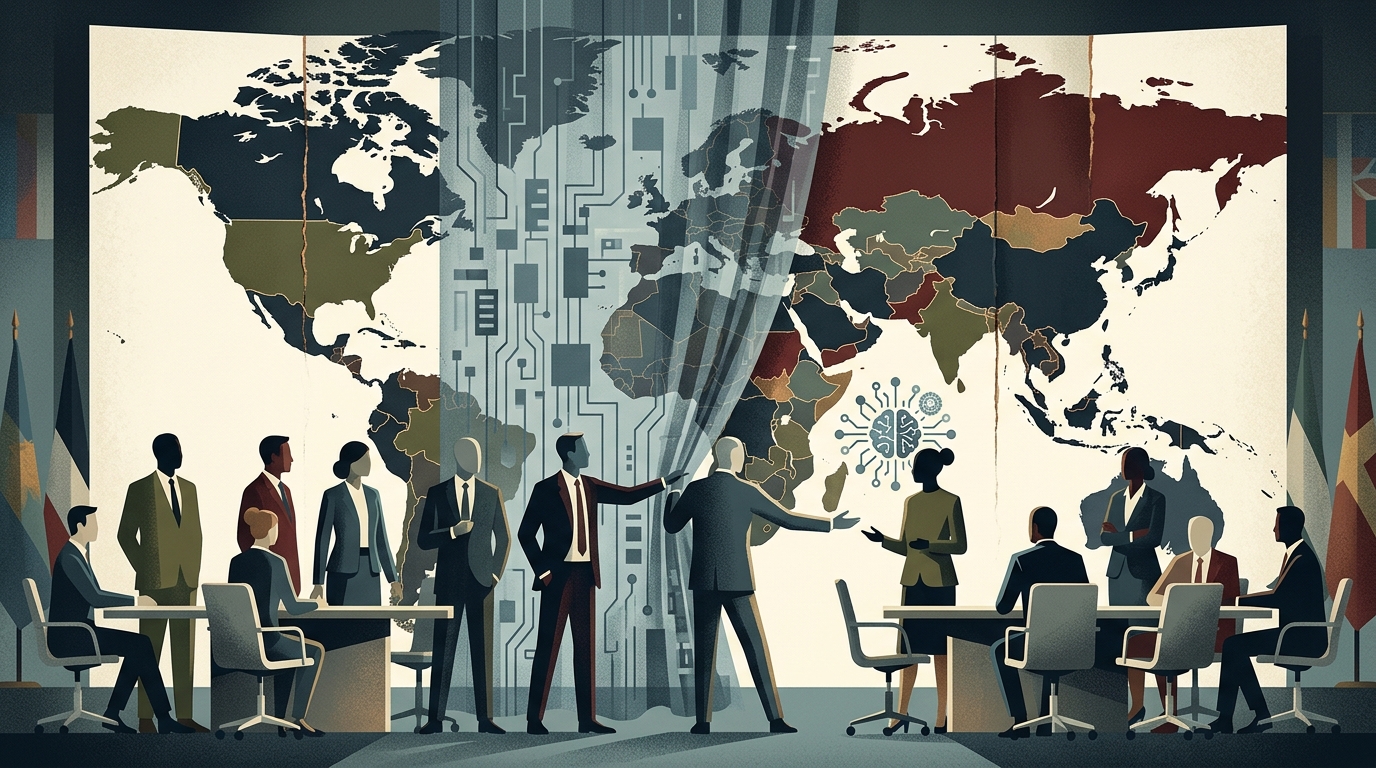
In conclusion, the imposition of travel limits on AI workers is the clearest sign yet that this technology is being treated as the ultimate weapon of the 21st century. As the AI "Silicon Curtain" rises, the world risks splitting into two incompatible technological ecosystems, with scientists caught in the crossfire.