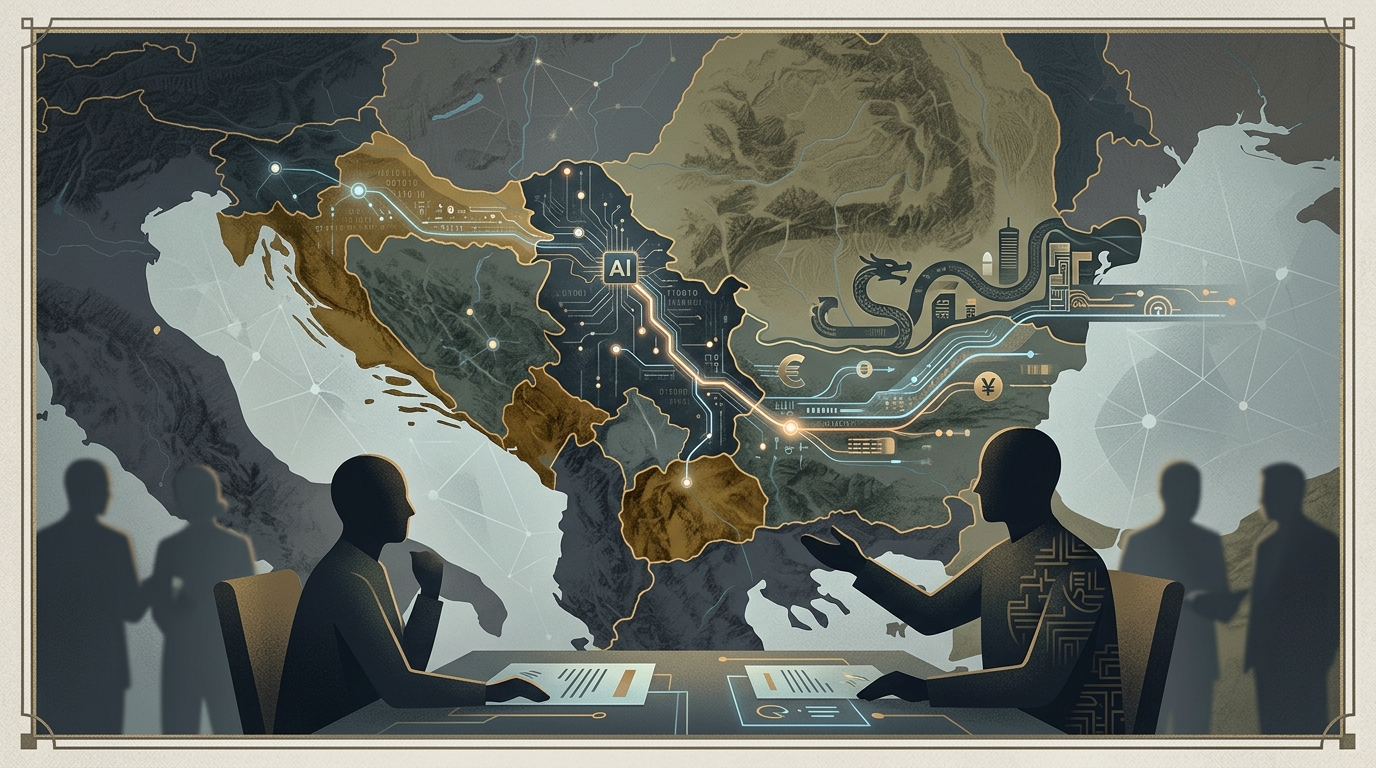
In a move that fundamentally redraws the geopolitical map of Southeastern Europe, China has announced a sweeping investment program worth €940 million in Serbia. This agreement transcends traditional infrastructure, targeting the very heart of the Fourth Industrial Revolution: Artificial Intelligence, robotics, and the production of components for electric mobility. As we navigate May 2026, this development is seen as the definitive consolidation of the "steel friendship" between Belgrade and Beijing, occurring at a time when Western relations with China are under immense strain.
The Strategic Shift to High-Tech
For decades, Chinese investments in the Balkans focused on roads, bridges, and coal-fired power plants. However, this new €940 million package signals a qualitative upgrade. Beijing is no longer merely seeking access to trade routes; it is aiming to create a technological ecosystem that functions as a "back door" to the European market. The investment includes the establishment of model Research and Development (R&D) centers for AI, where Chinese and Serbian scientists will collaborate on smart city applications and industrial automation.
Robotics is a central pillar of this deal. Analysts suggest that establishing production units for robotic systems in Serbia allows China to bypass many of the restrictions imposed by the European Union on Chinese technology imports. With Serbia remaining outside the EU while maintaining free trade agreements with the bloc, the country is transforming into an ideal "assembler" of Chinese innovations bearing the "Made in Serbia" label.
Automotive and EV: The Gateway to Europe
A significant portion of the funds will be directed toward the production of components for electric vehicles (EVs). China, a global leader in the battery and EV markets, views Serbia as a strategic partner due to the country's rich lithium deposits and competitive labor costs. The creation of automotive component factories will not only boost the local economy but also provide Chinese automakers with a production base within striking distance of German and French industrial giants.
"Serbia is no longer just a stop on the Silk Road, but a laboratory for the future of European industry under Chinese guidance," noted a Belgrade-based economic analyst.
This move coincides with increasing pressure from the EU on its member states to decouple from Chinese supply chains. Serbia, however, is taking the opposite path, betting that China's technological superiority will offer faster growth than the bureaucratic processes of EU integration.
Geopolitical Implications and Brussels' Reaction
The €940 million investment is not just economic; it is deeply political. Washington and Brussels are watching with concern as a digital "Iron Curtain" expands in the Balkans. The use of Chinese AI technology in Serbia's critical infrastructure raises questions about data security and cybersecurity in a region considered Europe's "soft underbelly."
Furthermore, Serbia is using these investments as leverage in its negotiations with the West. By demonstrating alternative sources of funding and technology, Belgrade strengthens its position, avoiding full alignment with EU foreign policy, particularly regarding Russia and China. The question remains whether this strategy of "multi-vector foreign policy" will prove sustainable in the long run, or if Serbia will find itself trapped in a technological dependency from which it will be impossible to break free.
Conclusion
The €940 million Chinese investment in Serbia represents a bold gamble for both parties. For China, it is an opportunity to solidify its presence in Europe through a friendly government. For Serbia, it is a ticket to the technological vanguard. However, the price of this partnership may not be measured only in euros, but in political autonomy and strategic direction for decades to come.