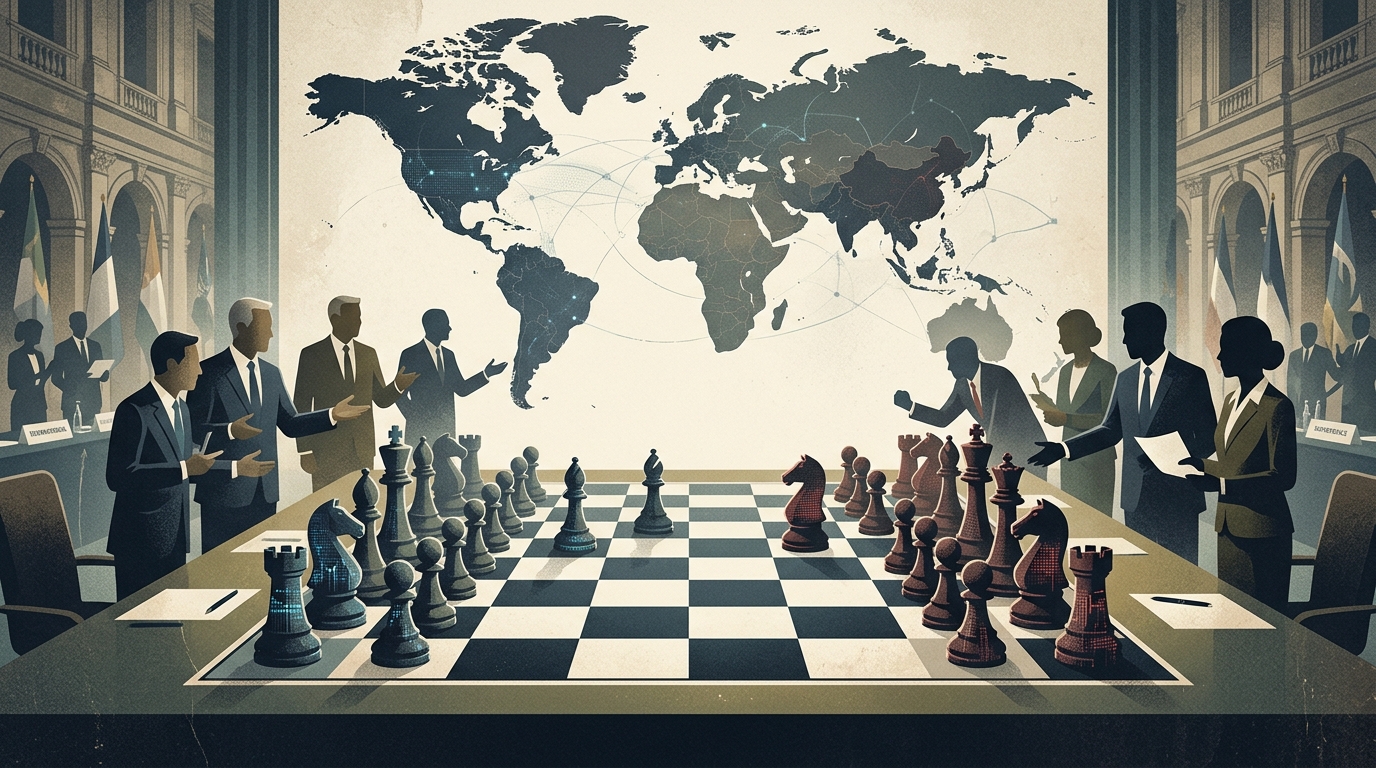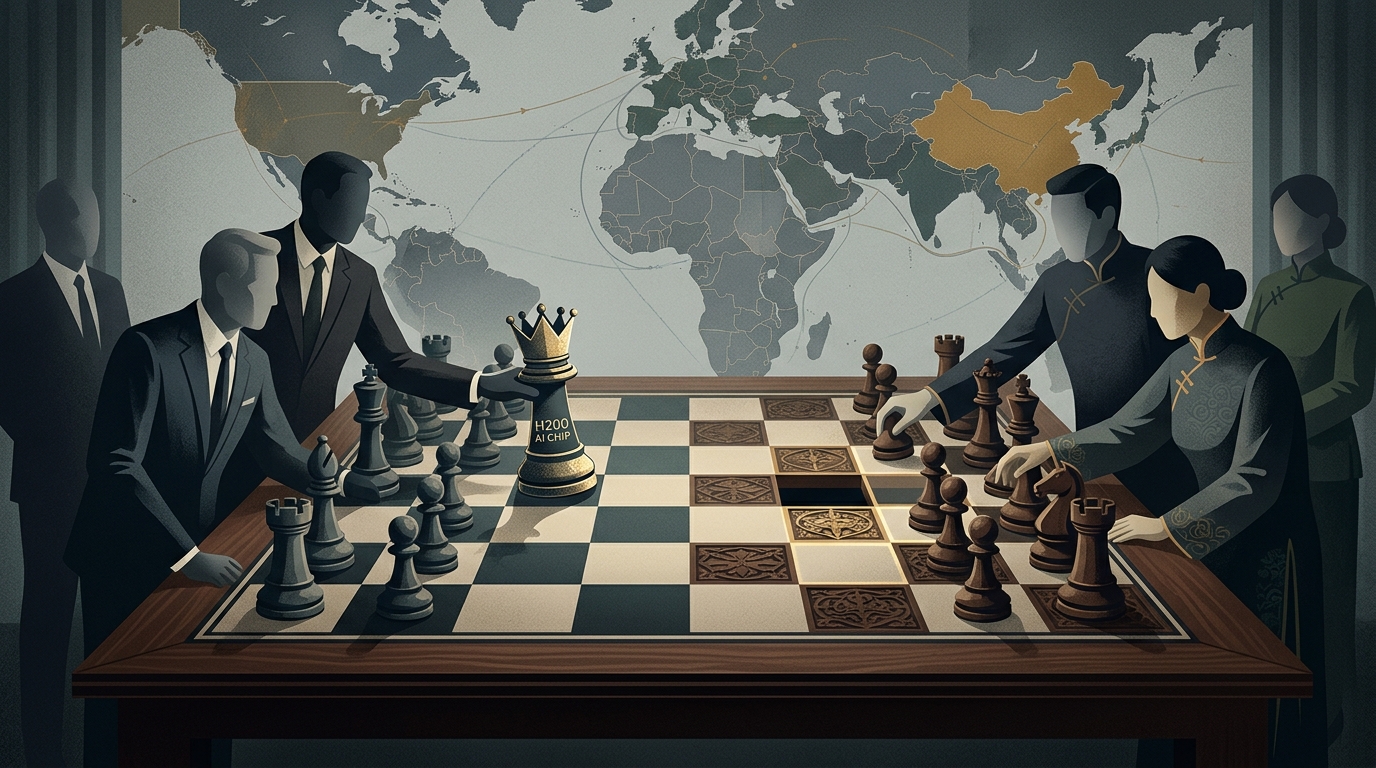
The global geopolitical stage is witnessing one of the most intricate maneuvers in modern industrial history: the relationship between Nvidia, the undisputed leader in Artificial Intelligence hardware, and China, a market ravenous for compute power but perpetually under the shadow of U.S. export restrictions. Recent reports indicating that China is selectively opening its market to Nvidia’s H200 architecture (specifically the export-compliant variants) mark a milestone that transcends simple commerce.
This is not merely about hardware sales. It is a strategic admission by Beijing that, despite the Herculean efforts of Huawei and other domestic champions, a significant gap in software ecosystems and chip efficiency persists. Nvidia, meanwhile, is walking a tightrope, attempting to satisfy the U.S. Department of Commerce while desperately trying not to cede 20% of its global revenue to Chinese competitors.
The Technological Bottleneck and Nvidia's Strategy
The H200 architecture represents the vanguard of Large Language Model (LLM) training. However, the versions destined for China are intentionally throttled to comply with U.S. performance caps. The central question for the industry was whether Chinese tech giants like Baidu, Tencent, and Alibaba would accept these "downgraded" high-cost chips or pivot decisively toward domestic alternatives.
The limited acceptance of H200-class chips suggests that China is opting for pragmatism. The urgent need for immediate AI deployment outweighs, for now, the ideological purity of total domestic self-reliance. Nvidia has successfully convinced Chinese clients that its CUDA ecosystem remains the gold standard, offering a level of developer accessibility that Huawei’s CANN platform has yet to fully replicate.
The Huawei Factor and Domestic Competition
Huawei is far from a passive observer. Its Ascend 910B chip is widely considered the primary domestic rival to Nvidia’s offerings in China. In specific benchmarks, its raw performance nears that of the U.S.-compliant Nvidia chips. However, China’s hurdle is not just design, but manufacturing. With restricted access to Extreme Ultraviolet (EUV) lithography machines from the Dutch firm ASML, scaling high-yield production remains a formidable challenge.
- Software Dominance: Nvidia’s CUDA has millions of developers globally, making the cost of switching to a new platform prohibitively high.
- Interconnectivity: Technologies like NVLink allow thousands of GPUs to function as a single massive supercomputer, a feat of engineering that domestic rivals struggle to scale.
- Energy Efficiency: In an era of energy constraints, the performance-per-watt metric is critical for the massive data centers powering AI.
Geopolitical Implications: Washington's Dilemma
The U.S. administration finds itself in a precarious position. If it tightens restrictions too severely, it risks accelerating China’s technological independence, potentially birthing a formidable competitor outside the reach of Western supply chains. If it loosens them, it risks allowing Beijing to achieve military and economic superiority through advanced AI.
"Semiconductor technology is the oil of the 21st century, but with a fundamental difference: its absence doesn't just stop transport; it halts the very evolution of the next generation of intelligence."
China’s decision to permit the entry of H200-class chips suggests a remaining window of interdependence. Neither side is quite ready for a total "decoupling" in the high-end compute sector. It is an "armed peace" in the technological realm.
The Future of the Global AI Market
As we move toward the latter half of the decade, the AI market is likely to remain fragmented. We are witnessing the birth of two parallel tech stacks: one built on Western standards and another on Chinese alternatives. Nvidia’s effort to tailor its products is a bid to remain the bridge between these two worlds. However, with mounting pressure from the U.S. Congress for even stricter controls, the long-term viability of the H200 series in China remains uncertain.
In conclusion, Nvidia’s limited re-entry into the Chinese market is a victory for business realism but also a stark reminder that in the age of AI, borders are more rigid than ever. A nation’s ability to train AI models now defines its national power, and in this race, no one wants to fall behind—even if it means using the tools provided by their primary strategic rival.