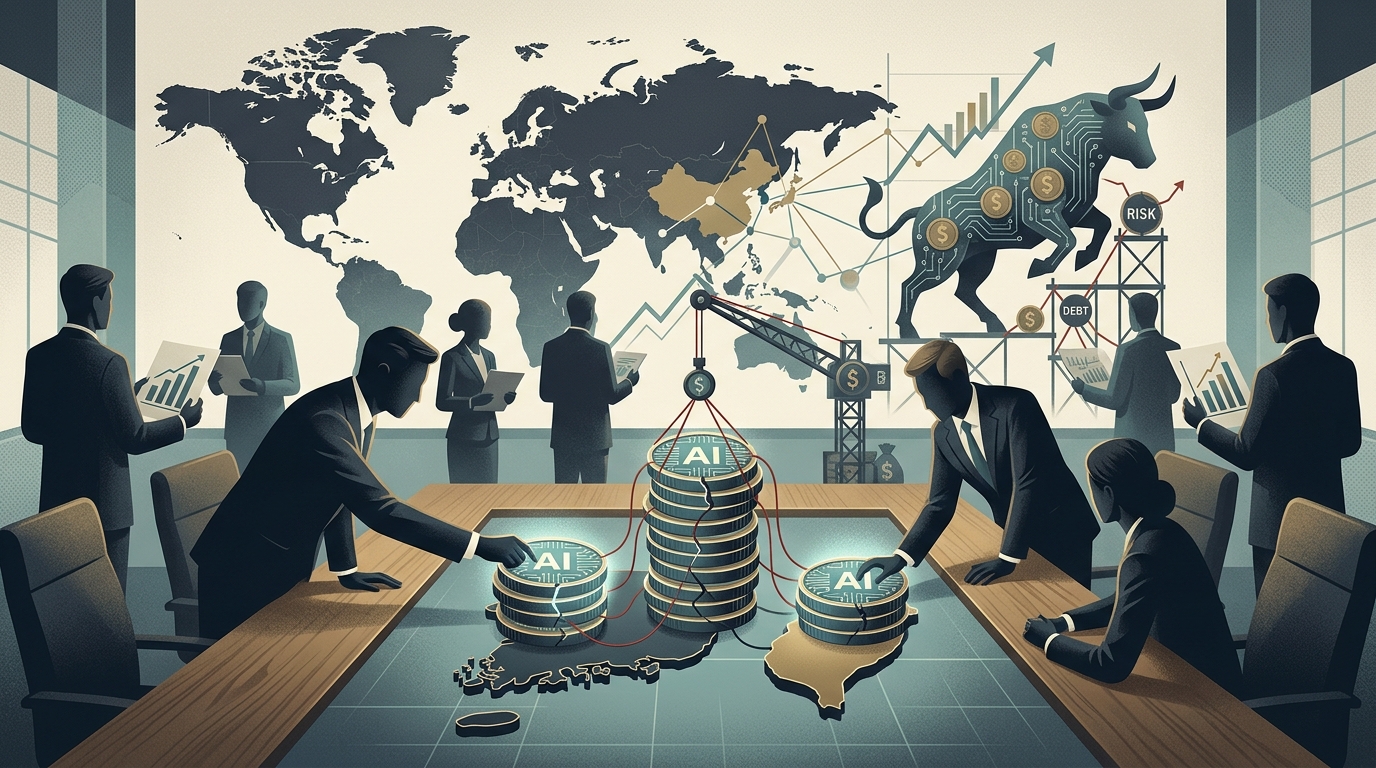
In the frantic race for Artificial Intelligence supremacy, attention is usually focused on NVIDIA’s powerful processors or OpenAI’s sophisticated language models. However, a quieter but equally critical battle is being fought at the foundational level of infrastructure: data transfer speed. At the heart of this struggle lies indium phosphide (InP), a compound semiconductor that serves as the backbone of high-speed optical communications. As China tightens its export controls on this critical material, the entire supply chain for AI data centers is facing a new, unpredictable threat.
The Critical Role of Indium Phosphide in the AI Era
Why is a relatively obscure material causing such a massive stir? The answer lies in the physics of data. Modern AI clusters consist of thousands of GPUs that must communicate with each other at speeds unimaginable for traditional copper cabling. This is where optical transceivers come in, converting electrical signals into light for transmission over fiber optics. Indium phosphide is the ideal material for manufacturing the lasers and detectors required for these connections, particularly at the 800G and 1.6T speeds that are the current standard for AI workloads.
Unlike silicon, InP allows for the emission of light at wavelengths that travel long distances through optical fibers with minimal loss. As the demand for bandwidth in data centers skyrockets, the reliance on InP has become absolute. Without it, the data traffic within these centers would hit a bottleneck, rendering even the fastest processors inefficient due to latency issues. The seamless flow of information that makes real-time AI possible depends on these tiny, high-performance components.
The Geopolitical Chessboard and Export Licenses
China holds a dominant position in the global production of indium phosphide wafers, controlling a vast portion of the market—estimated at 40% to 50% at various processing stages. Beijing’s decision to impose stricter export controls—similar to those placed on gallium and germanium last year—is viewed by many analysts as a strategic countermove to U.S. restrictions on China’s access to advanced chipmaking technology.
“It is no longer just about who has the best chips, but about who controls the materials that allow those chips to function as a unified system,” says a semiconductor industry executive.
The new requirements for export licenses create bureaucratic hurdles and immense uncertainty. Western firms relying on Chinese suppliers for InP substrates now face the prospect of delays that could last months, threatening the rollout schedules of major cloud providers such as Microsoft, Google, and Amazon. This is not just a trade friction; it is the weaponization of the supply chain in a high-stakes technological cold war.
Market Consequences and the Search for Alternatives
The optical components market is currently in a state of upheaval. Industry giants like Coherent and Lumentum, which supply data center builders, are working feverishly to diversify their sourcing. However, establishing new InP production and processing facilities outside of China is neither easy nor cheap. It requires specialized expertise and massive infrastructure investments that take years to materialize.
- Cost Escalation: Scarcity and geopolitical risk are driving raw material prices higher, which will eventually be passed down to the cost of AI services.
- Technological Pivot: Some researchers are looking at "silicon photonics" as an alternative, though this technology often still requires an InP-based light source to function effectively.
- Strategic Stockpiling: Many companies have begun hoarding supplies, which exacerbates the immediate market shortage and creates artificial price spikes.
This situation highlights the fragile nature of the global technology supply chain. While the West leads in software design and chip architecture, the East remains the "gatekeeper" of the physical resources. This asymmetry creates a dangerous leverage point that could slow down the global adoption of AI while widening the gap between nations with resource access and those without. The "just-in-time" manufacturing model is being replaced by a "just-in-case" strategy, which is inherently more expensive and less efficient.
Conclusion: A New Reality for the Tech Sector
The indium phosphide crisis is a loud warning signal. The era of unfettered globalization in technology appears to be giving way to an era of "techno-nationalism." For the data centers powering our future, the greatest threat is no longer a computer virus or a cyberattack, but the shortage of a crystal mined and processed thousands of miles away. The West's ability to develop domestic supply chains or find revolutionary technological alternatives will determine whether the AI revolution continues at its current pace or hits a wall made of rare minerals. As we look toward 2026 and beyond, the resilience of the supply chain will be just as important as the number of parameters in a neural network.