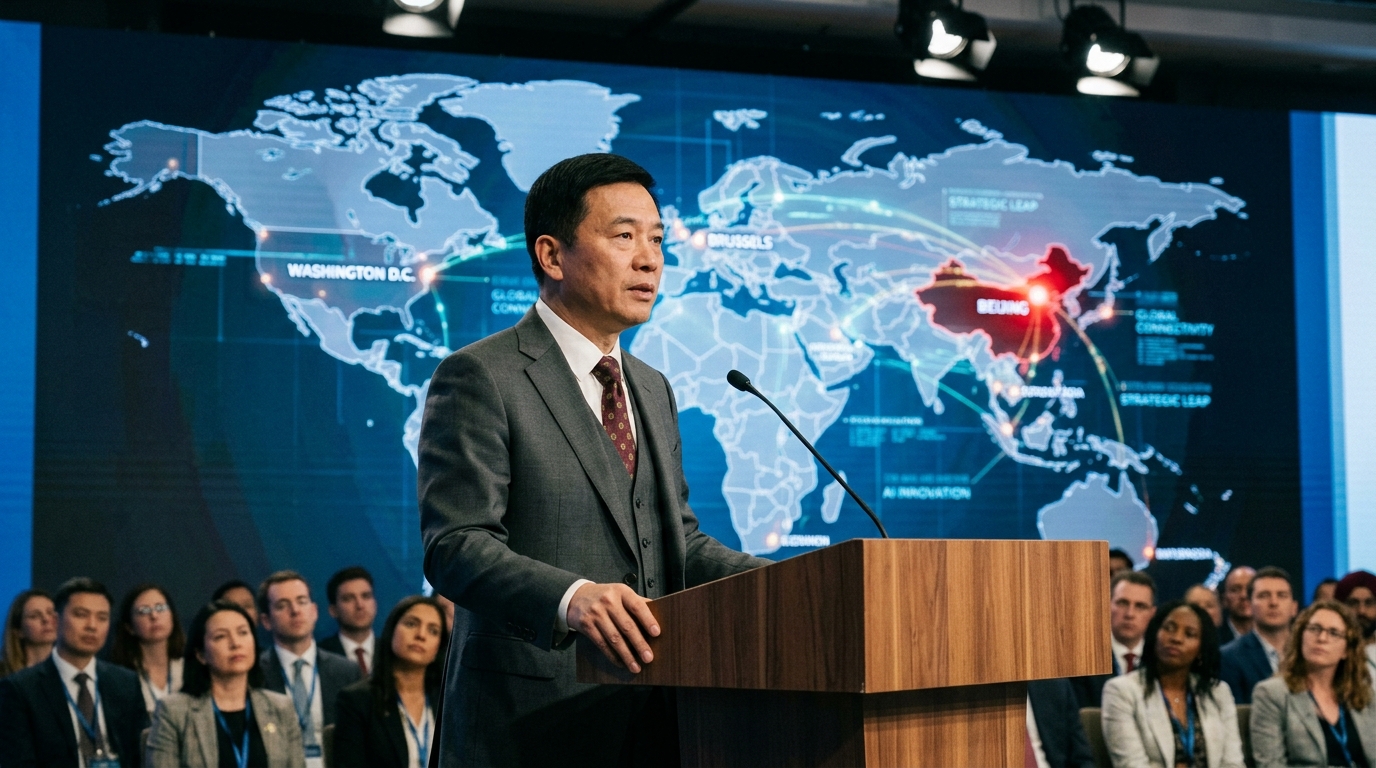
The global geopolitical chessboard of the 21st century is no longer defined by nuclear arsenals or control over oil fields, but by lines of code and the computational power of Large Language Models (LLMs). Today, in April 2026, we find ourselves at a critical tipping point. China, which for decades was dismissed as a mere "copycat" of the West, has successfully transformed into an autonomous pole of AI innovation, directly challenging the long-held primacy of the United States.
The Strategy of 'Asymmetric Innovation'
While Silicon Valley focused on brute force—leveraging vast amounts of data and energy-hungry Nvidia GPUs—Beijing was forced to take a different path due to US-led export controls. This "asymmetric innovation" has led to the development of models that are remarkably efficient, requiring less energy and less sophisticated hardware to achieve results comparable to GPT-5 or Claude 4.
The rise of entities like DeepSeek, which sent shockwaves through the global tech community, was not an isolated incident. It was a symptom of a profound structural shift. Chinese researchers have perfected techniques such as Mixture of Experts (MoE) and knowledge distillation, allowing domestic giants like Alibaba, Baidu, and Huawei to offer AI solutions that are simultaneously cheaper and faster than their American counterparts.
- Efficiency: Models trained at a fraction of the cost of OpenAI’s flagship systems.
- Hardware Resilience: Huawei and SMIC have managed to narrow the gap despite 3nm chip export restrictions.
- Data Sovereignty: Access to a massive pool of industrial and social data from 1.4 billion citizens.
The US Response and Technological Protectionism
Washington is watching with growing concern. The restrictions imposed by the US Department of Commerce have failed to halt Chinese progress; instead, they have acted as a catalyst for China’s domestic self-sufficiency. The "Thucydides Trap" is now playing out in the digital realm. While the US invests billions through the CHIPS Act, China responds with a state-directed mobilization of resources reminiscent of the Cold War Space Race.
"We are no longer in a race to see who gets there first, but who defines the rules of the game for the rest of the planet," notes a senior international relations analyst in Beijing.
Social and Ethical Implications
However, the Chinese AI model is not without its challenges. Strict censorship and the requirement for models to align with Communist Party values create inherent "blind spots" in content generation. Conversely, the deep integration of AI into manufacturing and logistics gives China a massive advantage in the real economy—the "brick and mortar" of the future—contrasting with the American focus on consumer services and software.
Europe, observing this titanic competition, is attempting to find its footing through regulation like the AI Act. But the harsh reality remains: without its own computational infrastructure, the Old Continent risks becoming a mere consumer of technologies developed either in California or Shenzhen.
Conclusion: A Bipolar Digital World
2026 marks the definitive end of Western mono-hegemony in high technology. China has proven that innovation does not only flourish in liberal environments but can be precisely engineered by a centralized state. The question is no longer if China will surpass the US, but how these two superpowers will coexist without leading the world into a total digital decoupling that fractures the internet as we know it.