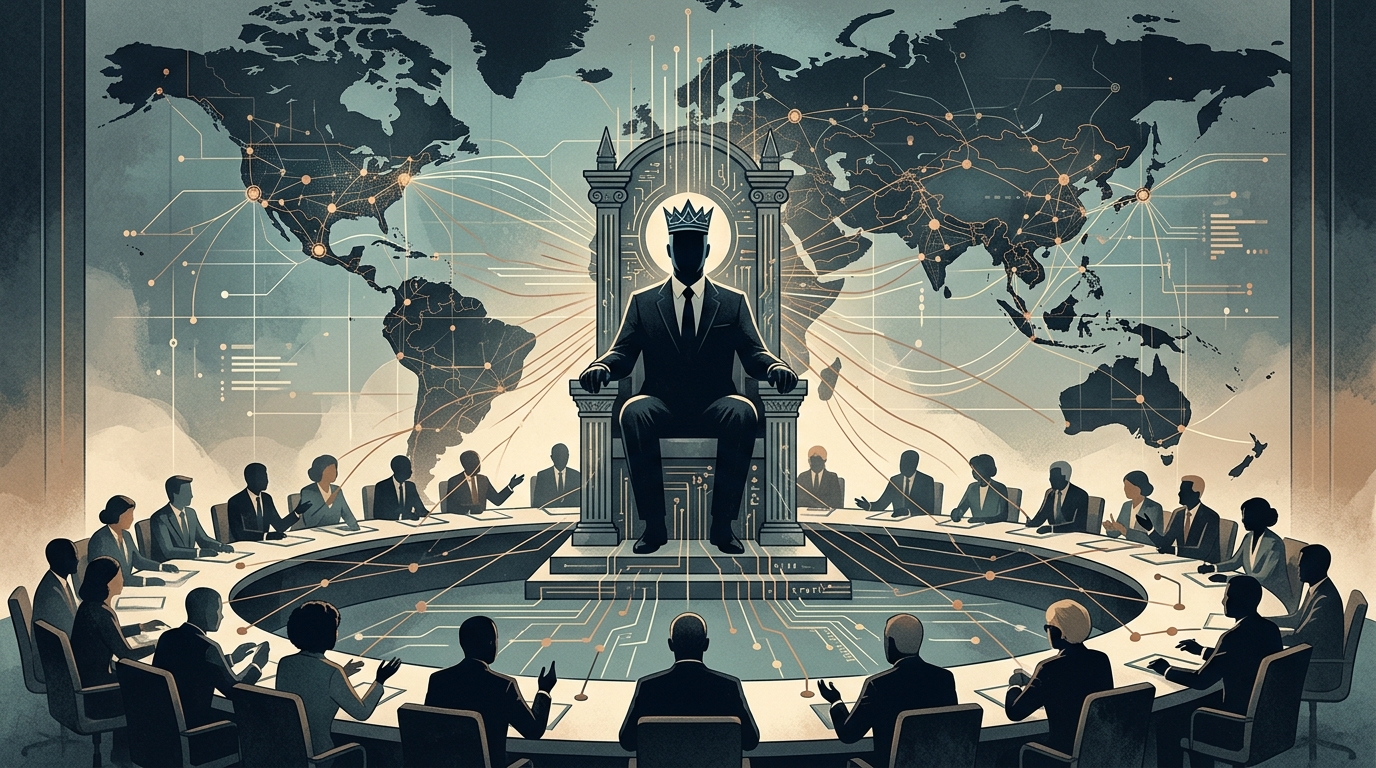
The global AI chessboard is no longer defined solely by who possesses the fastest processors, but by who controls the software stack that makes them viable. For over a decade, Nvidia has maintained a stranglehold on the industry through CUDA (Compute Unified Device Architecture), an ecosystem that has become the de facto language of AI development. However, the emergence of DeepSeek-V4, optimized specifically for Huawei’s CANN (Compute Architecture for Neural Networks), signals a tectonic shift. This is not merely a technical milestone; it is a geopolitical declaration of independence.
The Software Moat and the CUDA Hegemony
To understand the gravity of the shift toward CANN, one must appreciate the sheer scale of the 'moat' Nvidia has constructed. CUDA is not just a driver; it is a vast repository of kernels, optimization tools, and pre-written code that allows developers to extract maximum performance from GPUs with minimal friction. This dependency has historically been the greatest barrier to entry for any competitor. Porting a massive model like DeepSeek to a non-Nvidia architecture used to require months of manual labor and often resulted in significant performance degradation.
Huawei, cornered by US export controls, was forced to build its own equivalent ecosystem from the ground up. CANN serves as the bridge between Ascend hardware and AI frameworks like MindSpore or PyTorch. The news that DeepSeek-V4, one of the world's most efficient large language models, now runs natively and optimally on Ascend chips via CANN proves that Nvidia’s software fortress is no longer impregnable.
DeepSeek-V4: The Catalyst for Decoupling
DeepSeek-V4 is a strategic choice for this transition. Known for its architectural efficiency and innovative use of Mixture-of-Experts (MoE), the model is designed to push hardware to its limits. The collaboration between DeepSeek engineers and Huawei’s software team has led to deep-level optimizations of operators within the CANN framework, achieving performance metrics that rival Nvidia’s H100 in specific enterprise workloads.
- Low-level kernel optimization for MoE architectures.
- Drastic reduction in inter-node communication latency.
- Enhanced support for the open-source ecosystem, facilitating easier migration for other developers.
This development shatters the narrative that China is destined to run on inferior software. If DeepSeek-V4 can be trained and deployed at scale without a single line of CUDA code, then the path to full technological decoupling is clear. China’s 'CUDA Exit' strategy has moved from a theoretical fallback to an operational reality.
Geopolitical Implications: The Rise of Digital Bipolarity
The success of CANN has profound political consequences. US strategy has centered on choking China’s access to high-end silicon. However, the history of technology suggests that restrictions often act as catalysts for indigenous innovation. If China succeeds in standardizing CANN as a viable global alternative, we are witnessing the birth of a bifurcated AI world: a Western bloc powered by CUDA and an Eastern bloc powered by CANN and Ascend.
“The dominance of a standard ends where the necessity for survival begins. China isn’t choosing to leave CUDA; it is being forced to build something better for its own survival,” noted industry analysts in Beijing.
This scenario could lead to a fragmented global software market, increasing costs for multinational corporations that will eventually have to maintain dual-stack compatibility. Simultaneously, it bolsters the resilience of the Chinese supply chain, making it immune to future sanctions or diplomatic leverage.
Conclusion: The End of the Monoculture
The CANN vs. CUDA battle is the most significant software confrontation of the decade. DeepSeek-V4 has demonstrated that Huawei possesses not just the hardware, but the intellectual infrastructure to power the future of AI. While Nvidia remains the undisputed leader for now, its era of absolute monoculture is drawing to a close. For the global tech community, this heralds a period of intense competition and increasing complexity as the world divides behind an invisible digital iron curtain.