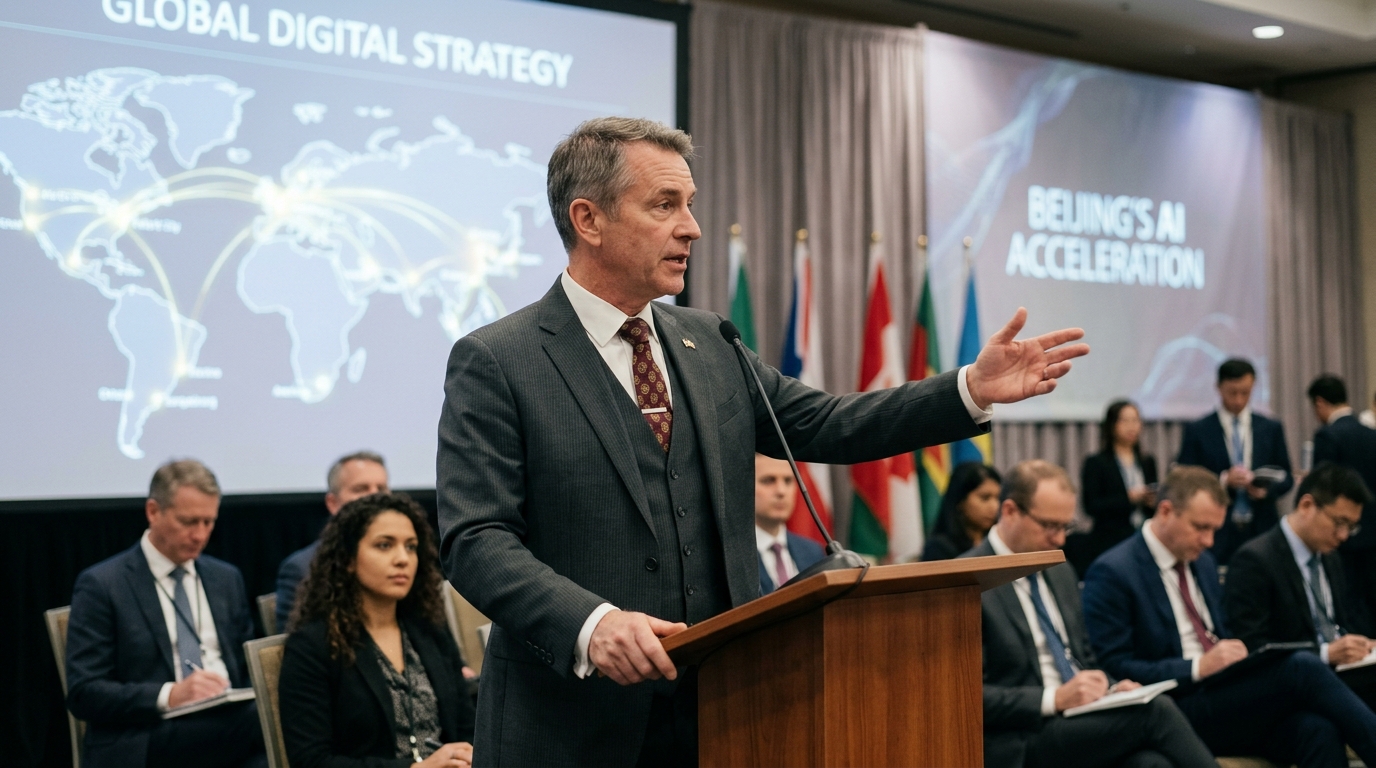
The race for Artificial Intelligence (AI) supremacy is entering a new, more aggressive phase, with Beijing spearheading a strategy that no longer focuses solely on research, but on the universal consumption and application of technology in everyday life and industry. The recently announced action plan by Beijing’s municipal authorities, in coordination with the central government, serves as a manifesto for China’s 'digital renaissance' at a time when geopolitical pressures from the West are intensifying.
This plan is not merely a wish list; it is a roadmap with specific targets and financial instruments. The Chinese capital aims to transform itself into a global innovation hub, promoting the use of Large Language Models (LLMs) in every facet of public and private life. From healthcare and education to manufacturing and the supply chain, AI is called upon to become the 'new electricity' powering the next phase of Chinese growth.
The 'Computing Power Vouchers' Strategy
One of the most intriguing aspects of the plan is the introduction of 'computing power vouchers.' Recognizing that the high cost of processing power is a barrier for small and medium-sized enterprises (SMEs), Beijing has decided to subsidize access to cloud infrastructure and data centers. This allows startups to train their own AI models without requiring the massive upfront investment in hardware—which, incidentally, is becoming increasingly scarce due to US restrictions on high-tech chip exports.
This move aims to democratize AI within Chinese borders. While AI development in the US is dominated by a few tech giants like Microsoft, Google, and Meta, China seeks to create an ecosystem where thousands of smaller players contribute to innovation. The logic is simple: the more businesses use AI, the more data is generated, and the faster algorithms improve.
Autonomy and the Response to Sanctions
One cannot analyze Beijing’s plan without considering the geopolitical context. The United States has imposed strict restrictions on China's access to advanced semiconductors (such as those from Nvidia). Beijing’s response is 'accelerated substitution.' The plan emphasizes the development of domestic software and hardware capable of competing with Western standards.
"Technological autonomy is no longer an option, but a matter of survival. Beijing is demonstrating that the response to pressure is massive domestic consumption and vertical integration," market analysts note.
Furthermore, the plan provides for the creation of high-quality 'open datasets.' In AI, data is the fuel, and China possesses an ocean of data due to its vast population and already high level of service digitization. Beijing intends to organize this data so that it is easily accessible for model training, giving a clear advantage to domestic developers.
Ethics, Regulation, and Social Control
Alongside development, Beijing is setting the framework for 'safe and controlled' AI. Unlike the more liberal framework of the West, China imposes strict rules on AI-generated content, ensuring it aligns with 'core socialist values.' This creates a unique challenge: how can you have a creative and innovative AI that simultaneously remains within strict ideological boundaries?
The action plan includes the creation of evaluation mechanisms for AI model safety before they are released to the public. This indicates that the Chinese leadership views AI not only as an economic tool but also as a matter of national security. The ability to control information in the era of deepfakes and Generative AI is considered crucial for state stability.
Conclusion: A New Growth Model
Beijing’s plan for the rapid development of AI consumption is a high-stakes, high-reward bet. If successful, China could overcome the hurdles posed by sanctions, creating a self-sufficient digital economy that serves as a model for the rest of the world. The battle for AI will not be decided only in laboratories, but in factories, hospitals, and schools—where technology meets the real economy. Beijing knows this well and is moving at a speed that causes both awe and concern in the international community.