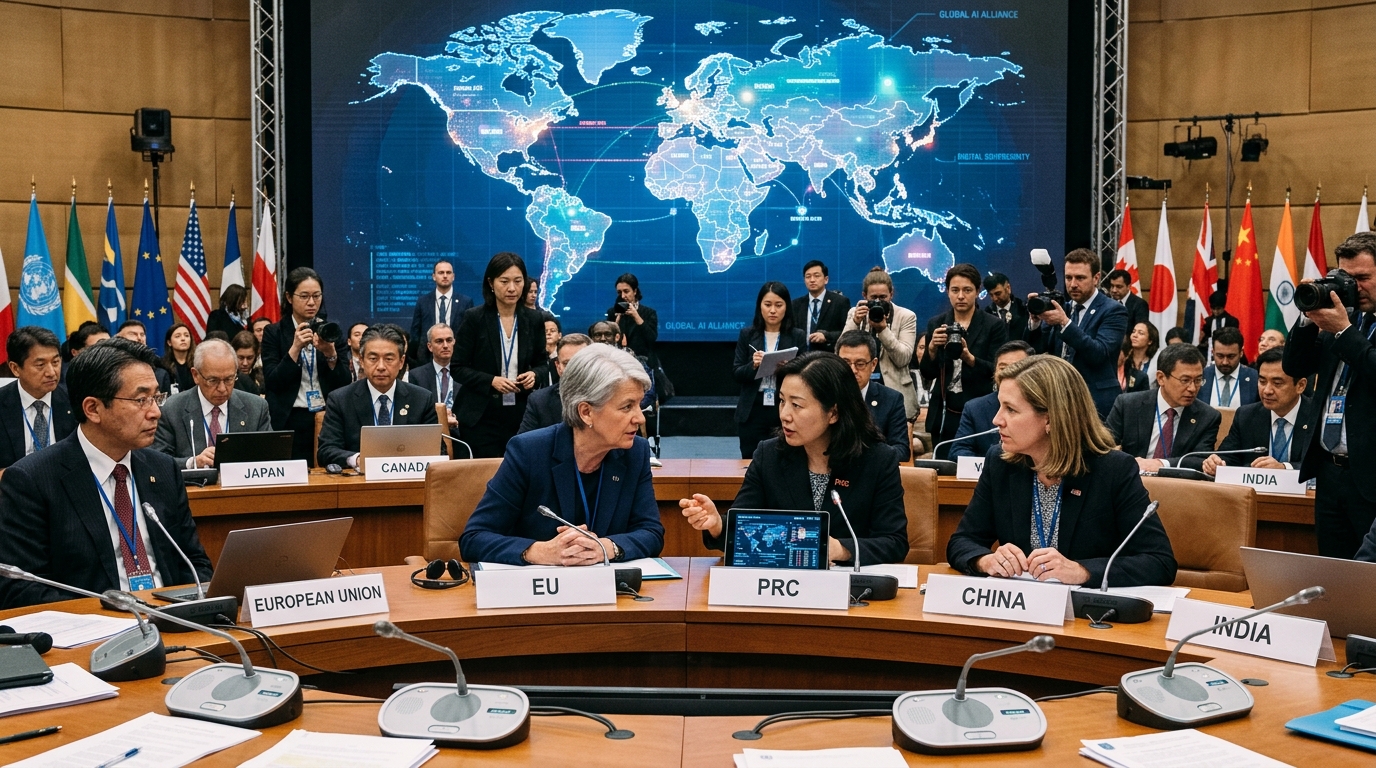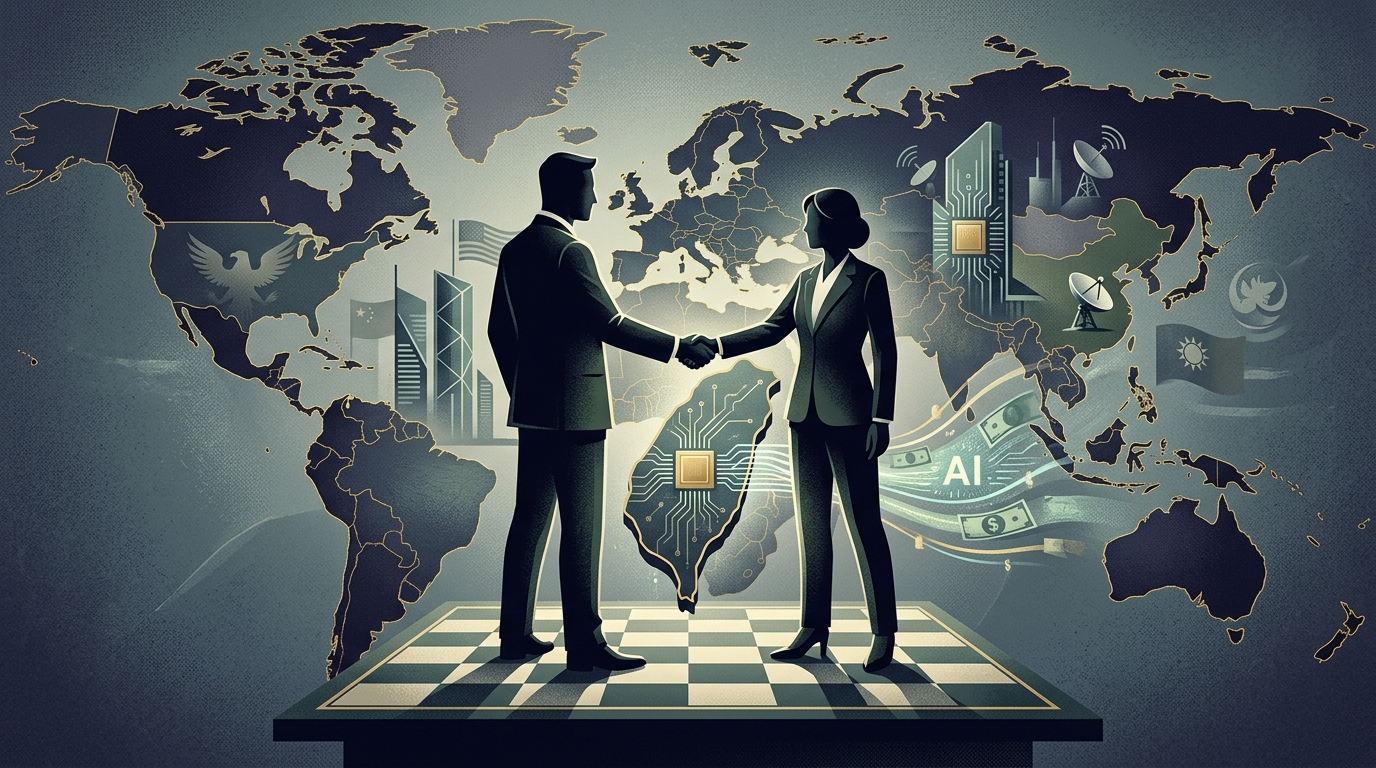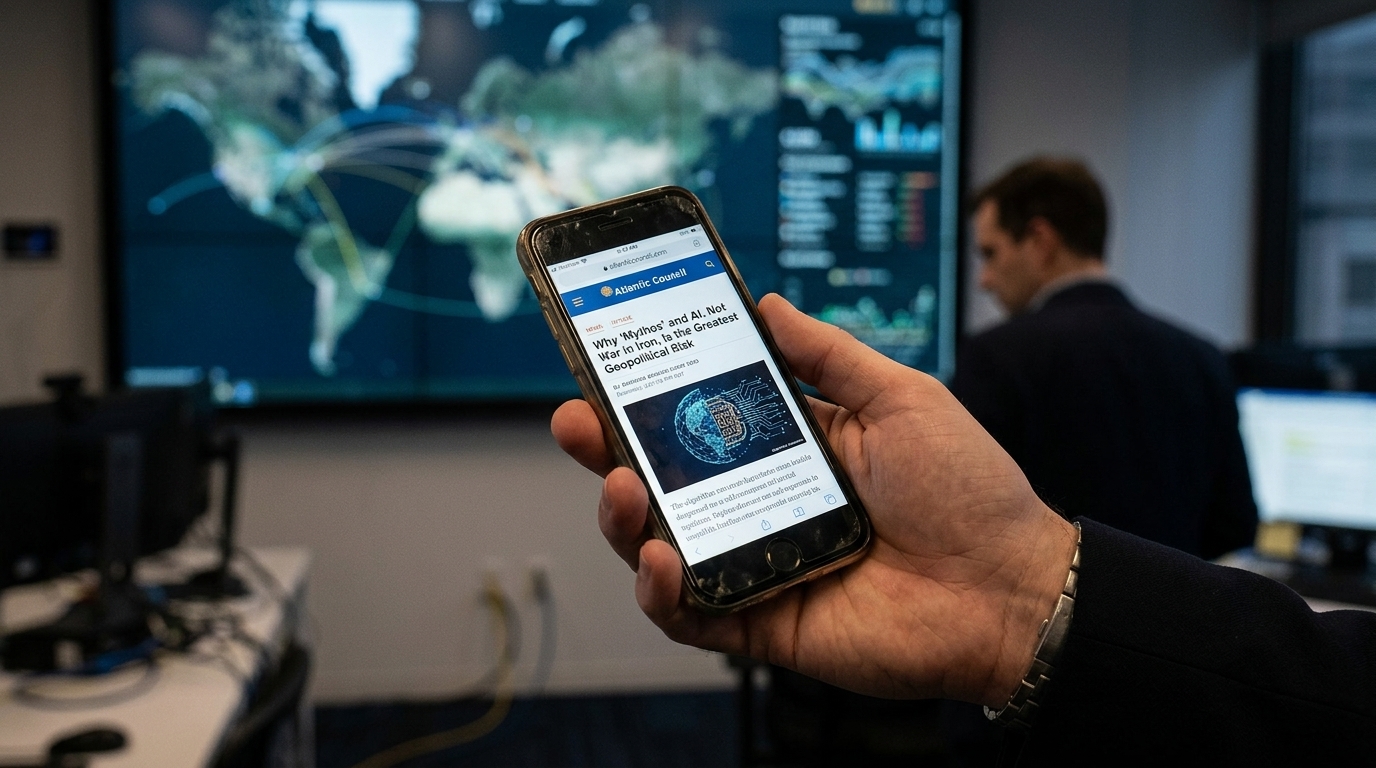
In an era where news headlines are dominated by escalating tensions in the Middle East and the specter of a full-scale war with Iran, a new analysis from the Atlantic Council is upending the traditional paradigms of global security. The report argues that the true existential risk to the international order lies not in the Strait of Hormuz or Tehran’s nuclear facilities, but in something far more abstract and pervasive: the AI 'Mythos.'
The term 'Mythos' refers not just to fake news, but to a structural shift in how societies perceive reality. As Generative AI technologies evolve at exponential rates, the ability of state and non-state actors to construct alternative realities is becoming the ultimate geopolitical weapon. This 'revolution of velocity' leaves little time for global leaders to adapt, as they remain trapped in analog models of governance and diplomacy.
Time Compression and the Failure of Policy
The Atlantic Council’s primary argument centers on the widening chasm between technological evolution and political response. While previous industrial revolutions took decades to reshape the social contract, the AI revolution is unfolding in months. This 'time compression' means that the deterrence mechanisms and international treaties that applied to nuclear weapons or first-generation cyber warfare are now obsolete.
According to the report, a war in Iran, however catastrophic, follows established patterns of strategy and diplomacy. There are communication channels, red lines, and a clear distinction between peace and war. In contrast, the AI 'Mythos' operates in a gray zone. Using deepfakes to destabilize an election or deploying algorithms to trigger artificial economic panic requires no troop movements, yet it can collapse a state from within.
"Artificial Intelligence is not just a new tool in the arsenal of great powers; it is the environment in which all future conflicts will be waged," the report states emphatically.
The Erosion of Shared Reality as a Geopolitical Weapon
One of the most disturbing points of the analysis is the emergence of 'post-truth' as a dominant geopolitical risk. When citizens can no longer distinguish between the real and the fabricated, social cohesion dissolves. This creates a power vacuum that authoritarian regimes exploit to advance their interests without firing a single shot.
- Automated Propaganda: The ability to generate millions of personalized messages targeting the psychological vulnerabilities of individual citizens.
- Strategic Deception: Using AI to create false military signals or diplomatic documents that can lead to catastrophic miscalculations by major powers.
- Economic Sabotage: Algorithms capable of manipulating markets in fractions of a second, causing crises that central banks are powerless to halt.
The Atlantic Council emphasizes that the West is particularly vulnerable to this threat due to the open nature of its societies. While China and Russia implement strict controls over their digital environments, democracies rely on the free flow of information—a freedom that is now being turned into a Trojan horse for the 'Mythos.'
Towards a New Digital Westphalia?
The report concludes with an urgent call for the creation of a new international framework, a 'Digital Westphalia,' to establish rules for the use of AI on the international stage. However, the challenge is immense: how do you regulate something that changes faster than the process of drafting a treaty? Proposals for 'algorithmic diplomacy' and enhancing citizen resilience through media literacy are steps in the right direction, but they may be insufficient against the coming storm.
The geopolitics of the 21st century will not be decided by who has the most tanks, but by who controls the narrative. If the 'Mythos' prevails, the concept of national sovereignty will become a dead letter, as the decisions of nations will be made in an environment fully controlled by algorithms that no one fully understands.