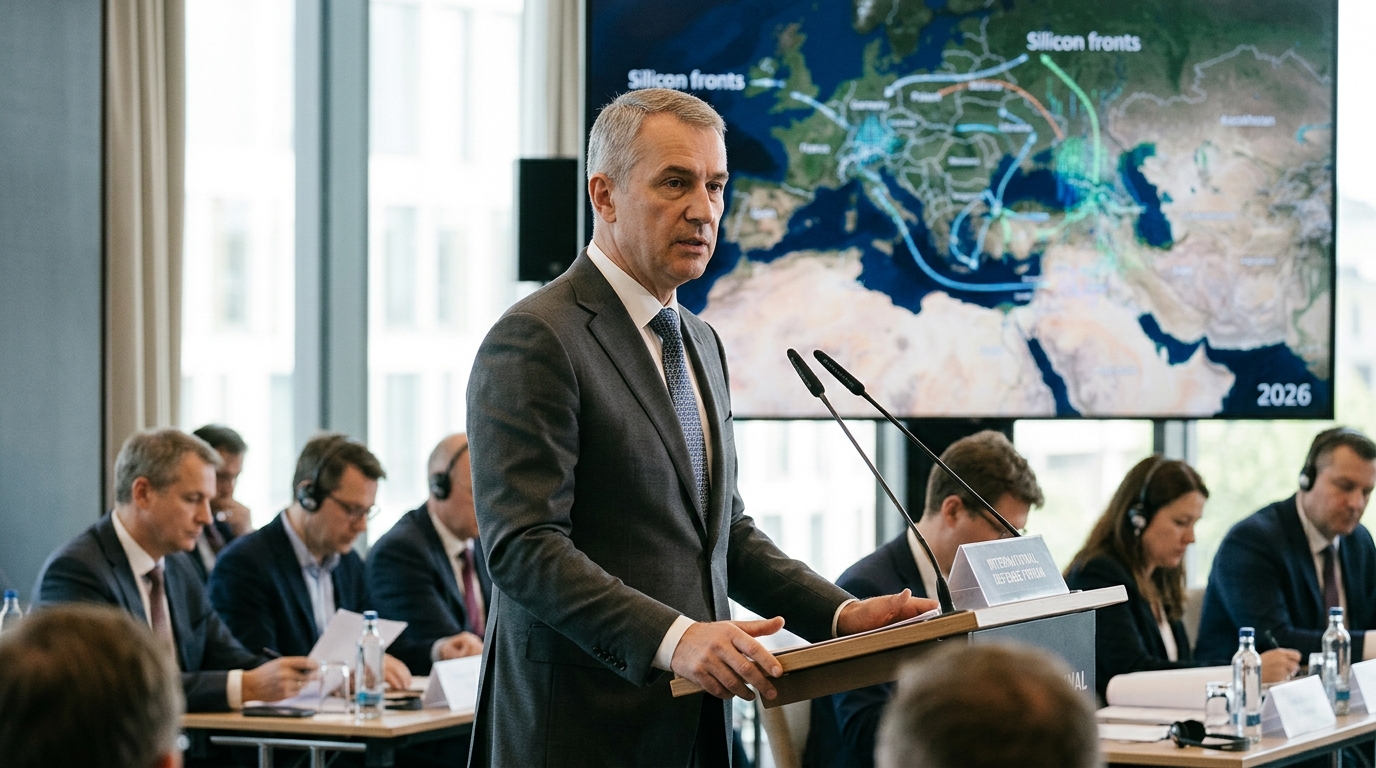
In July 2026, war is no longer fought solely with firepower, but with data velocity. Artificial Intelligence (AI) has long ceased to be a theoretical advantage in the labs of Silicon Valley or Beijing. Today, it serves as the central nervous system of every military operation, from target recognition in Ukraine to conflict deterrence in the Taiwan Strait. The transition from 'smart' warfare to 'autonomous' warfare is complete, forcing humanity to confront ethical and strategic dilemmas that international diplomacy is struggling to address.
The Collapse of the OODA Loop and Algorithmic Superiority
In classical military theory, the OODA loop (Observe, Orient, Decide, Act) describes the decision-making process. Historically, the time from observing an enemy to neutralizing them was measured in minutes or hours. With AI integration, this duration has shrunk to milliseconds. Computer Vision systems analyze thousands of hours of drone footage in real-time, identifying camouflaged units that the human eye would simply miss.
However, the issue isn't just speed; it's the displacement of responsibility. When an algorithm decides an object is a threat, human intervention is often reduced to a mere confirmation (human-on-the-loop). In many scenarios, the pace of developments necessitates full autonomy (human-out-of-the-loop), creating a new reality where machines select and engage targets without direct human commands. This 'algorithmic superiority' has become the new nuclear weapon of our era.
The Democratization of Lethality: Drones and Swarms
One of the most unsettling features of modern combat is the ease of access to lethal technologies. A military no longer needs billions for fifth-generation fighter jets. With a few thousand dollars and open-source software, even non-state actors can deploy kamikaze drone swarms that communicate with each other to overwhelm sophisticated air defense systems.
- Drone Swarms: Dozens of small aircraft operating as a single organism, rendering traditional radar systems obsolete.
- Predictive Maintenance: AI predicts when a component in a tank or aircraft will fail before it happens, keeping supply lines uninterrupted.
- Psychological Operations (Deepfakes): Using manipulated media to disorient enemy populations and leadership.
This evolution has shifted the geopolitical balance. Smaller nations can now project power disproportionate to their size, forcing superpowers to invest billions in AI countermeasures in an endless arms race.
The Ethical Abyss and the Absence of International Frameworks
Despite warnings from scientists and international organizations, a 'Geneva Convention for AI' does not yet exist. Major powers are reluctant to limit the development of autonomous weapons, fearing such a move would grant an advantage to their rivals. The question remains: who bears responsibility for a war crime committed by an algorithm? The programmer, the commander who activated the system, or the corporation that built the software?
"Artificial intelligence isn't just changing how we fight, but what it means to be a soldier. The virtue of judgment is being replaced by the efficiency of code," notes a senior NATO official.
In this landscape, the concept of deterrence is morphing. During the Cold War, deterrence was based on 'Mutually Assured Destruction.' Today, it relies on 'Mutually Assured Algorithmic Opacity.' No one knows for certain the capabilities of enemy software, making conflicts more unpredictable and the risk of escalation from a bot's miscalculation more likely than ever.