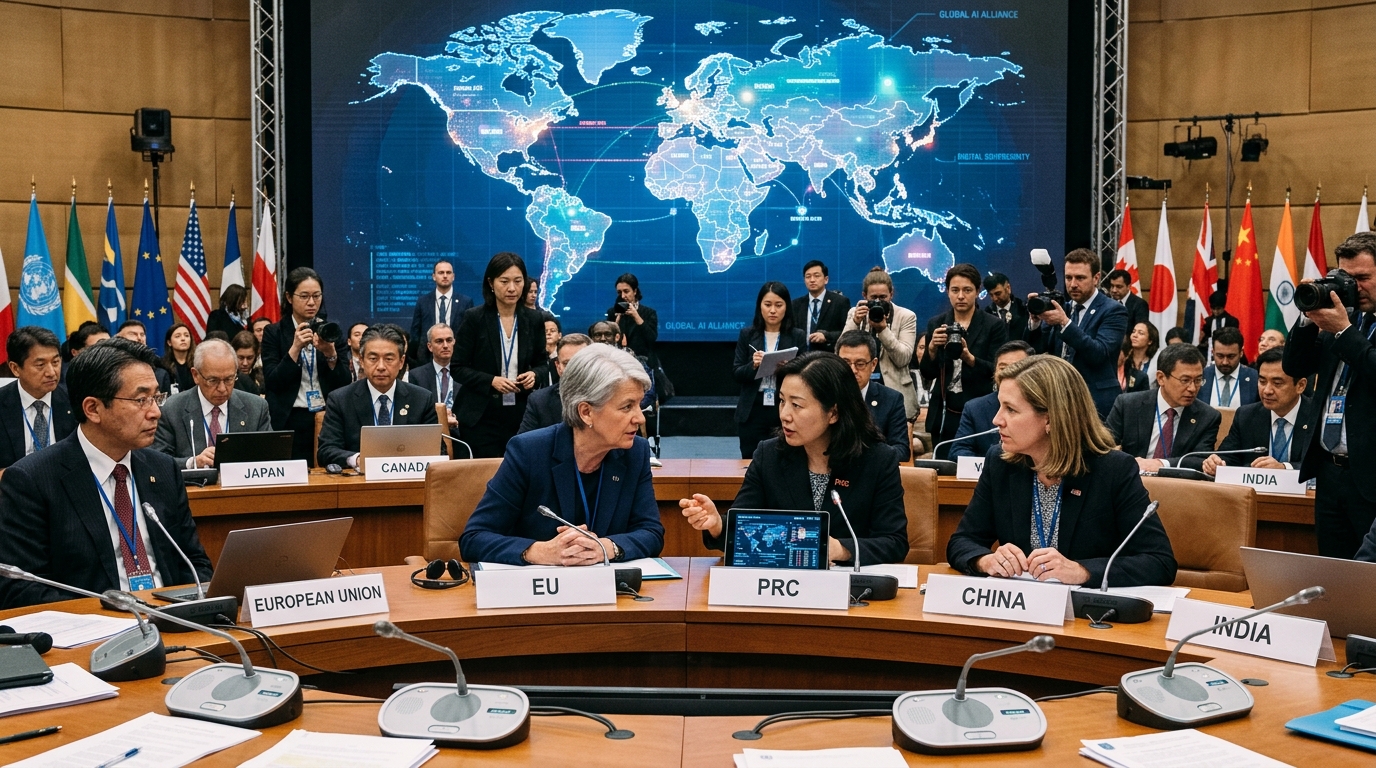
The news emerging from diplomatic circles in Baku, Azerbaijan, on the morning of Friday, May 15, 2026, has sent shockwaves through global markets and policy centers. Following years of stringent restrictions and a near-total blockade on Chinese access to cutting-edge technology, the U.S. Department of Commerce has authorized the sale of Nvidia’s H200 AI processors to the Chinese conglomerate Alibaba. This move, apparently the result of back-channel negotiations during the Caspian Energy and Tech Security Summit, upends the established narrative of the global power struggle.
The Strategic Weight of the Nvidia H200
The H200 is far more than a mere processor. It serves as the computational engine for modern Large Language Models (LLMs) and generative AI. Built on the Hopper architecture and utilizing HBM3e memory, the H200 offers speeds and capacities that make training models—like Alibaba’s Qwen—not just faster, but qualitatively superior. Until today, the U.S. government adhered to the “small yard, high fence” doctrine, banning any exports that could grant China an edge in developing AI for military or strategic purposes.
Why this shift, and why now? Analysts suggest that Alibaba successfully lobbied U.S. authorities through an unprecedented “verifiable end-use” framework. Reports indicate that the chips will be housed in specific data centers subject to remote monitoring and regular inspections by independent international bodies, ensuring that the processing power is dedicated solely to commercial cloud applications rather than state defense programs.
Azerbaijan as a Diplomatic Pivot
The selection of Baku as the venue for this announcement is calculated. Azerbaijan has emerged as a critical intermediary between East and West, providing a “neutral ground” where U.S. tech firms and Chinese giants can meet away from the political glare of Washington or Beijing. The deal appears to include energy-related concessions, with China committing to green infrastructure investments in the Caspian region, thereby facilitating a U.S. diplomatic pivot on the semiconductor issue.
“This is not a loosening of controls, but a precision surgical move that maintains U.S. supply chain dominance while preventing a total Chinese decoupling that would force violent self-sufficiency,” says a source close to the negotiations.
Reactions and the Road Ahead
In Beijing, the news was met with cautious optimism. Alibaba views access to the H200 as a lifeline for its Cloud division, which has been losing ground to domestic rivals utilizing Huawei’s Ascend chips. However, the reliance on American technology remains a thorn in the side of the Chinese leadership, which continues to pour billions into domestic semiconductor manufacturing.
In Washington, reactions are polarized. While the Commerce Department defends the decision as a means to maintain commercial ties and influence over the Chinese AI ecosystem, hardline senators are calling it a “strategic blunder” that will accelerate Chinese parity. What is certain is that the Alibaba-Nvidia deal opens the door for similar applications from other Chinese providers, such as Tencent and Baidu, creating a new framework of “managed competition” in a world that, until yesterday, seemed headed toward total technological bifurcation.
- The approval covers a specific quota of H200 units with strict software-level lockdowns.
- Alibaba has committed to full transparency regarding the algorithms trained on these systems.
- Nvidia’s stock has surged as it regains access to one of the world’s most lucrative markets.
In conclusion, this development in Baku demonstrates that the geopolitics of AI are far more fluid than the bellicose rhetoric of governments might suggest. The drive for profit and the reality of a globalized tech stack often transcend national borders, even in an era of intense systemic rivalry.