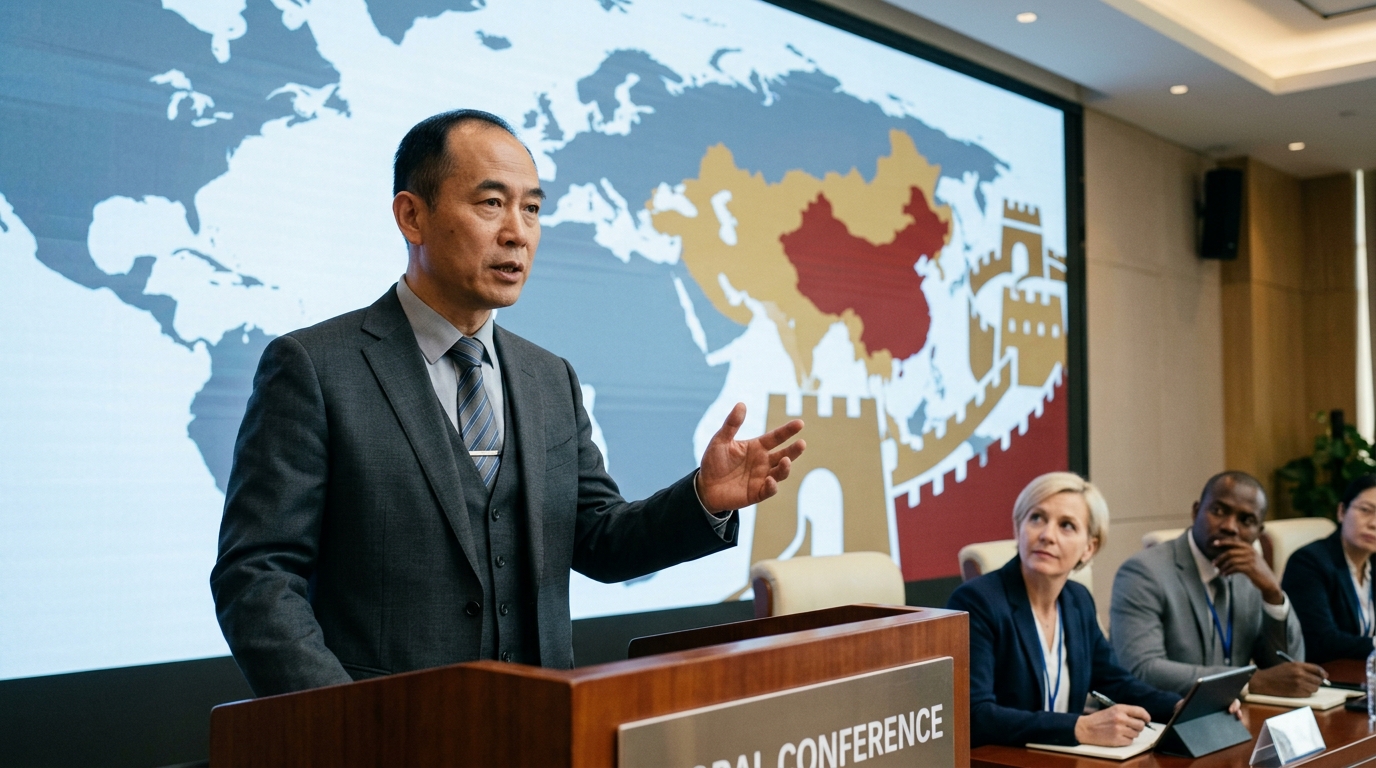
July 9, 2026, will likely be recorded as the moment the utopia of a global, open artificial intelligence finally collapsed. Following a series of new regulations from the Ministry of Industry and Information Technology (MIIT), China has announced strict restrictions on the export of its most advanced AI models, including the latest iterations of DeepSeek and Alibaba’s Qwen models. This decision is not merely a bureaucratic shift but a strategic retrenchment that formalizes the 'Algorithm Cold War.'
The Strategy of Digital Sovereignty
Beijing argues that these restrictions are necessary to ensure national security and protect intellectual property. However, analysts see something deeper: China's attempt to maintain an exclusive advantage in domestic productivity. By keeping its models within its borders, the Chinese government ensures that its own industries—from semiconductor manufacturing to biotechnology—will have access to tools that Western competitors cannot touch.
This move comes as a direct response to US-imposed restrictions on high-end Nvidia chip exports to China. It is a classic geopolitical 'tit-for-tat.' While Washington attempts to throttle China's hardware, Beijing responds by locking down the software. This creates a paradox: China now possesses some of the world's most efficient models (such as DeepSeek-V3), developed with fewer resources due to sanctions, and is now turning them into state secrets.
DeepSeek: The Symbol of the Chinese Counteroffensive
The inclusion of DeepSeek in the list of controlled entities is particularly striking. DeepSeek, which began as a research lab funded by hedge funds, managed to surpass OpenAI’s GPT-4 in several benchmarks, sending shockwaves through Silicon Valley. Their ability to train models at a fraction of the cost of American firms is now considered a 'national treasure' for China.
The new rules state that any company wishing to provide APIs or model weights to foreign users must undergo exhaustive security reviews. This practically means that access to Chinese AI from Europe or America will now be limited, if not impossible, for critical applications. The global open-source community, which has relied heavily on Chinese contributions over the past two years, is taking a heavy blow.
The Fragmentation of the Internet (Splinternet)
This development accelerates the creation of two parallel digital universes. On one side, a Western ecosystem under US hegemony, and on the other, a Chinese ecosystem expanding through the Belt and Road Initiative to countries in Southeast Asia, Africa, and the Middle East. China is not closing its doors entirely but is carefully choosing its partners, using AI as a diplomatic lever.
The consequences for the global economy are concerning. The lack of interoperability between AI systems will increase costs for multinational corporations, which will have to develop different strategies and infrastructures for each region. Furthermore, the competition for talent will become even fiercer, as scientists are forced to choose sides in a world where knowledge is no longer shared.
Conclusion: A World in Silos
As we head into the second half of the 2020s, the hope that artificial intelligence would serve as the 'common language' of humanity is fading. China's decision to fence off its models is the final confirmation that AI is now viewed as the modern equivalent of nuclear weapons: a force too powerful to share and too dangerous to leave unchecked. The remaining question is whether this isolation will lead to a new era of innovation or a dangerous stagnation due to the lack of idea exchange.